
Spills, pet accidents, and everyday foot traffic are inevitable parts of life, but they do not have to leave a permanent mark on your floors. If you are looking for a highly effective, eco-friendly, and budget-conscious way to lift stubborn spots and banish odors, learning how to clean carpet with baking soda and vinegar is a game-changer.
Instead of reaching for harsh, store-bought chemicals that leave behind sticky residues and overpowering artificial fragrances, you can utilize the natural chemical reaction between these two pantry staples.
This comprehensive guide will walk you through the exact steps, ratios, and pro tips to master DIY carpet cleaning and restore your home’s flooring safely and naturally.
Why Choose DIY Carpet Cleaning with Baking Soda and Vinegar?
Before diving into the methodology, it is important to understand why this specific combination is celebrated by homeowners and cleaning professionals alike.
When you combine baking soda (a base) with white vinegar (an acid), they undergo a fast chemical reaction.
According to the American Chemical Society, this reaction produces carbon dioxide gas. In the context of your carpet, this bubbling, fizzing action actively works to break down the bonds between the carpet fibers and the dirt, grease, or grime.
Here are the top reasons to use a baking soda and vinegar carpet cleaner:
- Completely Non-Toxic: Standard chemical cleaners can introduce volatile organic compounds (VOCs) into your home, impacting your indoor air quality (EPA). Vinegar and baking soda are food-grade and perfectly safe for babies and pets.
- Cost-Effective: You likely already have these ingredients in your kitchen, costing only pennies per application.
- Dual-Action Cleaning: Vinegar acts as a mild solvent to break down dirt, while baking soda is an alkaline powder that absorbs liquid and neutralizes acidic odor-causing molecules.
- No Soapy Residue: Traditional carpet shampoos can leave a sticky film that actually attracts more dirt over time. This natural method rinses clean.
Essential Supplies: What You Will Need
To effectively remove carpet stains naturally, gather the following items:
- Standard vacuum cleaner
- Fresh baking soda (sodium bicarbonate)
- Distilled white vinegar (Do not use apple cider or dark vinegars, as they can cause staining)
- Warm tap water
- A clean, empty spray bottle
- Clean, white microfiber cloths or absorbent towels (Image Alt Text: Cleaning supplies including a spray bottle, white towels, baking soda, and white vinegar set on a carpeted floor)
Step-by-Step: How to Clean Carpet with Baking Soda and Vinegar
Follow this expert, step-by-step process to ensure maximum stain lifting power without damaging your carpet fibers.
Step 1: Prep and Vacuum Thoroughly
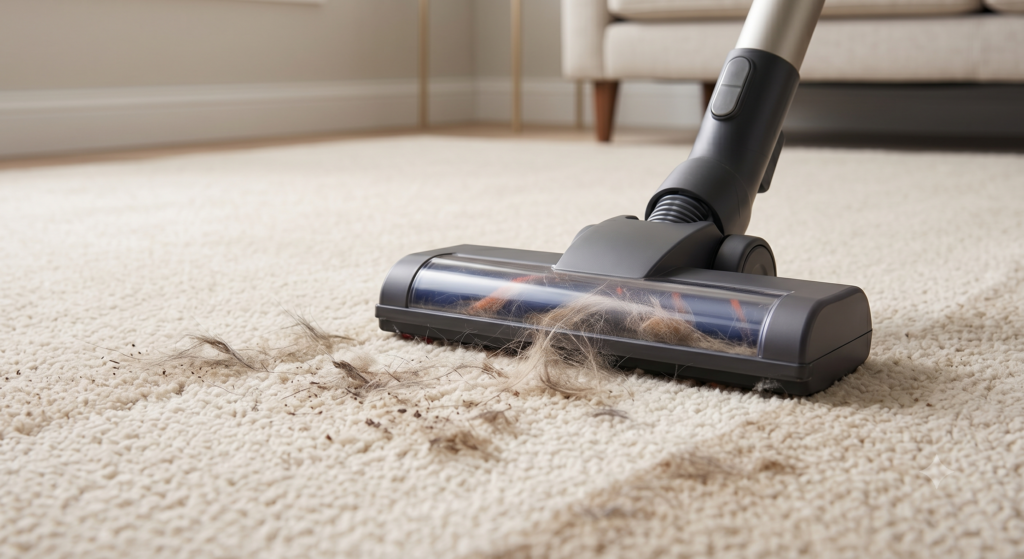
Never skip the dry extraction phase. According to the Carpet and Rug Institute (CRI), vacuuming is the most crucial step in carpet maintenance. Thoroughly vacuum the stained area to pick up loose dirt, dust, and pet hair. If you apply liquid to a dusty carpet, you will essentially create a muddy paste that sinks deeper into the backing.
Step 2: Apply the Baking Soda Carpet Cleaner
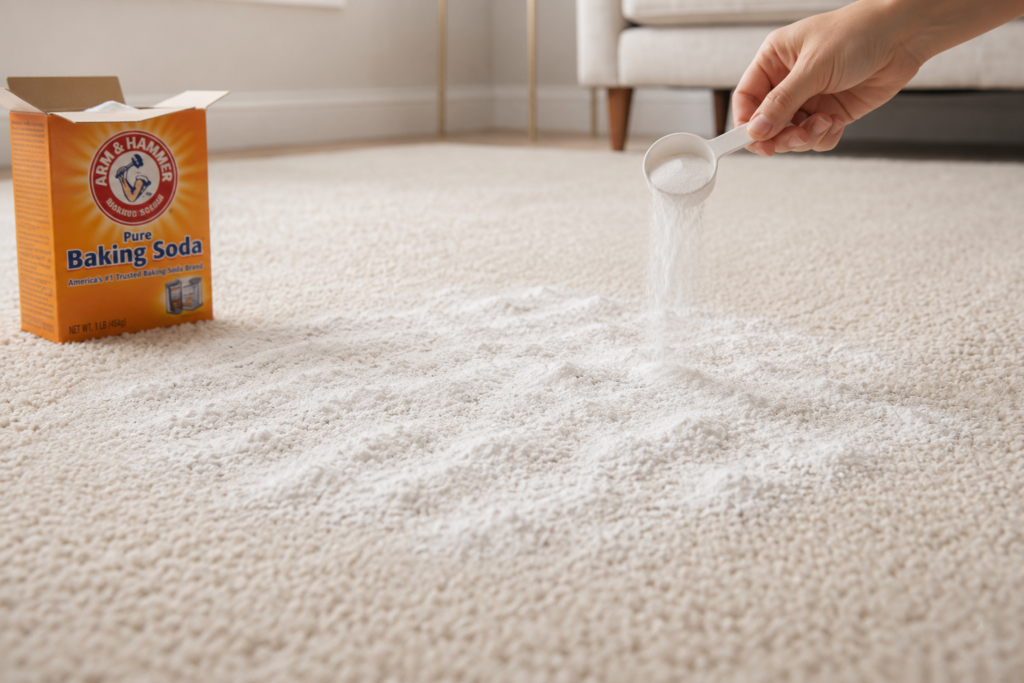
Once the area is clear of loose debris, sprinkle a thin, even layer of dry baking soda directly over the stain or the area you wish to deodorize.
- Pro Tip: Think of baking soda as a microscopic sponge. It begins to pull out bad smells and embedded oils immediately. For severe odors, you can gently brush the powder into the fibers and let it sit for a few hours before proceeding to the next step.
Step 3: Mix Your Homemade Carpet Stain Remover
In your clean spray bottle, mix a solution of 50% distilled white vinegar and 50% warm water. Using warm water helps accelerate the cleaning reaction, while the 1:1 ratio ensures the mild acid is strong enough to break down dirt but gentle enough not to harm synthetic carpet dyes.
Step 4: Mist and Let the Fizz Work
Lightly mist the vinegar and water solution directly over the baking soda layer. You will immediately see and hear the mixture bubble and fizz.
- Crucial Warning: Mist the stain, but do not soak it. Over-wetting your carpet can damage the adhesive backing and create an environment for mold growth deep in the carpet pad.
- Allow this effervescent reaction to sit and work its magic for 30 minutes. This dwell time is essential for lifting the dirt out of the carpet fibers.
Step 5: Blot the Stain (Never Scrub!)
After 30 minutes, take your clean, dry white towel and gently press it into the damp stain. Do not scrub. Scrubbing untwists the carpet fibers, causing them to fray and look worn. It also pushes the stain deeper into the pad. Continue to blot with clean sections of the towel until the area is barely damp and the stain has transferred to the cloth.
Step 6: Air Dry and Final Vacuum
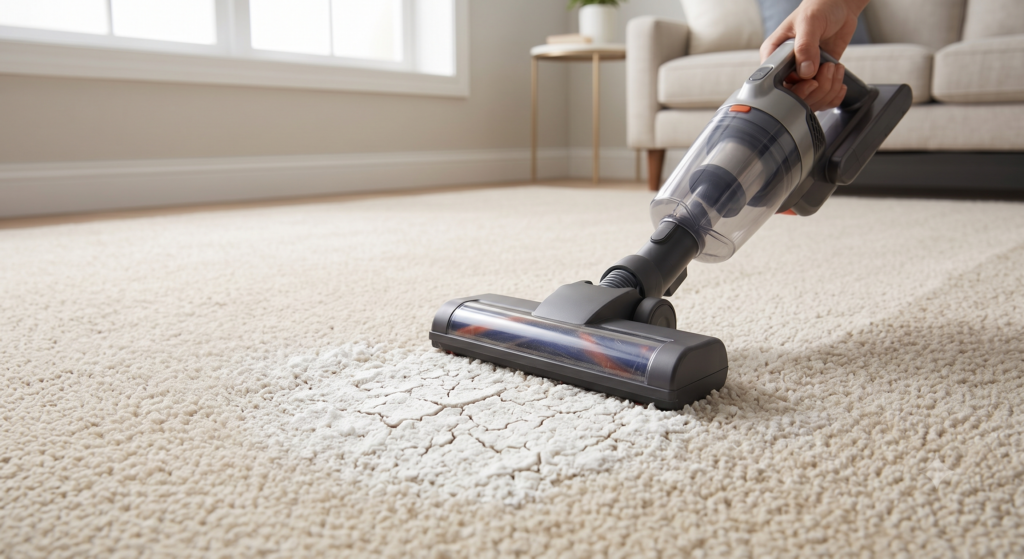
Allow the treated carpet to air-dry completely. Keep foot traffic off the area while it is wet to prevent re-soiling. Once the carpet is 100% dry to the touch, run your vacuum over the area to pick up any leftover, crystallized baking soda. Your carpet should now be clean, soft, and completely odor-free!
Modifying the Method for Specific Stubborn Spills
While the baseline homemade carpet stain remover works wonders on general grime, you might need to adjust your approach for specific household disasters.
Deodorize Carpet with Vinegar for Pet Stains
Pet urine is highly acidic and contains uric acid crystals that cling to carpet fibers. To tackle this, blot up as much fresh urine as possible first. Then, heavily apply the vinegar/water solution to neutralize the ammonia smell before applying the baking soda. Once dry, if the odor persists on a deeper level, it might be time to look into targeted professional pet odor removal services.
Coffee, Wine, and Tannin Stains
For dark liquid spills, speed is your best friend. Blot the liquid immediately. The acidic nature of vinegar makes it exceptionally good at breaking down tannin-based stains like coffee and wine. You may need to repeat the baking soda and vinegar application two or three times to completely lift heavy, dark dyes.
Grease and Oil Spots
If you dropped food or tracked in garage grease, the oil-absorbing properties of the baking soda are your primary weapon. Apply a heavier layer of baking soda and let it sit overnight to absorb the lipids before applying the vinegar spray the following morning.
Best Practices and Pro Tips for Carpet Stain Removal
- Always spot-test first. Apply the vinegar solution to a hidden corner of the carpet, like inside a closet, and wait 24 hours to confirm it won’t discolor the fibers.
- Work on stains while they’re fresh. The sooner you treat a spill, the less time it has to set into the carpet padding.
- Avoid wool and delicate natural-fiber carpets. Vinegar’s acidity can damage wool fibers over time, so this method is best suited for synthetic carpets like nylon, polyester, and olefin.
- Don’t oversaturate the carpet. Excess moisture that reaches the padding can lead to mold, mildew, and unpleasant smells, the opposite of what you’re trying to achieve.
- Use cool water for protein-based stains (blood, dairy, egg) before applying this method, since hot water can set these stains permanently.
- Ventilate the room while the vinegar smell dissipates. It fades within a few hours as the carpet dries.
Which Stains Does This Method Work Best On?
This homemade carpet cleaning solution is particularly effective for:
- General foot traffic grime and dinginess
- Pet stains and pet-related odors (urine, in particular)
- Coffee, tea, and wine spills
- Musty or mildew smells
- Light mud and dirt tracked in from outside
For deep-set stains, old set-in carpet stains, red dye stains (like Kool-Aid or certain wines), or large-scale carpet odor from long-term pet accidents, this DIY method may only provide partial improvement. In these cases, a combination of enzymatic cleaners for biological stains, or a professional deep-cleaning treatment, will deliver more thorough results.
Crucial Tips and Warnings for Natural Carpet Care
While learning how to clean carpet with baking soda and vinegar is incredibly safe, there are a few golden rules to follow to protect your flooring investment.
| Best Practices | Things to Avoid |
| Always Spot Test First: Test the vinegar mixture in a hidden corner (like a closet) to ensure it does not alter your carpet’s color. | Never Use Dark Vinegars: Apple cider or balsamic vinegars contain natural dyes that will permanently stain light carpets. |
| Use White Towels: Blotting with a white microfiber cloth prevents accidental color transfer from the towel to the carpet. | Avoid Wool Carpets: Vinegar is too acidic for natural wool fibers and can permanently degrade them. Wool carpets require specific pH-balanced care. |
When to Call the Professionals
Baking soda and vinegar are excellent for spot treatment and routine maintenance, but they aren’t a substitute for a deep, professional clean, especially for carpets that haven’t been cleaned in over a year, homes with heavy pet traffic, or allergy sufferers who need dust mites and allergens extracted at a deeper level than surface cleaning can reach.
If you’ve tried this method and stains or odors persist, or if you’re preparing a home for sale, move-in, or move-out, it’s worth exploring a professional option. You can learn more about our full range of services on our carpet cleaning services page, see how we handle tough situations on our pet stain and odor removal page, or check out our deep carpet cleaning page for a longer-lasting result. If you’re unsure which option is right for your home, our FAQ page answers common questions about cleaning frequency, drying time, and safety around kids and pets.
Frequently Asked Questions
Does baking soda and vinegar actually remove carpet stains? Yes, for most everyday stains and odors, this combination is effective. It works especially well on fresh spills and general odor buildup, though very old or deeply set stains may need additional treatment.
Is it safe to use baking soda and vinegar on all carpet types? It’s generally safe for synthetic carpets like nylon and polyester. Avoid using it on wool or other delicate natural-fiber carpets, as the acidity in vinegar can weaken and discolor these fibers over time.
How long does it take for the carpet to dry after this treatment? Drying time varies based on humidity and airflow, but most carpets are dry within 2 to 6 hours. Using a fan or opening windows speeds up the process.
Can I use this method for the whole house, or just spot stains? Both. For whole-room refreshing, use a light, even dusting of baking soda without the vinegar spray, let it sit, then vacuum. Reserve the full baking soda and vinegar combination for specific stains and odor hot spots.
Conclusion
Understanding how to clean carpet with baking soda and vinegar empowers you to handle household spills quickly, safely, and affordably. By relying on the simple science of a base-acid reaction, you can lift stains and neutralize odors without introducing toxic chemicals into your living space.
Remember the golden rules: always vacuum first, mist rather than soak, never scrub the fibers, and avoid using this method on natural wool. With this homemade carpet stain remover in your cleaning arsenal, maintaining a fresh, clean, and healthy home is easier than ever.
Ready for a Truly Deep Clean?
While natural spot treatments are great for daily maintenance, nothing beats the fresh, revitalized look and feel of a professionally cleaned carpet. If your floors need a reset, or you have tough stains that DIY methods just can’t crack, we are here to help. Contact JPA Carpet Cleaning today to schedule a consultation and bring your carpets back to life!