
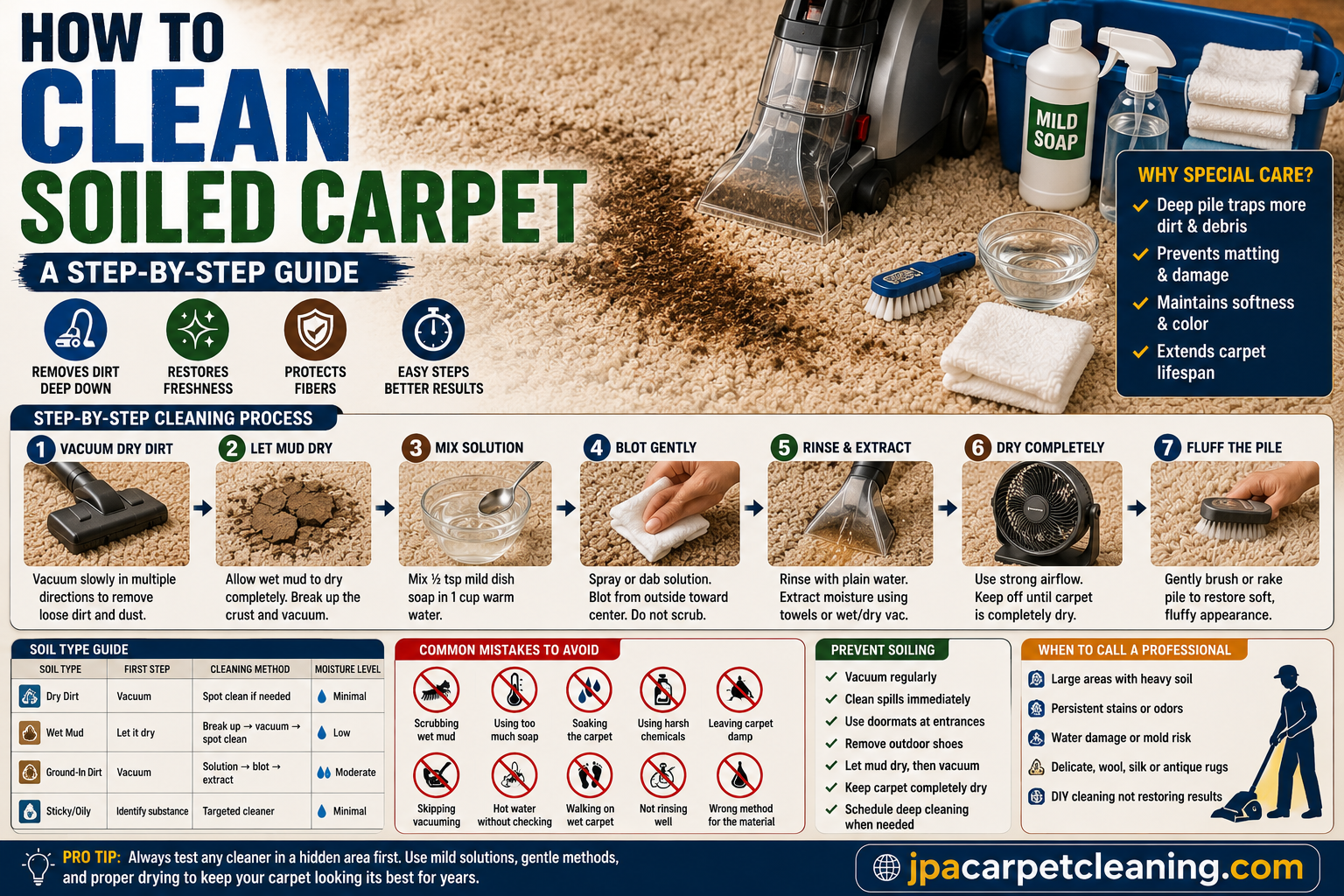
Tracked-in mud, dry soil, and ground-in grime can make even a well-maintained carpet look worn. The good news is that a vacuum, mild dish soap, warm water, white cloths, and a wet-dry vacuum are often enough to restore it.
The trick is knowing which method matches your type of soiling. Scrubbing wet mud works against you, while skipping vacuuming before wet cleaning creates a muddy mess deeper in the pile.
This guide explains how to clean soiled carpet properly, whether you are dealing with light dust, dried mud, or deeply embedded dirt.
What Makes a Carpet Soiled?
Loose dirt sits on the surface and comes out easily with vacuuming. Ground-in soil is different—foot traffic presses particles deep into the fibers and backing where suction alone cannot reach them.
Dried mud behaves differently from wet mud. Wet mud smears and spreads when scrubbed, while dried mud can be broken up and vacuumed away cleanly. Identifying your soil type first prevents you from making the problem worse.
Left untreated, soil abrades fibers every time someone walks across the carpet. This abrasion dulls the pile and makes future cleaning more difficult.
Supplies You’ll Need
- Vacuum cleaner
- Soft-bristled brush
- White microfiber cloths
- Paper towels
- Spray bottle
- Mild dish soap
- Warm water
- Bucket
- Dry towels
- Wet/dry vacuum or carpet extractor
- Carpet-safe cleaning solution
- Fan
Always test any cleaning solution on a hidden area before applying it to visible soiling.
How to Clean Soiled Carpet
The correct sequence matters. Adding moisture before removing dry soil turns dust into mud. Skipping the rinse leaves sticky residue that attracts new dirt within days.
Vacuum Dry Dirt First
Vacuum thoroughly before introducing any moisture. Move slowly over heavily soiled areas and make several passes in different directions. For high-pile or plush carpet, approach from at least two angles to lift debris trapped between fibers.
Removing loose soil first prevents it from turning into a muddy paste during wet cleaning.
Let Wet Mud Dry Completely
Do not scrub wet mud. Allow muddy areas to dry fully, then break up the crust with a soft brush or dull tool. Vacuum the loosened debris thoroughly before proceeding to spot cleaning.
Scrubbing wet mud pushes soil deeper into the carpet and spreads the stain outward.
Mix a Mild Cleaning Solution
Mix a small amount of mild dish soap—about half a teaspoon—into one cup of warm water. Do not use excessive soap. Too much detergent leaves sticky residue that attracts more dirt and causes rapid re-soiling.
Apply the solution using a spray bottle or a damp white cloth for controlled coverage.
Blot the Soiled Area
Apply the solution carefully and blot with a clean white cloth. Work gently rather than scrubbing aggressively. For concentrated spots, work from the outside toward the center to prevent spreading.
Excessive scrubbing frays fibers and pushes soil deeper into the backing.
Rinse and Extract
Blot the area with plain warm water to remove soap residue. Avoid saturating the carpet. Press a dry towel firmly against the area to absorb moisture, or use a wet/dry vacuum when available.
Removing cleaning solution and excess moisture prevents residue buildup and reduces the risk of odor or mildew.
Dry the Carpet Completely
Improve airflow with fans and open windows when weather permits. Keep foot traffic off the damp area until it is fully dry. Damp carpet can develop odor and encourage mold growth if left without proper ventilation.
How to Clean Heavily Soiled Carpet
Start with multiple vacuum passes, then divide heavily dirty areas into smaller sections. Treat visible spots individually with your mild solution before addressing the broader area.
Use a carpet-safe cleaning solution when surface cleaning is not enough, and extract dirty moisture rather than repeatedly adding more liquid. Repeat cleaning only when necessary, and avoid soaking the carpet at any stage.
When a Carpet Cleaner Helps
A carpet extractor is worth using when ground-in soil covers a large area. The machine loosens embedded dirt and simultaneously removes the dirty moisture, which speeds drying significantly.
Follow the machine’s instructions regarding water volume. Excessive water delays drying and can damage the backing.
How to Remove Different Types of Carpet Soil
Dry Dirt
Vacuum-first method with multiple passes in different directions. No moisture needed unless residue remains.
Dried Mud
Let it dry completely, break up the crust, vacuum thoroughly, then spot clean any remaining discoloration.
Ground-In Dirt
Repeated vacuuming, controlled moisture application, gentle agitation with a soft brush, and extraction.
Sticky or Oily Soil
These spots may require a carpet-safe product designed for the specific residue type. Test on a hidden area first.
Cleaning Different Carpet Types
| Carpet Type | Key Consideration |
|---|---|
| Nylon | Tolerates most cleaning methods; avoid high heat |
| Polyester | Sensitive to oil-based stains; use mild solutions |
| Wool | Requires pH-neutral products; limit moisture; avoid agitation |
| Berber | Snag-prone loops; blot only, never scrub |
| High-pile / Plush | Vacuum from multiple directions; minimize moisture |
| Area rugs | Check backing material; some cannot be wet-cleaned |
Natural fibers such as wool require more careful product selection and stricter moisture control than synthetics.
Soil Type Decision Chart
| Soil Type | First Step | Cleaning Method | Moisture Level |
|---|---|---|---|
| Dry dirt | Vacuum multiple passes | Spot clean if needed | Minimal |
| Wet mud | Let dry completely | Break up → vacuum → spot clean | Low |
| Ground-in dirt | Vacuum thoroughly | Solution → blot → extract | Moderate |
| Sticky/oily residue | Identify substance | Targeted carpet-safe product | Minimal |
Common Mistakes to Avoid
- Scrubbing wet mud immediately—it spreads and embeds deeper.
- Skipping vacuuming before wet cleaning—creates mud in the pile.
- Using too much soap—leaves residue that attracts new dirt.
- Saturating the carpet—risks backing damage and mold.
- Using very hot water without checking care instructions.
- Ignoring cleaning-product labels.
- Failing to rinse detergent residue.
- Walking on carpet before it dries.
- Using harsh chemicals not approved for the carpet type.
Each mistake either worsens soiling or damages fibers and backing.
How to Prevent Carpet From Getting Heavily Soiled
- Vacuum regularly, focusing on high-traffic paths.
- Clean spills immediately before they set.
- Place doormats at every entrance.
- Remove outdoor shoes when practical.
- Address tracked-in mud quickly—let it dry, then vacuum.
- Keep carpet completely dry after any cleaning.
- Schedule deeper cleaning when routine vacuuming no longer restores appearance.
When Should You Professionally Clean a Soiled Carpet?
Seek professional help when:
- Large areas have heavy, embedded soil.
- Dirt remains after proper home cleaning.
- Persistent odors suggest backing contamination.
- Old stains have set beyond surface treatment.
- Re-soiling happens quickly after cleaning.
- The carpet is delicate, expensive, wool, or a specialty rug.
- DIY cleaning risks overwetting or fiber damage.
Heavily Soiled Carpet Checklist
- Vacuum multiple passes in different directions
- Let any wet mud dry fully before disturbing
- Break up dried crust and vacuum debris
- Mix mild soap solution (½ tsp per cup warm water)
- Blot spots from outside inward
- Rinse with plain water
- Extract moisture with towels or wet/dry vacuum
- Dry completely with fans before replacing furniture
Frequently Asked Questions
Can baking soda help remove ground-in dirt from carpet?
Baking soda absorbs odors but does not lift embedded soil particles. It can be sprinkled lightly before vacuuming to freshen the surface, but it will not replace proper extraction for ground-in dirt.
Does carpet soil return after cleaning?
Rapid re-soiling usually indicates detergent residue left in the fibers. Sticky residue acts like a magnet for new dirt. Rinsing thoroughly with plain water after cleaning prevents this cycle.
Can I clean soiled carpet with only water?
Plain water works for very light surface dust but cannot break down oily or sticky residues. For anything beyond loose dry soil, a small amount of mild detergent or a carpet-safe solution is necessary.
Should I vacuum before or after using a carpet extractor?
Always vacuum before extraction. Loose dry soil turns into mud when mixed with the water the extractor uses. Vacuuming after the carpet dries can help lift any remaining particles.
How long should I wait before walking on cleaned carpet?
Wait until the carpet is completely dry to the touch—typically four to six hours with good airflow. Walking on damp fibers presses remaining soil back into the pile and can leave footprints.
Conclusion
Effective carpet soil removal follows a clear sequence: vacuum loose dirt first, let wet mud dry before disturbing it, apply a mild solution to remaining spots, blot gently, rinse thoroughly, extract excess moisture, and allow full drying. Skipping any step risks residue, re-soiling, or fiber damage.
When heavy soiling persists after proper home cleaning, or when delicate materials like wool are involved, professional carpet cleaning provides the extraction power and fiber-specific knowledge needed to restore the carpet safely.