Discovering an unexpected orange or brown rust mark on your flooring is frustrating. Unlike ordinary food or dirt spills, these marks require a highly specific approach to resolve.
Rust is an iron-based deposit, meaning standard household carpet cleaners often fail to lift it entirely. Fortunately, mild acidic solutions can help dissolve these stubborn deposits safely.
Learning how to clean rust stains from carpet involves using white vinegar, fresh lemon juice, or a carpet-safe commercial rust remover. This guide covers the safest methods to restore your floors.
Why Rust Stains Appear on Carpet
Rust marks typically appear when metal objects interact with moisture on your flooring. Common causes include rusty furniture legs, metal barstools, and rusty storage containers left in damp areas. Radiator or plumbing leaks can also introduce iron-rich water directly into the fibers.
Moisture makes rust transfer to carpet fibers much more easily. When a wet metal object sits on the floor, the oxidation process accelerates, leaving behind a concentrated deposit. Even water containing high levels of iron can leave rust rings as it evaporates.
Because rust is an iron-based deposit, ordinary carpet cleaners are often ineffective. Standard detergents cannot break down the chemical bond of oxidized metal. You need a targeted acidic treatment to dissolve the rust particles without harming the carpet backing.
What You Need to Remove Rust From Carpet
Gathering the right tools ensures a safe and effective cleaning process. Below is a list of essential items for tackling rust deposits.
| Item | Purpose |
|---|---|
| Spoon or dull scraper | Remove loose rust flakes |
| Vacuum | Remove loose particles |
| White vinegar | Mild acidic treatment |
| Fresh lemon juice | Alternative acidic treatment |
| Clean white cloth | Blotting without dye transfer |
| Spray bottle | Controlled application |
| Cool water | Rinsing the treated area |
| Baking soda | Optional supporting treatment for moisture |
| Carpet-safe rust remover | Stubborn or old stains |
| Gloves | Hand protection |
Always use clean white cloths so dye does not transfer to the carpet during treatment. You must always spot-test a cleaning solution in a hidden area before full application. Avoid soaking the carpet unnecessarily, as excess moisture can damage the backing.
How to Clean Rust Stains From Carpet
This is the primary instructional section for safe rust removal. Following these steps ensures you eliminate the stain without causing collateral damage to the fibers.
Scrape and Vacuum Loose Rust
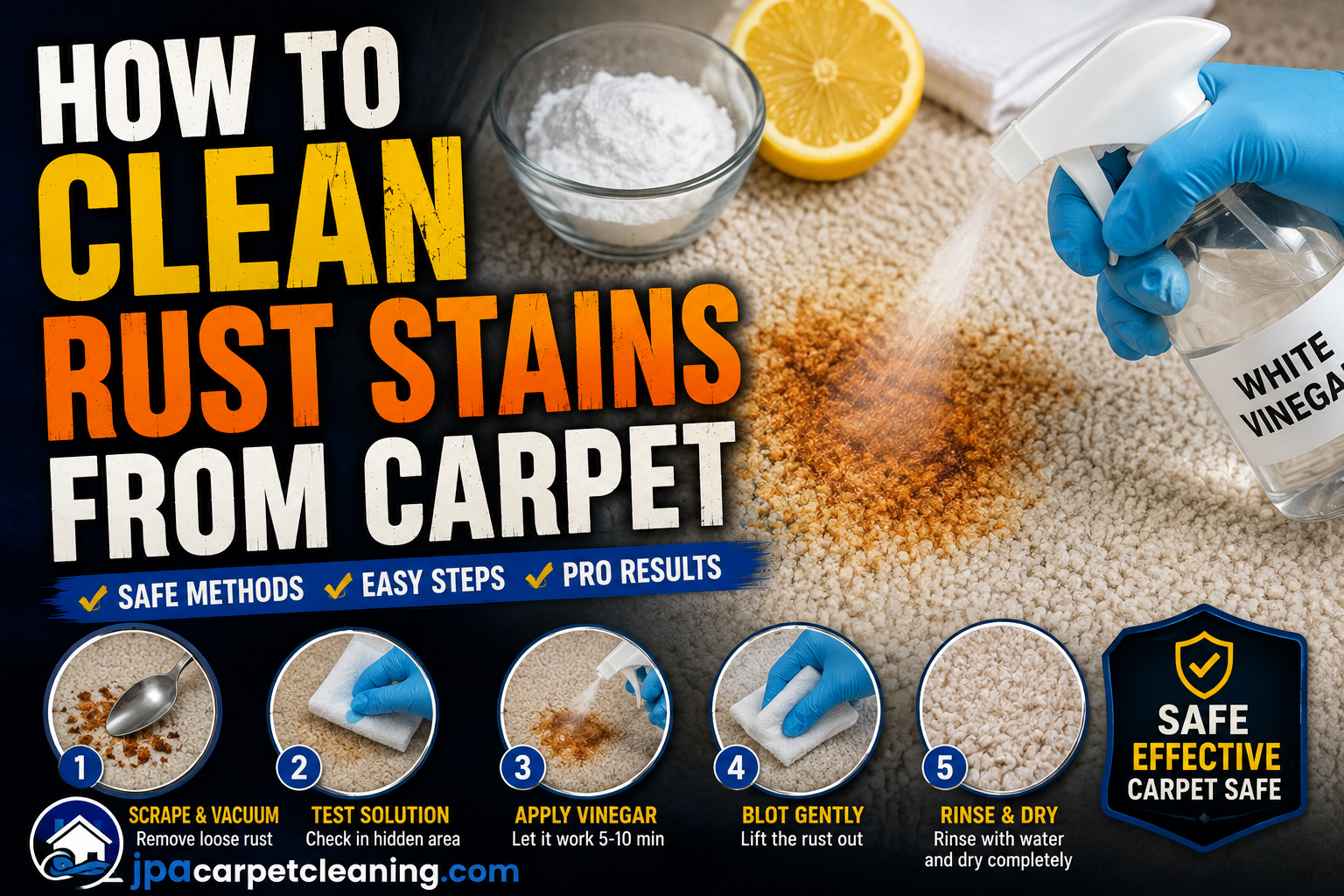
Before applying any liquid, gently scrape loose rust flakes using a dull spoon, scraper, or similar tool. Work carefully so the particles do not spread to clean areas of the carpet.
Vacuum the area thoroughly afterward to remove any remaining loose debris. Do not grind loose rust deeper into the carpet, as this makes the chemical treatment much less effective. Removing dry material first allows the cleaning solution to target the embedded stain directly.
Test the Cleaning Solution First
Choose an inconspicuous part of the carpet, such as inside a closet or under a piece of furniture. Apply a tiny amount of your chosen cleaning solution to this hidden area.
Wait a few minutes and inspect the color and texture. Do not continue with the treatment if you notice any discoloration or fiber damage. Carpet fiber type and dye stability vary greatly, and testing prevents irreversible damage to visible areas.
Try White Vinegar for a Mild Rust Stain
Apply plain white vinegar carefully to the stain using a spray bottle or a damp cloth. Avoid flooding the carpet, as excess liquid can seep into the padding.
Allow the vinegar to work for approximately 5 to 10 minutes initially. For suitable carpets and stubborn stains, treatment may require slightly longer contact, but it must be monitored closely rather than left unattended for 30 to 40 minutes. Prolonged exposure can be inappropriate for some fibers, dyes, or carpet backings.
Blot the area with a clean white cloth to lift the dissolved rust. Repeat the application if necessary, then rinse lightly with clean water and blot dry.
How to Remove a Stubborn Rust Stain
When mild household solutions fail, you may need a stronger approach. This is especially true for deep or aged deposits.
Use a Carpet-Safe Commercial Rust Remover
Commercial rust removers are more effective when the stain is old, has penetrated deeply, or covers a larger area. They are also necessary if the rust came from a heavily corroded metal object and vinegar does not work.
Some professional rust removers use stronger acids, so you must follow the product label exactly. Always wear gloves, ventilate the room, and perform a spot test first. Never mix different chemical cleaners together, and do not recommend or use hydrochloric acid or industrial acids as DIY household treatments.
Can Lemon Juice Remove Rust From Carpet?
Fresh lemon juice is a natural alternative to vinegar. Apply a small amount directly to the stain and let it work briefly.
Blot the area with a white cloth, then rinse lightly with clean water and blot dry. Lemon juice is acidic and may help loosen rust, but it is not automatically safer than a commercial product. It can still cause discoloration on sensitive dyes if left too long.
Does Baking Soda Remove Rust From Carpet?
It is important to correct a common misconception: baking soda is not the primary rust-removal ingredient. Rust responds much better to an appropriate acidic treatment that chemically breaks down the iron oxide.
Baking soda can be useful for absorbing moisture or neutralizing odors after the rust is gone. However, avoid aggressive baking-soda scrubbing, as the abrasive action can disturb and fray delicate carpet fibers without actually removing the rust.
How to Remove Old Rust Stains From Carpet
Older stains may require several controlled treatments to fully lift. The rust has had time to bond tightly with the fibers, demanding patience.
Start by vacuuming the area and testing the carpet. Apply a suitable rust treatment and allow a limited dwell time. Blot the area, and repeat the process only if the stain is visibly improving. Rinse carefully and dry completely.
Be aware that a rust stain that has remained for months or years may have permanently affected the carpet dye. In such cases, professional intervention or carpet replacement may be the only viable option.
How to Remove Rust Rings From Carpet
Rust rings often occur when wet or damp metal furniture sits on carpet for extended periods. Do not immediately scrub the circular stain, as this can spread the oxidation.
Remove the metal source first, then vacuum any loose rust. Treat the ring from the outside toward the center to prevent the stain from expanding. Blot rather than rub, and repeat the treatment if necessary.
| Problem | Likely Cause | What to Do |
|---|---|---|
| Orange ring remains | Rust still in fibers | Repeat suitable treatment |
| Stain spreads | Too much liquid used | Reduce solution amount |
| Carpet changes color | Dye reaction to acid | Stop treatment immediately |
| Rust keeps returning | Metal source still rusting | Remove or repair the source |
| Dark mark remains | Deep contamination | Consider professional cleaning |
What Not to Use on Rust Stains
Using the wrong products can permanently ruin your flooring. Avoid chlorine bleach entirely, as it can damage or remove carpet dye and may make the discoloration significantly worse.
Avoid aggressive scrubbing, as rust can spread through wet fibers, and hard brushing can permanently damage the pile. Avoid using WD-40 as a first choice; while some online forums suggest it, introducing an oily product creates a second type of stain that becomes much harder to remove.
Avoid strong acids without proper knowledge, and never mix cleaning chemicals. Specifically, avoid combining bleach with acids, bleach with ammonia, or multiple commercial stain removers, as this can create toxic fumes or destructive reactions.
Vinegar vs Lemon Juice vs Commercial Rust Remover
Choosing the right method depends on the severity of the stain. Below is a comparison to help you decide.
| Method | Best For | Strength | Risk |
|---|---|---|---|
| White vinegar | Mild rust | Low–moderate | Low when properly tested |
| Lemon juice | Small light stains | Low–moderate | Possible discoloration |
| Baking soda | Odor/moisture support | Low for rust | Abrasive if scrubbed |
| Carpet-safe rust remover | Old/stubborn rust | High | Requires careful use |
| Professional treatment | Severe/deep stains | Very high | Higher cost |
Rust Stain Removal by Carpet Type
Different carpet materials react differently to acidic treatments. Knowing your carpet type is essential for safe cleaning.
Nylon Carpet
Nylon is highly durable and resistant to wear, but its dyes can still react to acidic treatments. Always dilute acids and monitor the dwell time closely to prevent color fading.
Polyester Carpet
Polyester often resists many common stains due to its synthetic nature. However, rust can still bond to the fibers, requiring a specialized acidic treatment to break the deposit.
Wool Carpet
Exercise extreme caution with wool. Recommend minimal moisture, a strict product compatibility check, and professional cleaning for stubborn rust. Do not encourage aggressive DIY acid treatment on wool, as it can permanently degrade the natural fibers.
Berber Carpet
The loop construction of Berber carpet makes aggressive scrubbing especially undesirable. Snagged loops can unravel the entire section. Always blot gently and avoid stiff brushes.
What to Do After Removing the Rust
Proper aftercare ensures the stain does not return and the carpet remains healthy. Lightly rinse the treated area with cool water to neutralize any remaining acid.
Blot out the remaining solution using clean towels until no more moisture transfers. Dry the carpet completely using fans or open windows. Vacuum once the carpet is fully dry to restore the pile, and check the stain under natural light to confirm it is gone. Drying is important because residual moisture can lead to mold or other carpet problems.
Why Rust Stains Sometimes Come Back
If a rust stain returns, the root cause has not been addressed. Rusty furniture may remain in place, or metal underneath the carpet may still be corroding.
The carpet padding might remain contaminated, or the rust may have penetrated too deeply for surface treatments to work. Moisture continuing to reach the metal source will simply restart the oxidation process.
If the rust returns, you must find and remove the source before treating the carpet again. Otherwise, the cycle will repeat indefinitely.
When to Call a Professional Carpet Cleaner
DIY methods have their limits. Recommend professional help when the stain is large, the carpet is expensive, or the material is wool or otherwise delicate.
You should also call a pro if the stain is several years old, multiple DIY treatments have failed, or the carpet has changed color. If rust has reached the backing or padding, or if the source is a plumbing or radiator leak, professional extraction is necessary.
Professional carpet cleaners have specialized rust-removal products designed specifically for textile fibers, offering a safer and more effective solution for severe cases.
Common Mistakes When Removing Rust From Carpet
Avoid scrubbing aggressively, as this spreads the rust and damages the fibers. Do not pour too much vinegar or leave acidic solutions on the carpet too long, as this can degrade the backing.
Skipping the spot test is a frequent error that leads to permanent discoloration. Never use bleach, WD-40, or mix cleaning chemicals.
Forgetting to rinse and leaving the carpet wet invites mold growth. Finally, treating the carpet without fixing the rusty metal source guarantees the stain will eventually return.
Frequently Asked Questions
What is the easiest way to remove rust stains from carpet?
The easiest way is to vacuum loose flakes, apply white vinegar for 5 to 10 minutes, blot gently, and rinse with cool water.
Does white vinegar remove rust from carpet?
Yes, the mild acidity of white vinegar helps dissolve iron oxide deposits, making it effective for mild to moderate rust stains.
Can lemon juice remove rust stains from carpet?
Yes, fresh lemon juice is acidic and can loosen rust, but it must be used carefully and rinsed thoroughly to avoid dye damage.
Does baking soda remove rust from carpet?
No, baking soda does not chemically remove rust. It is only useful for absorbing moisture or odors after the rust has been treated with an acid.
Can I use bleach on a rust stain?
No, chlorine bleach can damage carpet dye and may make the rust discoloration permanently worse.
How do I remove old rust stains from carpet?
Old stains require multiple controlled treatments with a carpet-safe commercial rust remover, followed by thorough rinsing and drying.
How do I remove rust rings caused by furniture?
Remove the furniture, vacuum loose rust, treat the ring from the outside in with vinegar or a commercial remover, and blot gently.
What is the best commercial rust remover for carpet?
Look for products specifically labeled as “carpet-safe rust removers” that do not contain harsh industrial acids like hydrochloric acid.
Can rust permanently stain carpet?
Yes, if left untreated for months or years, rust can permanently alter the carpet dye or degrade the fibers.
Should I hire a professional for a rust stain?
Yes, if the carpet is wool, the stain is large, or DIY methods have failed, professional cleaning is the safest option.
Conclusion
Learning how to clean rust stains from carpet requires a different approach than treating ordinary spills. Always start by removing loose rust, testing your solution, and using a mild acidic treatment for suitable carpets. Blot the area gently rather than scrubbing, then rinse and dry thoroughly.
For stubborn marks, move to a carpet-safe commercial rust remover to finish the job. If your carpet is delicate or the stain is severe, professional help remains the safest option to protect your flooring investment.