
Automotive carpet collects dirt, spilled drinks, mud, and trapped moisture every time you drive, and vacuuming alone can’t lift what has settled deep into the fibers.
Learning how to clean automotive carpet properly starts with a few basics like vacuum thoroughly, spray on an automotive carpet cleaner (or a simple mix of warm water and mild dish soap), let it dwell briefly, scrub with a stiff bristle brush, then blot or extract the moisture.
This guide walks through the full process, covering stain removal, odor elimination, drying, floor mats, and ongoing maintenance so your interior stays fresh.
Why Cleaning Automotive Carpet Matters
Lets know why regular automotive carpet cleaning is important.
- Removes dirt embedded deep in the fibers
- Improves cabin appearance
- Eliminates odors from spills and trapped moisture
- Removes allergens and dust
- Prevents mold growth
- Protects carpet fibers from long term wear
- Maintains resale value
Tools and Supplies You’ll Need
- Vacuum cleaner with a crevice attachment
- Automotive carpet cleaner
- Bucket and warm water
- Spray bottle
- Microfiber towels
- Medium or stiff bristle brush
- Soft detailing brush
- Wet/dry vacuum (optional)
- Portable carpet extractor (recommended)
- Fan
- Rubber gloves
Automotive specific cleaners are formulated for vehicle fibers and are generally safer than harsh household cleaners, which can discolor or weaken carpet over time.
How to Clean Automotive Carpet
Lets know the cleaning process step by step.
Preparation and Vacuuming
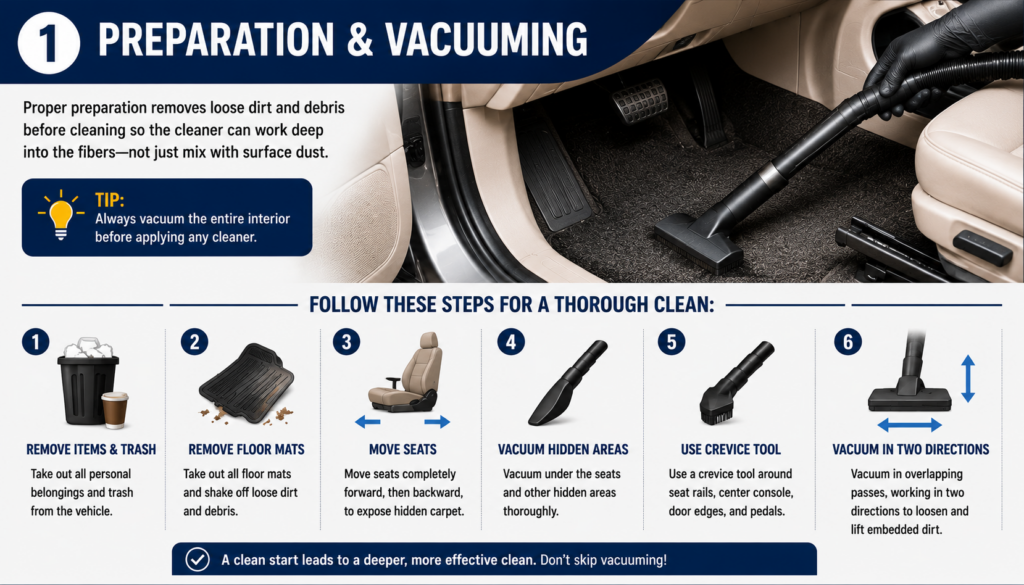
Good prep prevents extra mess later:
- Remove personal belongings and trash.
- Take out all floor mats and shake off loose dirt and debris.
- Move seats completely forward, then backward, to expose hidden carpet.
- Vacuum underneath the seats and other hidden areas thoroughly.
- Use a crevice tool around seat rails, the center console, door edges, and pedals.
- Vacuum in overlapping passes, working in two directions to loosen embedded dirt.
Vacuum the entire interior before applying any cleaner — spraying cleaner onto loose dust turns it into muddy residue that’s much harder to remove.
Spot Treating and Scrubbing
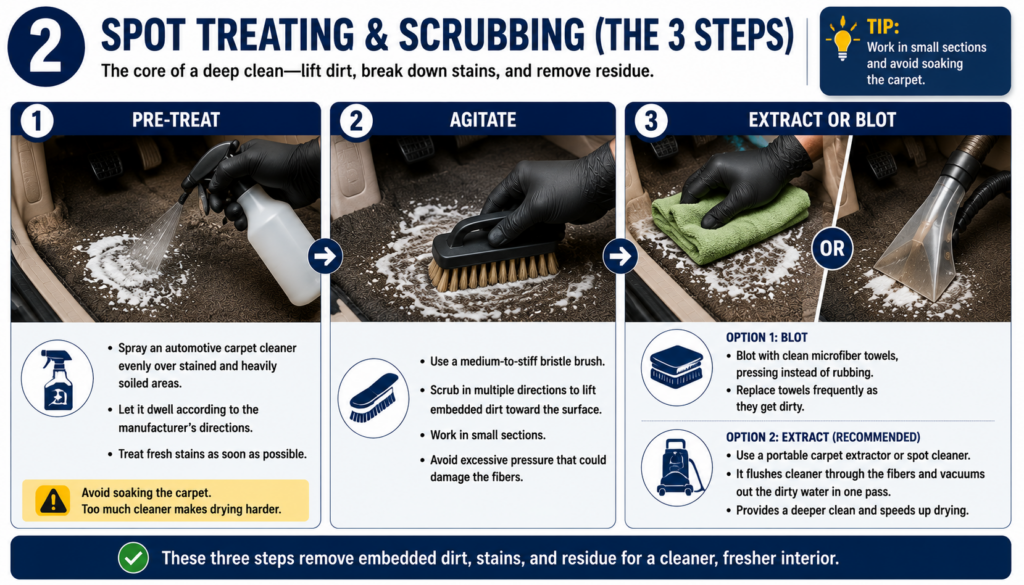
This is the core of the deep clean, organized into three numbered steps.
1. Pre Treat
Spray an automotive carpet cleaner evenly over stained and heavily soiled areas.
Let it dwell according to the manufacturer’s directions, avoid soaking the carpet, and treat fresh stains as soon as possible.
2. Agitate
Use a medium to stiff bristle brush and scrub in multiple directions to lift embedded dirt toward the surface.
Work in small sections, and avoid excessive pressure that could damage the fibers.
3. Extract or Blot
Option 1: Blot with clean microfiber towels, pressing instead of rubbing, and replace towels frequently as they get dirty.
Option 2 (recommended): Use a portable carpet extractor or spot cleaner.
It flushes cleaner through the fibers and vacuums out the dirty water in one pass, removing more embedded dirt than towels alone, speeding up drying, and providing a deeper clean overall.
Drying
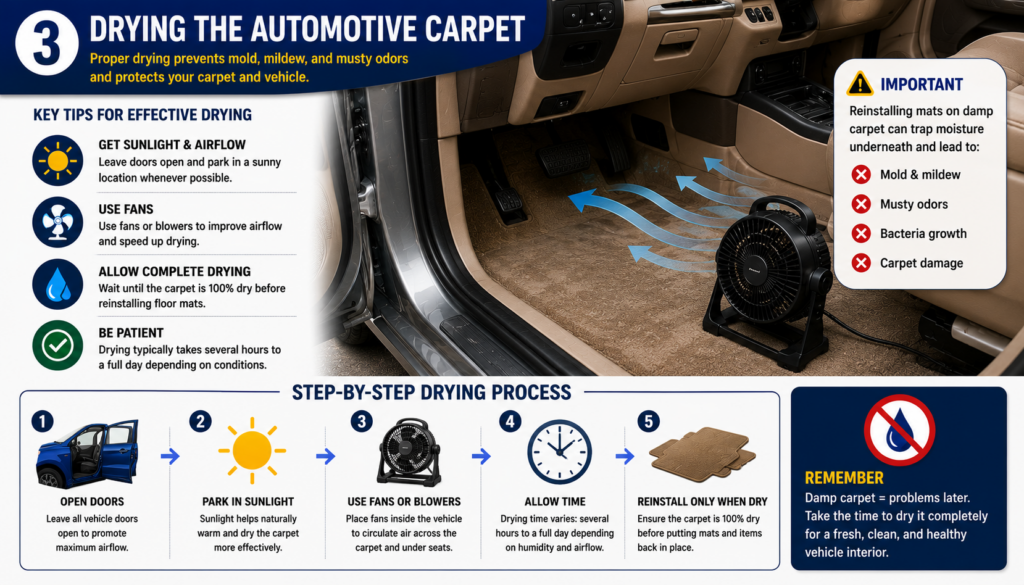
Leave vehicle doors open and park in a sunny location when possible. Improve airflow with fans, and allow the carpet to dry completely — wait until it’s 100% dry before reinstalling floor mats.
Incomplete drying can lead to mold, mildew, musty odors, and bacteria growth.
How to Clean Automotive Floor Mats
| Mat Type | Cleaning Method | Drying |
|---|---|---|
| Carpet mats | Vacuum, spray cleaner, brush fibers, spot clean stains | Dry completely before reinstalling |
| Rubber mats | Hose off, wash with soap, scrub grooves, rinse thoroughly | Air dry before reinstalling |
Never reinstall damp mats — moisture trapped underneath can undo all your cleaning work.
How to Remove Common Automotive Carpet Stains
| Stain | Why It’s Challenging | Recommended Method | Precaution |
|---|---|---|---|
| Coffee | Tannins set fast | Blot, apply cleaner, rinse | Repeat if a shadow remains |
| Soda | Sugar attracts more dirt | Blot, treat with warm water and cleaner | Avoid rubbing it deeper in |
| Mud | Dries into the fibers | Let dry fully, vacuum, then treat residue | Don’t scrub while still wet |
| Grease | Oil based, water resistant | Use a degreasing automotive cleaner, blot repeatedly | Avoid household solvents |
| Ink | Spreads if rubbed | Blot only with an ink safe cleaner | Never scrub |
| Pet urine | Penetrates deep, causes odor | Blot, treat with an enzyme cleaner | Dry thoroughly to prevent smell |
| Vomit | Acidic, odor prone | Remove solids, treat with enzyme cleaner | Ventilate the vehicle while drying |
| Salt stains | Redissolves with moisture | Rinse with a vinegar water solution | Dry completely to prevent return |
| Food spills | Can leave grease and color | Scrape off solids, then treat with cleaner | Treat quickly before it sets |
How to Remove Odors From Automotive Carpet
Smoke smell, pet odors, mold smell, wet carpet smell, and milk spills all come from residue trapped in the fibers, not just the surface. Baking soda absorbs light odors when left overnight and vacuumed up.
Enzyme cleaners break down organic residue from pets, food, and bodily fluids far more effectively than fragrance sprays. Proper drying and good ventilation prevent the mildew smell that follows incomplete cleaning.
Removing the odor source is always more effective than masking the smell.
DIY Cleaning Solutions
For light cleaning, these homemade options work well:
- Vinegar and water
- Mild dish soap
- Baking soda paste
Always test a homemade solution on a hidden area first to check for discoloration.
Common Mistakes to Avoid
- Skipping vacuuming before applying cleaner
- Using too much cleaner
- Over wetting the carpet
- Using bleach
- Using harsh household chemicals
- Scrubbing too aggressively
- Reinstalling mats too early
- Ignoring hidden dirt under the seats
Each of these reduces how effective the cleaning is or actively damages the carpet.
How Often Should You Clean Automotive Carpet?
- Vacuum: weekly or every two weeks
- Spot clean: immediately after spills
- Deep clean: every 3–6 months
Increase frequency for vehicles used with pets, children, heavy commuting, snow, mud, or beach trips.
Professional Tips for Better Results
- Work in small sections
- Replace microfiber towels frequently
- Brush in multiple directions
- Avoid soaking the carpet
- Allow plenty of drying time
- Apply a fabric protectant if desired
- Deep clean before stains become permanent
Frequently Asked Questions
Can I use household carpet cleaner?
It’s better to use an automotive specific formula household cleaners can be too harsh for vehicle fibers.
Is steam cleaning safe?
Light steam can work, but excess heat and moisture risk soaking the padding underneath and inviting mold.
How long does automotive carpet take to dry?
Usually several hours to a full day, depending on humidity, airflow, and how much moisture was used.
Can I pressure wash carpet mats?
Rubber mats can handle a hose, but avoid pressure washing carpet mats — it can push dirt deeper and fray fibers.
Do I need a carpet extractor?
It’s optional but recommended, since it removes more dirt and moisture than towels alone and speeds up drying.
What removes old stains?
Older stains usually need repeated treatments with an enzyme or automotive specific cleaner, along with patient scrubbing.
How often should I shampoo automotive carpet?
Every 3–6 months for most drivers, more often with heavy use, pets, or kids.
Can mold grow beneath wet carpet?
Yes — trapped moisture beneath carpet or padding is a leading cause of mold and musty odors.
Lets Clean Your Auto Carpet Today!
Cleaning automotive carpet properly comes down to a simple sequence as like mentioned earlier in this article.
Add a regular maintenance routine on top of that, and your interior stays fresh far longer.
Clean spills the moment they happen, and deep clean your automotive carpet several times a year to keep the interior fresh and extend its lifespan.
Happy cleaning!