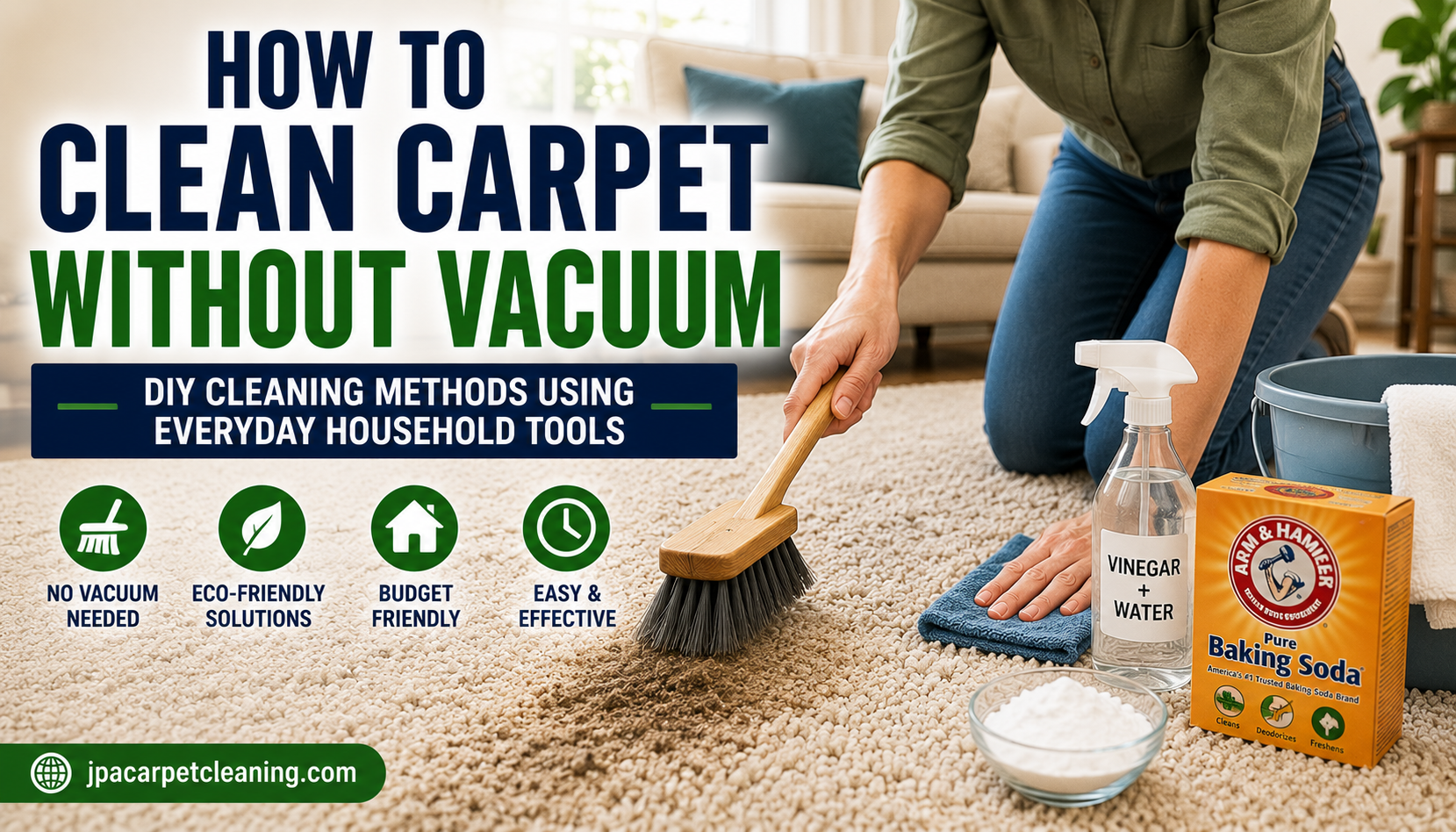
No vacuum on hand doesn’t mean a dirty carpet has to stay that way. Learning how to clean carpet without vacuum starts with tools already around most homes: a stiff broom, baking soda, and a scrub brush.
Sweeping lifts loose dirt, a vinegar and warm water mix handles stains, and microfiber cloths pull up what’s left. Baking soda finishes the job by absorbing odor rather than masking it.
This guide covers everyday upkeep, deeper cleaning, pet hair, stain removal, and when hand cleaning stops being enough.
Can You Clean Carpet Without a Vacuum?
Yes, for routine maintenance and small messes, hand cleaning gets the job done. It takes more time than a vacuum, since sweeping and scrubbing by hand cover less ground per pass.
Different methods suit different problems — a broom lifts loose dirt, baking soda handles odor, and a damp scrub targets embedded grime. Heavy soil or carpet that hasn’t been cleaned in years may still need a vacuum or professional service.
Tools You’ll Need
- Stiff broom
- Rubber broom or rubber brush
- Dustpan
- Microfiber cloths
- White towels
- Bucket
- Warm water
- Mild dish soap
- White vinegar
- Baking soda
- Soft scrub brush
- Spray bottle
- Rubber gloves
- Masking tape or lint roller (for pet hair)
- Fan (optional)
Test any cleaning solution on a hidden patch of carpet first, since reactions can vary by fiber and dye.
How to Clean Carpet Without Vacuum
The same order works whether the mess is fresh or a few days old.
| Task | Best Method |
|---|---|
| Loose dirt | Stiff broom and dustpan |
| Pet hair | Rubber broom, tape, or lint roller |
| Odor | Baking soda |
| Fresh stains | Vinegar and water, blotted |
| Deep embedded dirt | Damp scrub with dish soap solution |
1. Remove Loose Dirt and Hair
Sweep with a stiff broom using short, firm strokes, then collect debris with a dustpan. A rubber broom or rubber brush works better for pulling up pet hair, which resists a regular bristle broom.
Small rugs can go outside for a shake or beating to knock out dust settled deep in the fibers. Masking tape or a lint roller picks up whatever hair remains afterward. Clearing dry debris first matters — wetting dirt before it’s removed turns it into mud that grinds deeper into the carpet.
2. Deodorize and Refresh
Sprinkle baking soda evenly across the carpet and work it gently into the fibers with a soft broom. Leave it for at least 30 minutes, or overnight for stubborn odors.
Sweep or brush it away afterward if a vacuum isn’t available. Baking soda absorbs odor molecules rather than covering them up, which is why it outperforms air fresheners on lingering smells.
3. Tackle Spots and Stains
Mix white vinegar and warm water for general stains, then blot rather than scrub, working from the outside toward the center. Repeat if any residue remains.
Protein-based stains like blood or vomit should never be scrubbed, since agitation sets them further into the fibers. For tougher marks that don’t respond to vinegar, a commercial spot cleaner is a reasonable next step.
4. Deep Damp-Scrub
Mix warm water with a small amount of mild dish soap or carpet shampoo, dip a soft scrub brush into it, and work gently across small sections. Wipe away loosened dirt with a damp microfiber cloth, rinsing it often, and avoid soaking the carpet.
This method reaches embedded dirt reasonably well but won’t extract nearly as much moisture as a carpet extraction machine, which pulls dirty water back out instead of leaving it to air dry.
5. Dry the Carpet
Blot excess moisture with dry towels, open windows, and use fans to keep air moving. Avoid walking on damp carpet, and let it dry completely before moving furniture back.
Proper drying keeps mold and musty odors from settling in — carpet left damp too long, especially in a humid room, is far more likely to develop a lingering smell than one dried quickly with good airflow.
Best DIY Cleaning Solutions
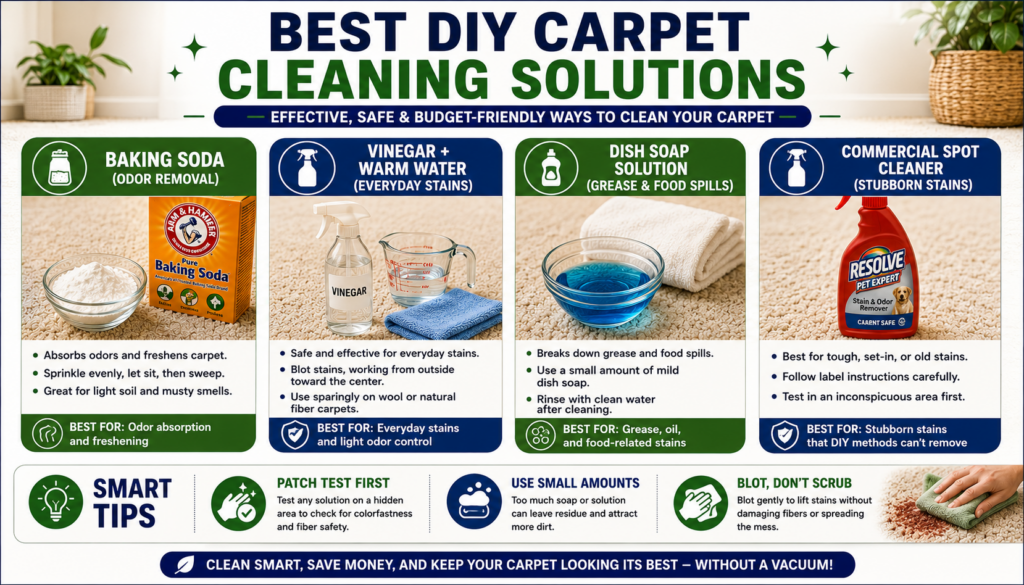
Vinegar and Warm Water
Best for everyday stains and light odor control. Less effective on set-in grease, and use sparingly on wool, since acidity can affect certain dyes.
Baking Soda
Best for odor absorption and freshening rather than lifting stains. Works well on light soil when brushed in and left to sit.
Dish Soap Solution
Best for grease and food spills. Use sparingly — too much soap leaves a residue that attracts more dirt than it removes.
Commercial Carpet Spot Cleaners
Best for stains that don’t respond to vinegar or dish soap, especially older or heavily set-in marks.
How to Remove Common Carpet Stains Without a Vacuum
Coffee
DIY: vinegar and water, blotted immediately. Commercial: an oxygen-based remover. Avoid rubbing, which spreads the color.
Pet Accidents
DIY: vinegar and water, then baking soda once dry. Commercial: an enzyme cleaner. Treat quickly before it reaches the padding.
Mud
Let it dry fully, brush away the residue, then treat any remaining mark with a vinegar solution. Don’t scrub while wet.
Wine
DIY: dish soap and water, then vinegar. Commercial: an oxygen-based remover. Blot, don’t press hard.
Grease
DIY: dish soap and warm water. Commercial: a degreasing spot cleaner. Avoid over-wetting.
Ink
DIY: rubbing alcohol on a cloth. Commercial: an ink-safe spot cleaner. Blot only — never rub.
Food Spills
DIY: dish soap and water. Commercial: an all-purpose spot cleaner. Remove solids before treating the residue.
Removing Pet Hair Without a Vacuum
| Tool | Best For |
|---|---|
| Rubber broom | General sweeping, works well on most pile heights |
| Rubber gloves (damp) | Pulling hair off in small areas |
| Lint roller | Quick touch-ups on light hair |
| Packing tape | Removing hair pressed into low-pile carpet |
| Carpet rake | Loosening hair from high-pile or shag carpet |
High-pile carpet holds hair deeper in the fibers, so a carpet rake or rubber broom works better than tape alone. Low-pile carpet releases hair more easily, so a lint roller or damp rubber glove is enough for routine upkeep.
Common Mistakes to Avoid
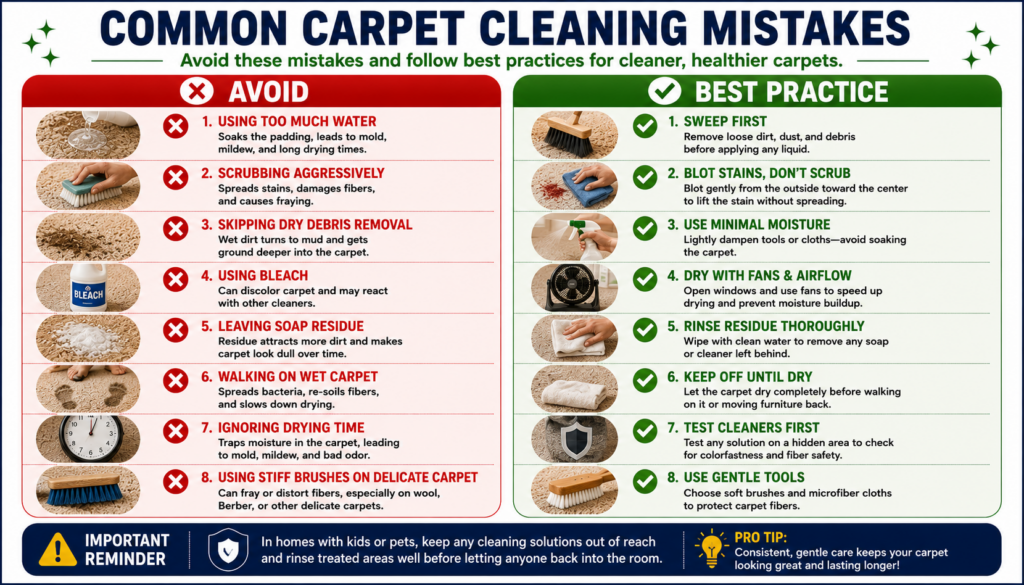
- Using too much water, which soaks the padding and slows drying
- Scrubbing aggressively, which spreads stains and frays fibers
- Skipping dry debris removal before wetting the carpet
- Using bleach, which discolors carpet and can react with other cleaners
- Leaving soap residue behind, which attracts more dirt over time
- Walking on damp carpet, which spreads bacteria and delays drying
- Ignoring drying time, which invites mold and lingering odor
- Using stiff brushes on wool, Berber, or other delicate carpet, which can fray or distort the fibers
In homes with kids or pets, keep any cleaning solution out of reach and rinse treated areas well before letting anyone back into the room.
When Hand Cleaning Isn’t Enough
Manual methods have limits. Heavy pet accidents, water damage, mold, large stained areas, and high-traffic discoloration usually need more suction than a broom and towels can provide.
Thick carpets with years of embedded dirt respond better to a rented carpet cleaner or a professional, since hand scrubbing can’t reach dirt worked down to the backing.
Tips to Keep Carpet Cleaner Between Deep Cleanings
- Remove shoes indoors.
- Clean spills immediately.
- Shake rugs regularly.
- Brush pet hair weekly.
- Spot clean stains early.
- Deep clean every few months.
Frequently Asked Questions
Can I clean carpet without a vacuum cleaner?
Yes, a stiff broom, baking soda, and a damp scrub handle most routine cleaning and light stains.
What’s the best way to remove pet hair?
A rubber broom works well on most carpet, while a carpet rake suits high-pile or shag styles better.
Can baking soda replace vacuuming?
It absorbs odor and freshens carpet, but still needs to be swept or brushed away if no vacuum is available.
Is vinegar safe for all carpets?
Generally yes when diluted, but use it sparingly on wool or other natural fiber carpet, where acidity can affect dyes.
How do I remove dirt trapped deep in carpet?
A damp scrub with dish soap and warm water reaches embedded dirt reasonably well, though a machine extracts more.
Can I deep clean carpet by hand?
Yes, with a scrub brush, mild solution, and thorough drying, though it takes more effort than machine extraction.
When should I rent a carpet cleaner?
Consider one for heavy staining, pet accidents that reached the padding, or carpet not deep cleaned in a long time.
Conclusion
Cleaning carpet without a vacuum comes down to working through it in order: remove loose dirt first, treat odors with baking soda, and spot clean stains carefully before a full hand scrub.
Dry the carpet completely once done, and keep up with regular sweeping and spot cleaning between deep cleans. That routine keeps buildup light enough that hand cleaning stays manageable.