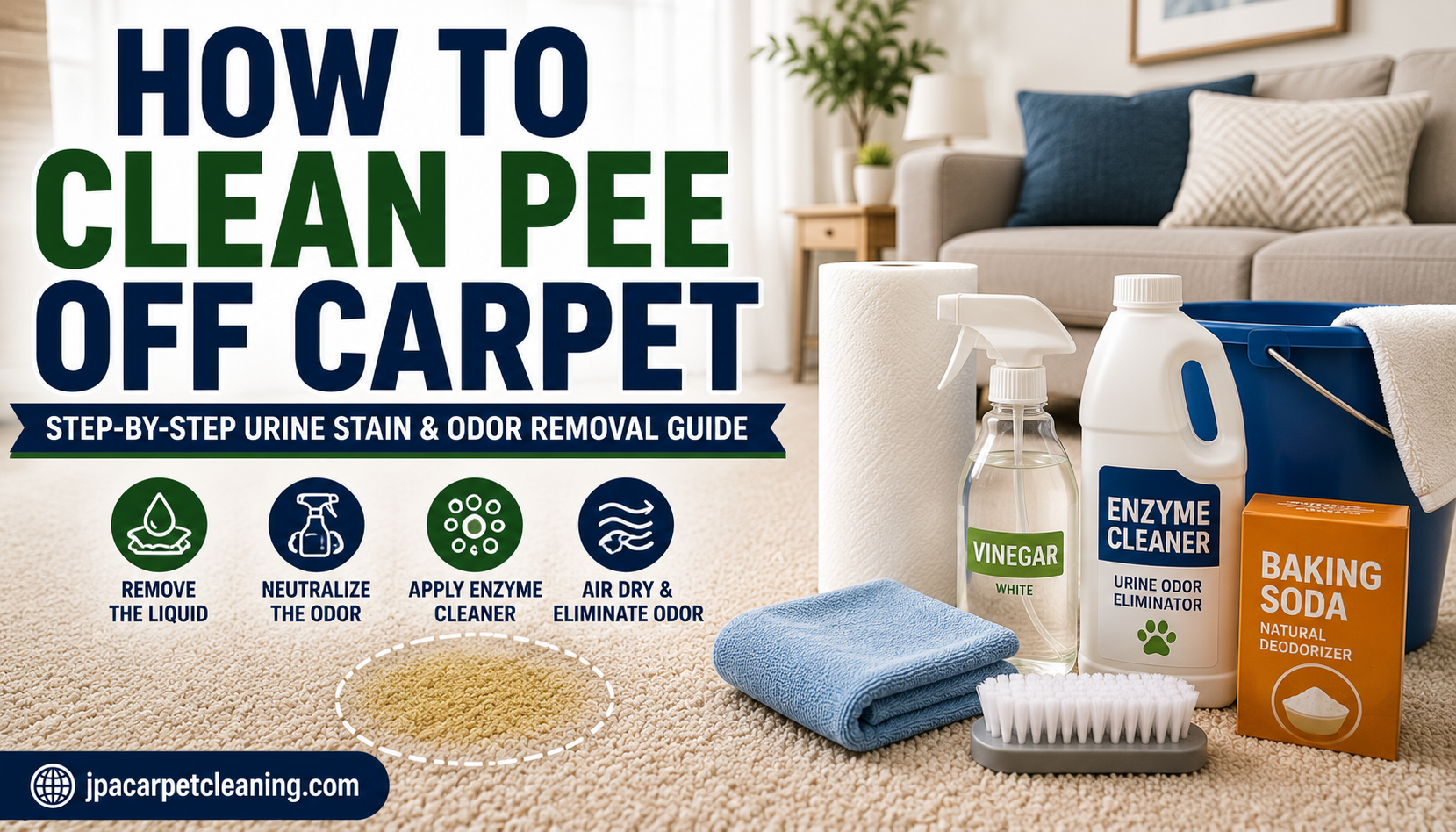
A fresh accident is far easier to handle than one that’s had time to set. Learning how to clean pee off carpet starts with paper towels and moves through vinegar, an enzyme cleaner, and baking soda.
Warm water helps loosen residue at nearly every stage, whether you’re blotting a fresh spot or working on a stain that soaked in days ago.
This guide covers fresh accidents, dried stains, pet versus human urine, carpet-specific care, and how to keep the odor from coming back for good.
Why Urine Should Be Cleaned Immediately
Urine soaks through carpet fibers within minutes and can reach the padding underneath before you’ve even grabbed a towel. Once it’s there, it’s much harder to remove completely.
Left untreated, urine crystals keep producing odor long after the spot looks dry, and the bacteria and ammonia in urine create a smell that gets stronger over time rather than fading. Cleaning promptly cuts down on both staining and the odor that tends to become permanent if it’s ignored.
Supplies You’ll Need
- Paper towels
- White microfiber cloths
- Rubber gloves
- Spray bottle
- White vinegar
- Warm water
- Baking soda
- Enzyme cleaner
- Wet/dry vacuum (optional)
- Soft brush
- Hydrogen peroxide (for stubborn stains)
- Bucket
Test any cleaning solution on an inconspicuous area of carpet first, since reactions can vary by fiber and dye.
How to Clean Pee Off Carpet
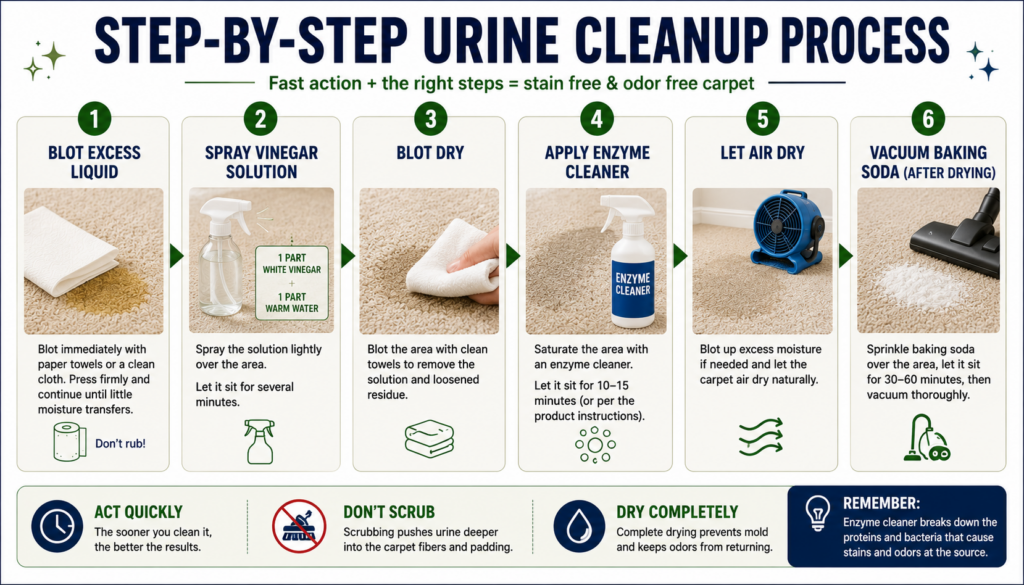
The same three-part process works for most fresh accidents, whether from a pet or a person.
Step-by-Step Cleaning Guide
Extract the Liquid. Blot fresh urine immediately with paper towels or a clean cloth, pressing firmly without rubbing, and continue until little moisture transfers to the towel. A wet/dry vacuum helps pull up larger accidents faster. Rubbing pushes urine deeper into the fibers and padding instead of lifting it out, which is why blotting works better.
Neutralize the Odor. Mix 1 part white vinegar with 1 part warm water and spray it lightly over the area. Let it sit for several minutes, then blot dry with clean towels. Vinegar’s acidity helps neutralize the alkaline compounds in dried urine residue, cutting down on odor before the enzyme treatment.
Apply an Enzyme Cleaner. Saturate the area with an enzyme cleaner and let it sit for 10 to 15 minutes, or according to the product’s instructions. Blot up the excess moisture and let the carpet air dry naturally. Enzyme cleaners break down the proteins and odor-causing bacteria in urine rather than covering the smell, which is why they outperform general-purpose cleaners on pet accidents.
Treating Old, Dried Urine Stains
Dried urine takes more effort than a fresh spot, since it’s usually worked its way into the padding by the time it’s noticed.
Subsurface Extraction. Old urine often reaches the carpet padding, so saturate the area with warm water and enzyme cleaner, then extract the moisture with a wet vacuum or carpet extractor. Repeat the process if odor remains after the carpet dries.
Hydrogen Peroxide Treatment. After testing for colorfastness, mix 3% hydrogen peroxide with warm water and a few drops of dish soap if appropriate. Apply lightly, let it sit, then blot. Reserve this step for stains that remain after odor treatment, and avoid overusing it on delicate or dark carpet.
Homemade vs Commercial Urine Cleaners
| Factor | DIY (vinegar, baking soda, dish soap) | Commercial (enzyme, pet urine remover) |
|---|---|---|
| Odor removal | Fair, may need repeats | Strong, breaks down the source |
| Stain removal | Good for fresh spots | Better on set-in or dried stains |
| Best use | Fresh, mild accidents | Pet urine, old stains, strong odor |
| Cost | Low | Moderate |
| Drying time | Similar for both | Similar for both |
Fresh Urine vs. Dried Urine Cleanup
| Fresh Urine | Dried Urine | |
|---|---|---|
| First step | Blot immediately | Rehydrate with warm water first |
| Padding risk | Lower if treated fast | Often already affected |
| Treatment | Vinegar, then enzyme cleaner | Enzyme cleaner, then hydrogen peroxide if needed |
| Number of treatments | Usually one | Often two or more |
Human Urine vs Pet Urine on Carpet
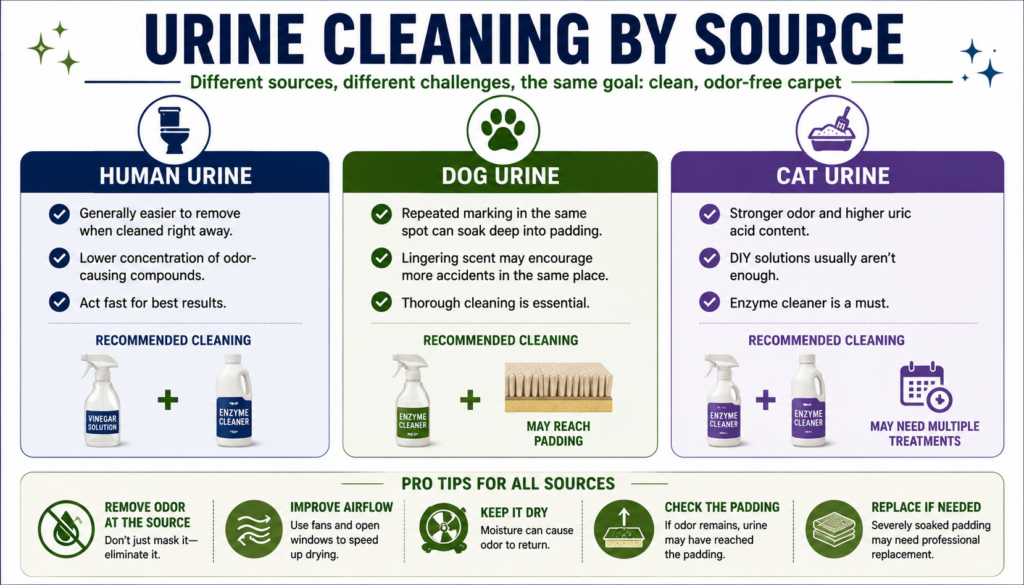
Human Urine
Generally easier to remove when cleaned right away, with a lower concentration of odor-causing compounds in most situations.
Dog Urine
Repeated marking in the same spot can soak deep into the padding, and the lingering scent tends to encourage more accidents in the same place.
Cat Urine
Carries a stronger odor and higher uric acid content than most other urine, which is why it usually needs an enzyme cleaner rather than a DIY mix.
Carpet-Specific Cleaning Guidance
Wool carpet is sensitive to over-wetting and strong chemicals, so use a diluted solution and skip hydrogen peroxide unless a small test patch confirms it’s safe. Nylon and polyester tolerate most treatments, including enzyme cleaners and vinegar, without special precautions. Berber’s tight loops resist deep staining but can snag with aggressive scrubbing. Area rugs, especially handmade or antique ones, often do better with professional treatment than a full at-home soak.
Common Mistakes to Avoid
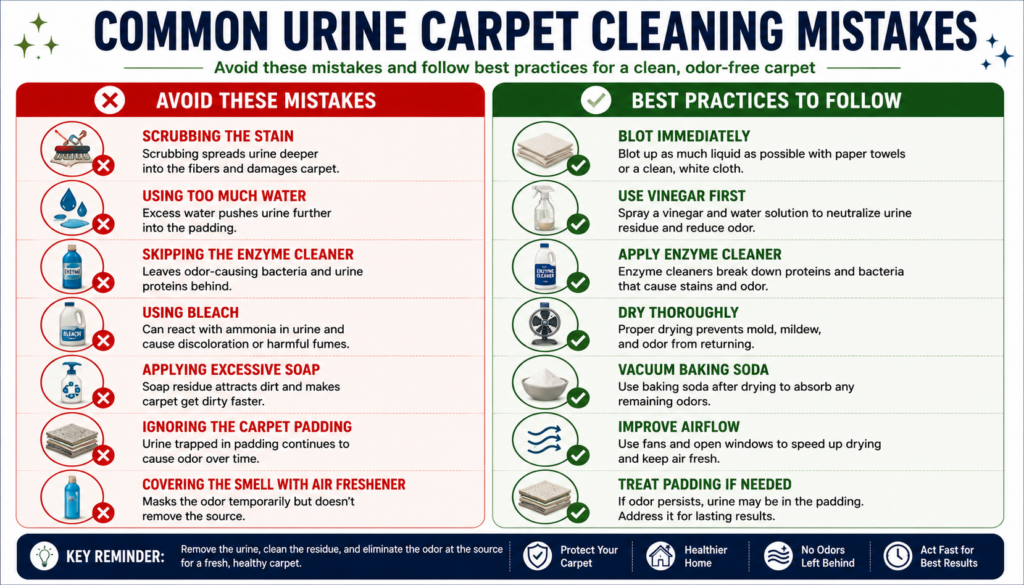
- Scrubbing the stain, which spreads urine deeper into the fibers
- Using too much water, which pushes urine further into the padding
- Skipping the enzyme cleaner, which leaves odor-causing bacteria behind
- Using bleach, which can react with ammonia in urine and discolor carpet
- Applying excessive soap, which leaves residue that attracts more dirt
- Ignoring the carpet padding, which keeps the odor source in place
- Covering the smell with air freshener instead of removing its source
In homes with kids or pets, keep all cleaning solutions out of reach and let the carpet dry fully before anyone is allowed back on it.
How to Prevent Urine Odors From Returning
Odor often comes back because residue is still trapped below the surface, not because the first cleaning failed completely. Dry the carpet completely, improve airflow with fans, and vacuum up any baking soda once it’s fully dry. Repeat the enzyme treatment if the smell resurfaces, and check the padding underneath if odor persists despite multiple attempts.
For pets that keep returning to the same spot, address the underlying cause through training or a veterinary checkup, since the lingering scent alone often triggers repeat accidents even after a thorough cleaning.
When Should You Replace the Carpet Padding?
- Odor persists despite repeated cleaning attempts
- The original accident was a large spill
- Multiple pet accidents have happened in the same spot
- Water damage is combined with urine contamination
- The subfloor beneath the padding may also need attention
Frequently Asked Questions
What’s the best cleaner for urine on carpet?
An enzyme cleaner is generally the most effective, since it breaks down the proteins and bacteria causing both the stain and the odor.
Can vinegar remove urine smell?
Vinegar helps neutralize fresh residue and reduce odor, but it works best alongside an enzyme cleaner rather than as a standalone fix.
Does baking soda eliminate urine odors?
Yes, baking soda absorbs lingering odor when left on the dry carpet for a while before being vacuumed up.
Can I use hydrogen peroxide on carpet?
Yes, in a diluted mix, but always test for colorfastness first, especially on darker or delicate carpet.
How do I remove old urine stains?
Rehydrate the area, extract with warm water and enzyme cleaner, and repeat the process if the stain or odor remains.
Why does the urine smell come back after cleaning?
Residue that reached the padding wasn’t fully removed the first time, and moisture or heat can reactivate the odor later.
When should I hire a professional carpet cleaner?
Consider one for large accidents, persistent odor after repeated treatment, or urine that has reached the padding or subfloor.
End Words!
Cleaning urine off carpet comes down to acting quickly: blot the liquid right away, neutralize residue with vinegar when appropriate, and apply an enzyme cleaner to break down what’s causing the smell.
Dry the carpet thoroughly afterward, and treat old or dried stains promptly with the same approach before the odor becomes permanent. Fresh accidents respond far better than ones left to sit, so speed matters more than any single product.