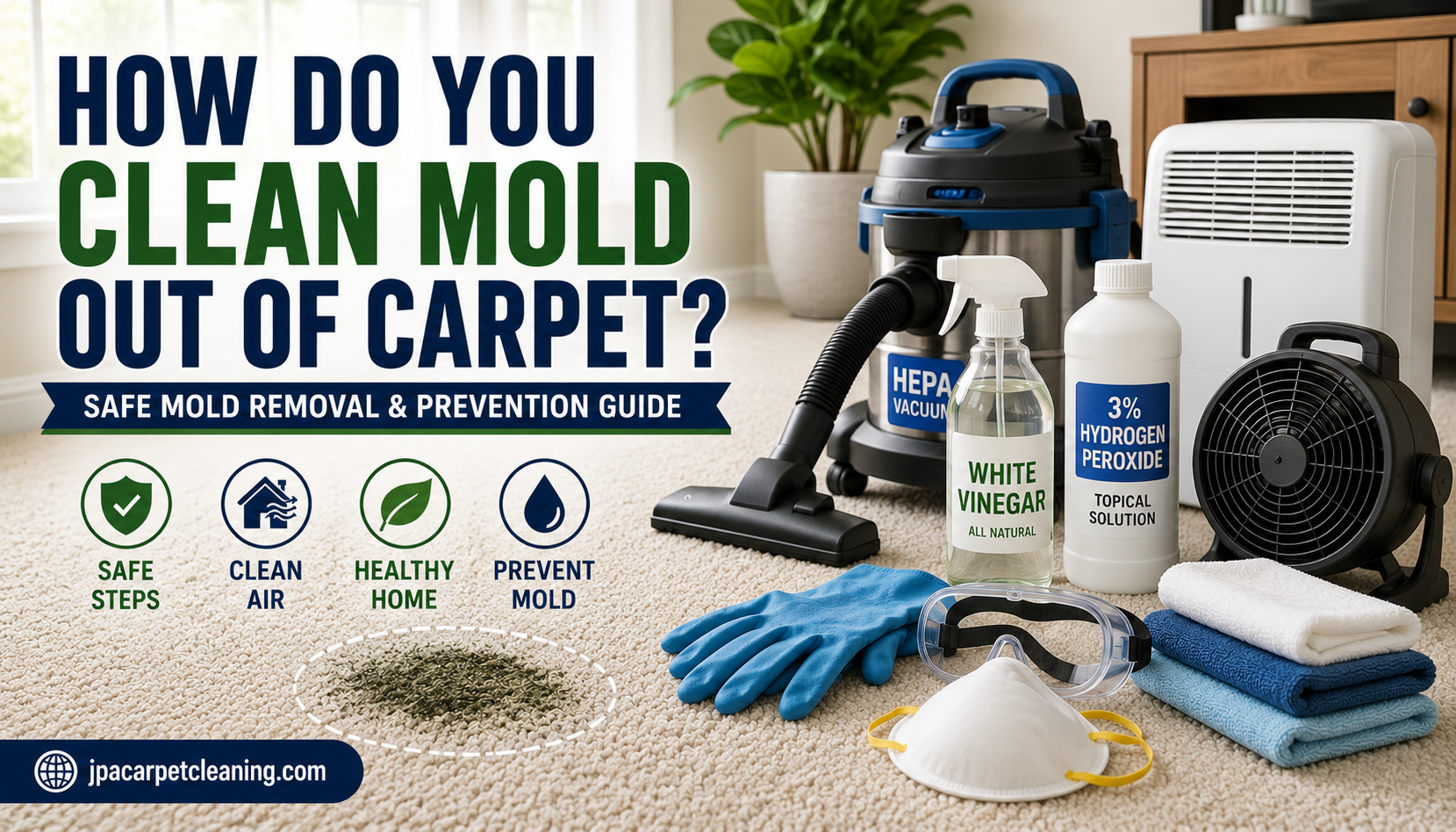
Mold in carpet spreads fast, and the wrong cleaning method can push spores deeper into the fibers instead of removing them. If you’re asking how do you clean mold out of carpet, the short answer starts with a HEPA vacuum and protective gloves.
From there, a targeted application of white vinegar or hydrogen peroxide, followed by fans running until the area is bone dry, does most of the work. Knowing whether a spot needs a DIY fix or a professional call matters just as much as the cleaning steps themselves.
This guide walks through safe removal, proper drying, and the point where cleaning stops being enough and replacement becomes the smarter move.
Is It Safe to Clean Mold Out of Carpet Yourself?
Small, isolated mold spots are usually manageable with basic supplies and a bit of patience. If you’re looking at a patch a few inches wide near a window or plant pot, cleaning it yourself is often reasonable.
Larger infestations are a different story. Mold spreads through carpet fibers and padding in ways you can’t always see from above, and by the time it’s visible on the surface, it may have already worked its way underneath. Water damage should always be resolved first, since damp padding will keep feeding new growth no matter how well you clean the top layer.
People with allergies, asthma, or weakened immune systems face higher risks from disturbed mold spores. If anyone in the home falls into that category, weigh that before deciding to tackle the job solo.
Supplies You’ll Need
Gather everything before you start so you’re not tracking mold spores through the house mid-cleanup:
- N95 or P2 respirator
- Rubber gloves
- Safety goggles
- HEPA vacuum
- White vinegar
- 3% hydrogen peroxide
- Spray bottle
- Soft scrub brush
- White microfiber cloths
- Paper towels
- Wet/dry vacuum (optional)
- Box fans or air movers
- Dehumidifier
- Trash bags
Test any cleaning solution on a hidden section of carpet first, tucked under furniture or near a closet edge, to check for discoloration before treating the visible area.
How Do You Clean Mold Out of Carpet?
Treating and Removing Carpet Mold
Safety and Ventilation
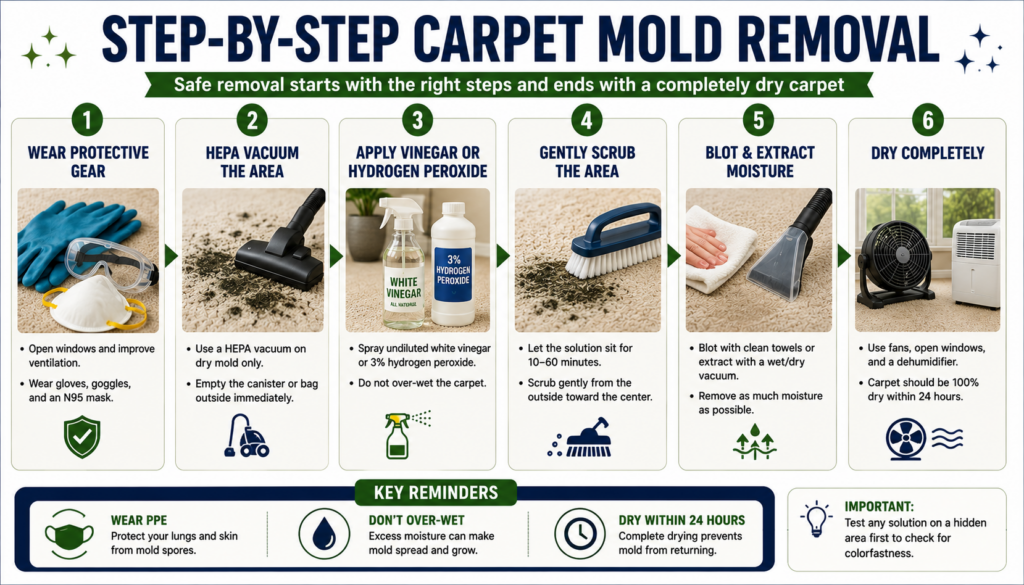
Open windows before you begin and set up fans to keep air moving through the room. Put on gloves, eye protection, and an N95 mask, and keep children and pets out of the space until you’re finished. Disturbing mold without protection releases spores into the air, where they can settle elsewhere in the house or get inhaled.
Dry Vacuuming
Use a HEPA-filtered vacuum only. A standard household vacuum will just blow mold spores back into the room through its exhaust. Run the HEPA vacuum gently over the dry mold, then take the canister or bag outside to empty it immediately rather than dumping it indoors.
Apply the Cleaning Solution
You have two solid options here. Undiluted white vinegar can be applied directly and left to soak into the fibers, which helps cut down both mold growth and odor. Alternatively, 3% hydrogen peroxide works well when applied directly and given time to sit before cleaning, though you should always test it first for colorfastness on darker carpets. Whichever you choose, avoid soaking the carpet, since extra moisture can actually make the mold problem worse.
Dwell Time and Agitation
Let the solution sit for 10 to 60 minutes depending on the product and how established the mold is. Scrub gently with a soft brush, working from the outer edge of the stain toward the center so you’re not spreading it further out.
Blot and Extract
Blot the area with clean towels, or use a wet/dry vacuum if you have one, to pull out as much moisture as possible. Extracting the liquid matters just as much as removing the visible mold — leftover moisture is exactly what mold needs to come back.
Dry the Area Completely
Point fans at the treated section, open windows if the weather cooperates, and run a dehumidifier in the room. Aim to have the carpet fully dry within 24 hours. Any moisture left sitting in the fibers or padding gives mold another chance to take hold.
When to Call a Professional
When to Call a Professional
Some situations go beyond what a DIY cleaning session can handle. Call in a mold remediation professional if:
- Mold covers more than roughly 10 square feet
- Mold has reached the carpet padding
- The area was affected by flooding
- Sewage contamination is involved
- A musty odor lingers after cleaning
- Mold keeps returning in the same spot
- Anyone in the household has health concerns tied to mold exposure
In many of these cases, replacing the carpet is safer and cheaper in the long run than repeated cleaning attempts that never fully solve the problem.
White Vinegar vs Hydrogen Peroxide for Carpet Mold
White Vinegar
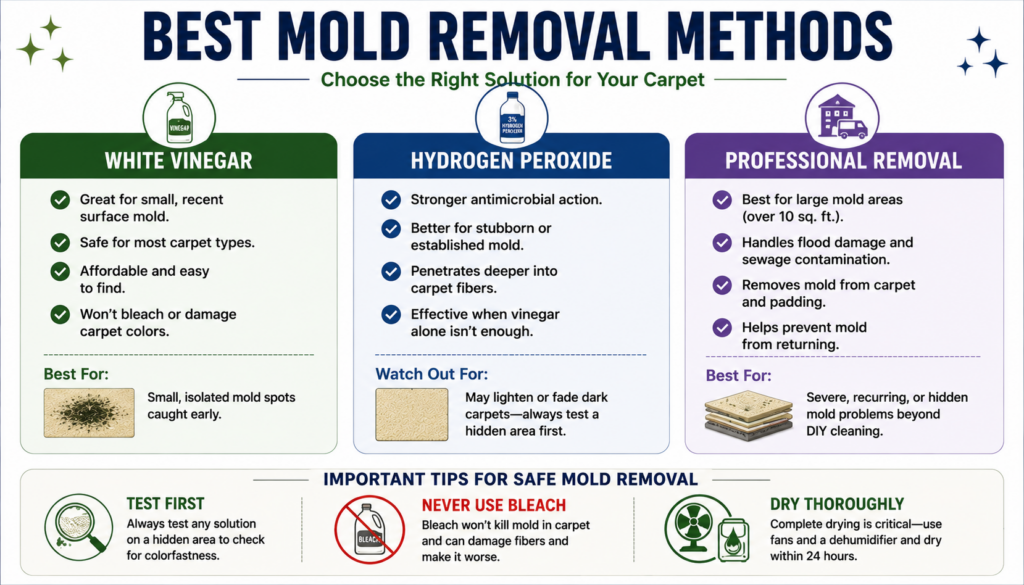
White vinegar is affordable, easy to find, and mild enough for most carpet types. It won’t bleach colors the way stronger products can, which makes it a safer starting point for patterned or darker carpet.
Its limitation is that it works better on surface mold than on anything that has spread deep into the padding. It’s best suited for small, recent spots you catch early.
Hydrogen Peroxide
Hydrogen peroxide has stronger antimicrobial action and handles tougher, more established mold spots. The tradeoff is colorfastness — it can lighten certain dyes, so testing a hidden patch beforehand isn’t optional. It’s the better choice when vinegar alone hasn’t cleared a stubborn spot.
| Method | Best For | Watch Out For |
|---|---|---|
| White Vinegar | Small, recent surface mold | Less effective on deep-set stains |
| Hydrogen Peroxide | Tougher, established spots | Can lighten some carpet dyes |
| Professional Removal | Large, deep, or recurring mold | Higher cost, but thorough |
How to Prevent Mold From Returning
Preventing a repeat problem comes down to controlling moisture:
- Fix leaks as soon as you spot them
- Keep indoor humidity below 50%
- Dry spills quickly instead of letting them sit
- Improve airflow and ventilation in damp rooms
- Run dehumidifiers in basements or other humid areas
- Clean carpets on a regular schedule
- Inspect carpet after any flooding or plumbing leak
| Indoor Humidity | Mold Risk |
|---|---|
| Below 40% | Low |
| 40–50% | Manageable, monitor closely |
| Above 50% | High, mold growth becomes likely |
Common Mistakes to Avoid
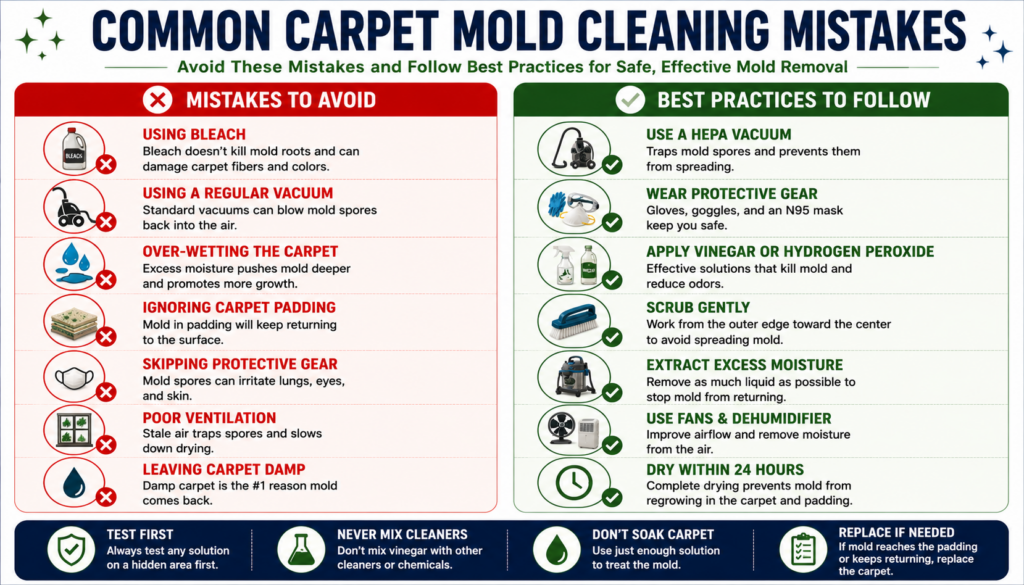
- Using bleach on carpet — it can damage fibers and dyes without fully reaching mold below the surface.
- Using a regular vacuum instead of a HEPA vacuum — it scatters spores rather than containing them.
- Over-wetting the carpet — extra moisture feeds the very problem you’re trying to fix.
- Ignoring the padding — surface cleaning does nothing for contamination underneath.
- Skipping protective equipment — exposure risk isn’t worth the shortcut.
- Closing windows while cleaning — poor airflow lets spores concentrate indoors.
- Leaving the carpet damp — this is the single biggest reason mold returns.
Can Moldy Carpet Be Saved?
Surface mold on a healthy, dry carpet usually responds well to cleaning. Deep contamination is a tougher call, especially once mold has worked into the padding or backing. Flood-damaged carpet is often not worth saving, since the padding tends to hold onto both moisture and contamination long after the surface looks fine.
Older carpet nearing the end of its lifespan is rarely worth the labor of intensive cleaning. Run a quick cost comparison: repeated professional cleanings can approach the price of replacement, and replacement guarantees you’re not dealing with hidden contamination.
Padding and subfloor inspection checklist:
- Peel back a corner of carpet near the affected area
- Check for a musty smell coming from the padding
- Look for discoloration or dampness on the padding itself
- Press on the subfloor to check for softness or warping
- Check baseboards nearby for staining
Carpet-Specific Notes
- Wool reacts poorly to hydrogen peroxide in some cases; test carefully and lean toward vinegar first.
- Nylon handles both vinegar and hydrogen peroxide well.
- Polyester is generally durable against both solutions but dries slower, so extra fan time helps.
- Berber loops can trap moisture at the base, so extraction and drying deserve extra attention.
- Area rugs can often be taken outside for treatment and full sun drying, which speeds up the process significantly.
A Note for Households With Kids, Pets, or Allergy Sufferers
Keep anyone in a higher-risk group out of the room during treatment and until it’s fully dry. Store cleaning solutions well out of reach, and consider running an air purifier in adjacent rooms while you work. If flood or sewage damage caused the mold, photograph the affected area and any damaged padding before cleanup starts — that documentation matters if you end up filing an insurance claim.
Frequently Asked Questions
Can vinegar kill mold in carpet?
Yes, undiluted white vinegar is effective against many common household mold types, particularly on surface-level growth.
Is hydrogen peroxide safe for carpet?
Generally yes, but it can lighten certain dyes, so test an inconspicuous spot before treating the visible area.
Can I vacuum mold with a regular vacuum?
No. A standard vacuum lacks the filtration to contain spores and can spread them through the room instead.
How do I know if mold reached the carpet padding?
A persistent musty smell, visible dampness when you peel back the carpet, or discoloration on the padding are all signs it has spread beneath the surface.
Can mold come back after cleaning?
Yes, if moisture remains in the carpet or padding. Thorough drying is what prevents a repeat problem, not just the initial cleaning.
Should I replace moldy carpet?
Replacement makes sense when mold has reached the padding, covers a large area, or keeps returning despite repeated cleaning.
How long does carpet take to dry after mold treatment?
With fans, ventilation, and a dehumidifier running, most carpet dries within 24 hours.
Conclusion
Cleaning mold out of carpet comes down to a handful of steps done in the right order: protect yourself first, vacuum with a HEPA filter, treat the spot with vinegar or hydrogen peroxide, and dry the area completely afterward. Skipping the drying step is the most common reason mold shows back up days or weeks later.
For small, recent spots, this process works well on your own. Once mold reaches the padding, covers a large area, or keeps returning, cleaning stops being the safer option and replacement or professional remediation takes over.