Keeping carpet looking its best takes more than an occasional vacuum pass. Learning how to clean house carpet properly means combining routine vacuuming with the right cleaning solution for the job at hand.
An enzyme cleaner handles pet stains, dish soap cuts through grease, and warm water mixed with carpet shampoo washes away everything vacuuming leaves behind.
This guide covers the full cleaning process, stain removal, cleaning without a machine, and how to keep carpet fresher between deep cleans.
How Often Should You Clean House Carpet?
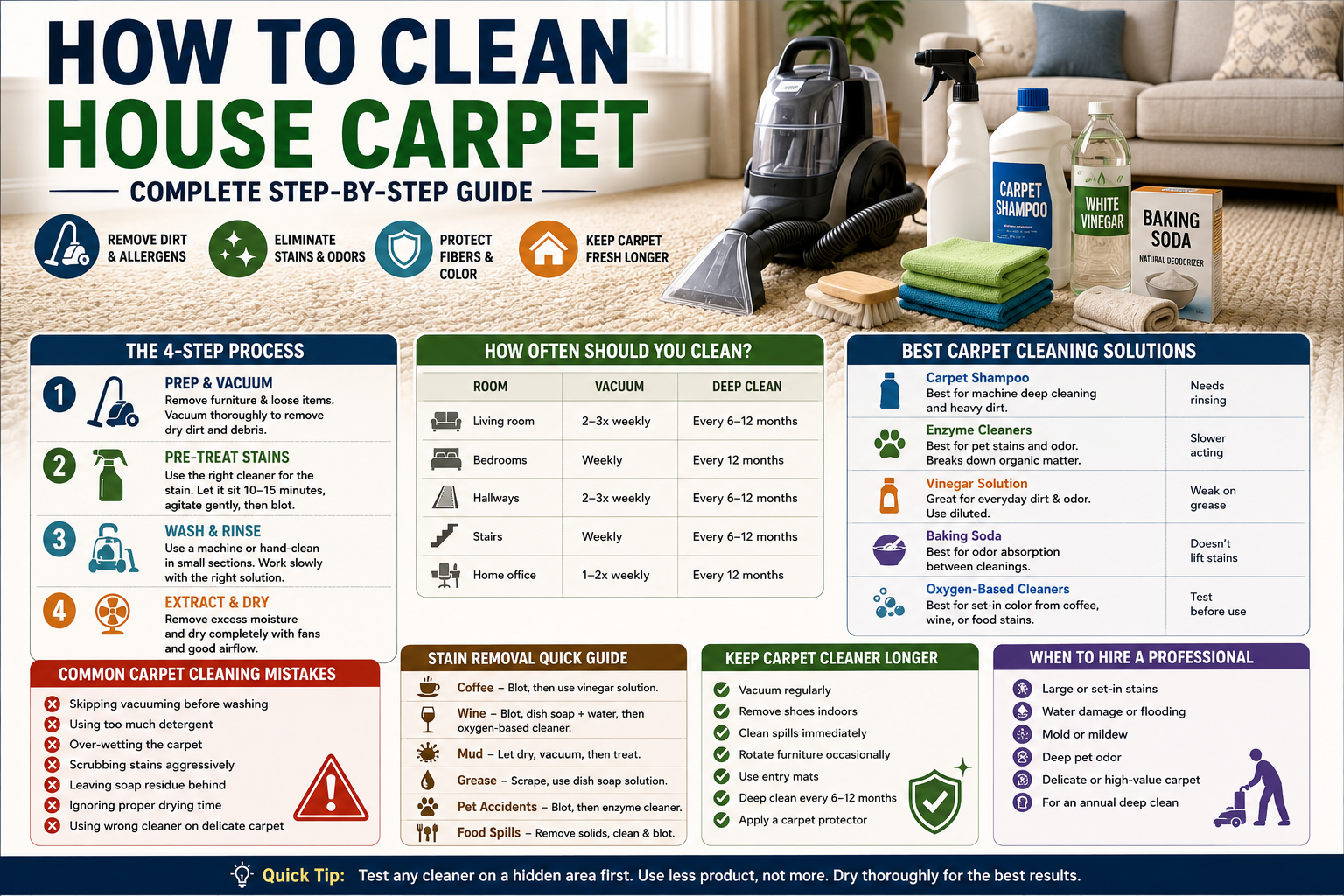
Vacuum high-traffic areas 2 to 3 times per week, and low-traffic areas like guest bedrooms once a week. Spot clean spills the moment they happen rather than waiting.
Deep clean the whole carpet every 6 to 12 months, and increase that frequency for homes with pets, children, or allergy sufferers, where dirt and allergens build up faster.
| Room | Vacuum | Deep Clean |
|---|---|---|
| Living room | 2–3x weekly | Every 6–12 months |
| Bedrooms | Weekly | Every 12 months |
| Hallways | 2–3x weekly | Every 6–12 months |
| Stairs | Weekly | Every 6–12 months |
| Home office | 1–2x weekly | Every 12 months |
Supplies You’ll Need
- Vacuum cleaner
- Carpet cleaning machine (optional)
- Carpet shampoo
- Enzyme cleaner
- Mild dish soap
- White vinegar
- Warm water
- Spray bottle
- Bucket
- Soft-bristle brush
- White microfiber cloths
- Paper towels
- Baking soda
- Wet/dry vacuum (optional)
- Fans
Test any cleaning solution on a hidden area before treating a visible section of carpet.
How to Clean House Carpet
The same four-stage sequence applies whether you’re using a machine or cleaning by hand.
The Step-by-Step Method
1. Prep and Vacuum. Remove furniture whenever possible, and pick up toys, rugs, and loose objects. Vacuum thoroughly before washing, covering edges, corners, and under furniture. Removing dry debris first matters — wetting dirt before it’s vacuumed turns it into mud that grinds deeper into the fibers.
2. Pre-Treat Stains. Use a commercial stain remover or enzyme cleaner, matching the product to the stain type where possible. For a DIY option, mix 1 tablespoon dish soap, 1 tablespoon white vinegar, and 2 cups warm water. Spray lightly, let it sit 10 to 15 minutes, agitate gently with a soft brush, then blot instead of scrubbing.
3. Wash and Rinse. With a carpet cleaning machine, fill it with warm water and add carpet shampoo per the manufacturer’s directions. Work slowly in overlapping passes, rinse if recommended, and extract as much dirty water as possible.
No machine? Mix a mild solution of warm water and dish soap, work it in with a soft brush in small sections, and blot up moisture with clean towels. It takes longer and won’t extract as much dirt, but works for smaller areas.
4. Extract and Dry. Finish with dry, suction-only passes to remove excess moisture, then open windows and run fans. Avoid walking on damp carpet, and replace furniture only once it’s fully dry. Proper drying keeps mildew and musty odors from developing.
Drying time varies: low-pile carpet in a dry room often dries in 4 to 6 hours, while thick carpet in high humidity can take a full day.
Cleaning House Carpet Without a Machine
Spot cleaning, hand scrubbing, a baking soda treatment, and a vinegar solution handle most routine cleaning without a machine. Sprinkle baking soda for odor, spray vinegar and water for general dirt, scrub gently with a soft brush, then blot dry.
Hand cleaning takes more effort and doesn’t extract as much moisture or dirt as hot water extraction, so it suits small areas and light soiling better than a full deep clean.
| Method | Best For | Limitations |
|---|---|---|
| Machine cleaning | Whole-room deep cleans | Requires equipment |
| Hand cleaning | Small areas, light dirt | Less extraction, more effort |
| Professional cleaning | Heavy soiling, delicate carpet | Highest cost |
How to Remove Common Carpet Stains
Coffee
Blot immediately, then treat with a vinegar solution or oxygen-based cleaner. Avoid rubbing, which spreads the stain.
Wine
Blot without pressing hard, treat with dish soap and water, then an oxygen-based cleaner if color remains.
Mud
Let it dry fully, vacuum the residue, then treat any leftover mark with a vinegar solution. Don’t scrub while wet.
Grease
Scrape off excess, then use a degreasing dish soap solution. Avoid soaking the area.
Pet Accidents
Blot up liquid immediately, then treat with an enzyme cleaner, which breaks down the proteins causing odor.
Food Spills
Remove solids, then treat with dish soap and warm water, or a commercial spot cleaner for stubborn color.
Best Carpet Cleaning Solutions
Carpet Shampoo
Best for machine-based whole-room cleaning and heavy dirt, though it needs proper rinsing to avoid residue.
Enzyme Cleaners
Best for pet stains and organic odor, since enzymes break down what’s causing the smell.
White Vinegar Solution
Best for everyday dirt and light odor. Limited on set-in grease and should be diluted for wool.
Baking Soda
Best for odor absorption rather than stain removal. Pair with another solution for visible discoloration.
Oxygen-Based Cleaners
Best for set-in color from coffee, wine, or food, especially on light carpet, after a patch test.
| Solution | Best Use | Limitation |
|---|---|---|
| Carpet shampoo | Whole-room deep clean | Needs rinsing |
| Enzyme cleaner | Pet stains, odor | Slower acting |
| Vinegar solution | Everyday dirt | Weak on grease |
| Baking soda | Odor absorption | Doesn’t lift stains |
| Oxygen-based cleaner | Set-in color | Test before use |
Carpet Type Considerations
Wool needs gentler solutions and less moisture than synthetic carpet, since it’s sensitive to over-wetting. Nylon and polyester tolerate most machine and DIY methods well. Berber’s tight loops can snag with aggressive scrubbing, so keep motions gentle. Area rugs, especially handmade ones, often do better with spot cleaning than a full machine pass.
Common Carpet Cleaning Mistakes
- Skipping vacuuming, which leaves dry dirt to turn into mud
- Using too much detergent, which leaves sticky residue
- Over-wetting the carpet, which slows drying and risks mildew
- Scrubbing stains aggressively, which spreads them and frays fibers
- Leaving soap residue behind, which attracts more dirt
- Walking on wet carpet, which spreads bacteria and delays drying
- Ignoring drying time, which invites mold and odor
- Using the wrong cleaner on delicate carpet, which can damage fibers or dyes
In homes with kids or pets, keep cleaning solutions sealed and out of reach until the carpet is completely dry.
Troubleshooting Common Issues
- Sticky residue: usually too much detergent — rinse with a water-only pass.
- Recurring stains: residue left in the padding is wicking back up — retreat with more suction.
- Slow drying: poor airflow or over-wetting — add fans and confirm excess moisture was extracted.
- Lingering odor: repeat baking soda or enzyme treatment and check that the carpet dried fully.
How to Keep House Carpet Cleaner Longer
- Vacuum regularly.
- Remove shoes indoors.
- Clean spills immediately.
- Rotate furniture occasionally.
- Use entry mats.
- Schedule deep cleaning every 6–12 months.
- Apply a carpet protector after cleaning if appropriate.
When Should You Hire a Professional Carpet Cleaner?
Consider a professional for large stains, water damage, mold, or pet odor that’s reached the padding. Delicate carpet and high-value rugs also benefit from professional-grade equipment, and even well-maintained carpet does well with an annual professional visit.
Frequently Asked Questions
How often should house carpet be cleaned?
Vacuum high-traffic areas 2 to 3 times a week, and deep clean every 6 to 12 months.
Can I clean carpet without a machine?
Yes, hand scrubbing with a mild solution, baking soda for odor, and thorough drying work well for smaller areas.
What’s the best homemade carpet cleaner?
A mix of dish soap, white vinegar, and warm water handles most everyday stains and light dirt.
Can I use dish soap on carpet?
Yes, in small amounts — too much leaves a residue that attracts more dirt.
How long does carpet take to dry?
Typically 4 to 12 hours depending on humidity, thickness, and airflow.
Is vinegar safe for carpet?
Generally yes when diluted, though use it sparingly on wool or other natural fiber carpet.
When should I hire a professional carpet cleaner?
Consider one for large stains, water damage, mold, deep pet odor, or delicate carpet.
Conclusion
Cleaning house carpet well comes down to sequence: vacuum before washing, treat stains first, then wash slowly using a cleaner matched to the job.
Remove as much excess moisture as possible and let the carpet dry completely before walking on it again. Following a regular cleaning schedule between deep cleans is what keeps carpet looking its best year-round.