
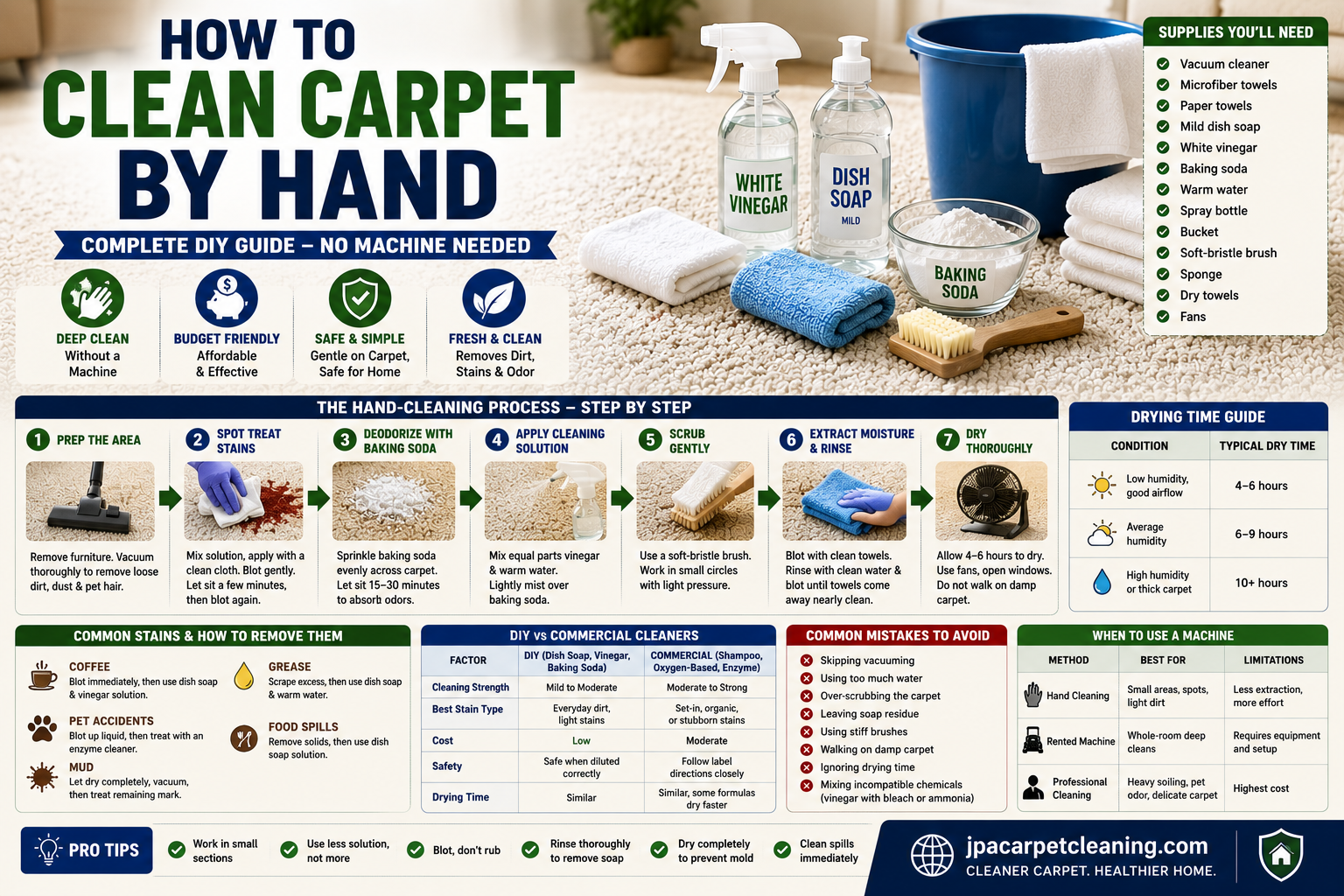
No machine doesn’t mean no deep clean. Learning how to clean carpet by hand starts with thorough vacuuming, then moves through dish soap, white vinegar, and baking soda in a specific order.
Microfiber towels do the heavy lifting at the end, pulling out the moisture that determines whether the carpet dries clean or ends up smelling musty.
This guide covers the full manual process, stain-specific treatment, carpet-type precautions, and when hand cleaning stops being enough on its own.
Why Clean Carpet by Hand?
Hand cleaning is a solid option when a carpet cleaning machine isn’t available, or the job is small enough that renting one doesn’t make sense. It works especially well for small rooms, area rugs, and spot cleaning rather than a full whole-house deep clean.
It’s also more affordable than renting equipment, and working by hand gives more direct control over how much solution touches a stain. The tradeoff is moisture control — without a machine to extract water, careful blotting and drying time matter more to avoid mold or lingering odor.
Supplies You’ll Need
- Vacuum cleaner
- White microfiber towels
- White paper towels
- Mild dish soap
- White vinegar
- Baking soda
- Warm water
- Spray bottle
- Bucket
- Soft-bristle brush
- Sponge
- Dry towels
- Fans
Spot-test every cleaning solution on a hidden area first, and avoid over-wetting the carpet at any stage of the process.
How to Clean Carpet by Hand
The Hand-Cleaning Process
Cleaning carpet by hand takes more time and effort than running a machine, but it can produce genuinely good results when moisture is controlled carefully at every step.
1. Prep the Area
Remove furniture and loose objects, then vacuum thoroughly, making several slow passes and focusing on high-traffic areas. Remove as much loose dirt and pet hair as possible before moving on.
Vacuuming first matters because wetting dirt before it’s removed turns it into mud that works deeper into the fibers instead of lifting out cleanly later.
2. Spot Treat Stains
Mix 1 tablespoon liquid dish soap, 1 tablespoon white vinegar, and 2 cups warm water. Apply with a clean microfiber cloth, working from the outside inward, and blot instead of scrubbing.
Let the solution sit a few minutes to loosen the stain before blotting it away. For stubborn spots, a stain-specific commercial cleaner can work alongside this base solution.
3. Deodorize with Baking Soda
Sprinkle baking soda evenly across the carpet, covering the full area rather than just visible stains, and let it sit 15 to 30 minutes.
Baking soda absorbs odor molecules trapped in the fibers while helping loosen surface dirt, making the next step more effective.
4. Apply Cleaning Solution
Mix equal parts white vinegar and warm water in a spray bottle, then lightly mist it over the baking soda. Don’t soak the carpet — a light, even spray is enough.
You’ll notice a mild fizzing reaction where vinegar meets baking soda; that’s normal and helps lift dirt from the fibers. Work in small sections rather than spraying the whole room at once.
5. Scrub Gently
Use a soft-bristle brush and work the solution in with small circular motions. Avoid stiff brushes, and don’t press harder than necessary.
Excessive force frays and distorts carpet fibers, which can leave permanent texture damage even after the carpet is otherwise clean.
6. Extract Moisture and Rinse
Blot repeatedly with clean microfiber towels, replacing them as they saturate. Rinse the area using clean warm water, then continue blotting until the towels come away nearly clean.
Removing as much moisture as possible is the most important step in the entire process, since leftover water is what leads to mold, mildew, and lingering odor once machine extraction isn’t available to pull it out.
7. Dry Thoroughly
Allow 4 to 6 hours to dry, longer in humid conditions. Open windows, run fans, and avoid walking on the carpet while it’s still damp. Replace furniture only once the area is completely dry.
| Condition | Typical Dry Time |
|---|---|
| Low humidity, good airflow | 4–6 hours |
| Average humidity | 6–9 hours |
| High humidity or thick carpet | 10+ hours |
Cleaning Different Carpet Types by Hand
Nylon Carpet
Holds up well to the standard process above without special precautions, making it one of the easiest carpet types to hand clean.
Polyester Carpet
Similar to nylon but slightly less resilient to crushing, so avoid excessive scrubbing pressure in one spot.
Wool Carpet
Use less moisture and a gentler solution than synthetic carpet, since wool absorbs water readily and is sensitive to over-wetting.
Berber Carpet
Tight loops can snag with aggressive scrubbing, so keep circular motions light and avoid stiff brushes entirely.
Area Rugs
Check the care label first — delicate or antique rugs often do better lifted and treated outdoors, or left to a professional, than cleaned in place.
Homemade vs Commercial Carpet Cleaners
| Factor | DIY (dish soap, vinegar, baking soda) | Commercial (shampoo, oxygen-based, enzyme) |
|---|---|---|
| Cleaning strength | Mild to moderate | Moderate to strong |
| Best stain type | Everyday dirt, light stains | Set-in, organic, or stubborn stains |
| Cost | Low | Moderate |
| Safety | Safe when diluted correctly | Follow label directions closely |
| Drying time | Similar | Similar, some formulas dry faster |
Common Stains and How to Remove Them
Coffee
Blot immediately, then use the dish soap and vinegar solution. Avoid rubbing, which spreads the color.
Pet Accidents
Blot up liquid right away, then treat with an enzyme cleaner, which breaks down odor-causing proteins.
Mud
Let it dry fully, vacuum the loose residue, then treat any remaining mark with the vinegar solution.
Grease
Scrape off excess first, then use dish soap and warm water. Avoid soaking the area.
Food Spills
Remove solids, then treat with the dish soap solution or a commercial spot cleaner for stubborn color.
Common Mistakes to Avoid
- Skipping vacuuming, which lets dry dirt turn into mud
- Using too much water, which soaks the padding and slows drying
- Over-scrubbing, which frays and distorts carpet fibers
- Leaving soap residue, which attracts more dirt over time
- Using stiff brushes, which can damage delicate fibers
- Walking on damp carpet, which spreads bacteria and delays drying
- Ignoring drying time, which invites mold and lingering odor
- Mixing incompatible cleaning chemicals, such as vinegar with bleach or ammonia, which can release harmful fumes
In homes with kids or pets, keep all cleaning solutions sealed and out of reach until the carpet is completely dry.
When Should You Rent a Carpet Cleaner Instead?
Consider a rented or professional machine for whole-house deep cleaning, severe pet odors, water damage, heavy staining, or especially thick carpet that’s hard to fully rinse by hand. An annual deep clean is also a reasonable time to bring in a machine even if you handle spot cleaning by hand the rest of the year.
| Method | Best For | Limitations |
|---|---|---|
| Hand cleaning | Small areas, spot treatment, light dirt | Less extraction, more effort |
| Rented machine | Whole-room deep cleans | Requires equipment and setup |
| Professional cleaning | Heavy soiling, delicate carpet | Highest cost |
Troubleshooting Common Issues
- Sticky residue: usually too much soap — rinse again with a water-only pass.
- Recurring stains: residue in the padding is wicking back up — retreat with more blotting.
- Lingering odors: repeat the baking soda treatment and confirm the carpet dried fully.
- Slow drying: add fans, open windows, and blot more thoroughly before letting it air dry.
Frequently Asked Questions
Can you deep clean carpet by hand?
Yes, with thorough vacuuming, the right solutions, and careful moisture control, hand cleaning can get carpet genuinely clean.
What’s the best homemade carpet cleaner?
A mix of dish soap, white vinegar, and warm water handles most everyday stains and light dirt effectively.
Is baking soda safe for carpet?
Yes, it’s safe for nearly all carpet types and works well for odor absorption when vacuumed up afterward.
Can I clean carpet without vinegar?
Yes, a dish soap and warm water solution alone works for many stains, though vinegar adds extra odor control.
How long does hand-cleaned carpet take to dry?
Typically 4 to 6 hours, though thicker carpet or high humidity can extend that well beyond that.
How often should I clean carpet by hand?
Spot clean stains immediately, and hand clean high-traffic areas every few months between deeper cleanings.
When should I use a carpet cleaning machine?
Consider one for whole-house deep cleans, heavy staining, pet odor, or carpet that hasn’t been cleaned in a long time.
Lets Clean Your Carpet Today!
Cleaning carpet by hand comes down to working in order: vacuum first, treat stains before cleaning the whole area, and use small amounts of solution rather than soaking the carpet.
Remove as much moisture as possible with thorough blotting, and let the carpet dry completely before walking on it again. That careful drying step is what prevents mold and keeps odors from coming back.