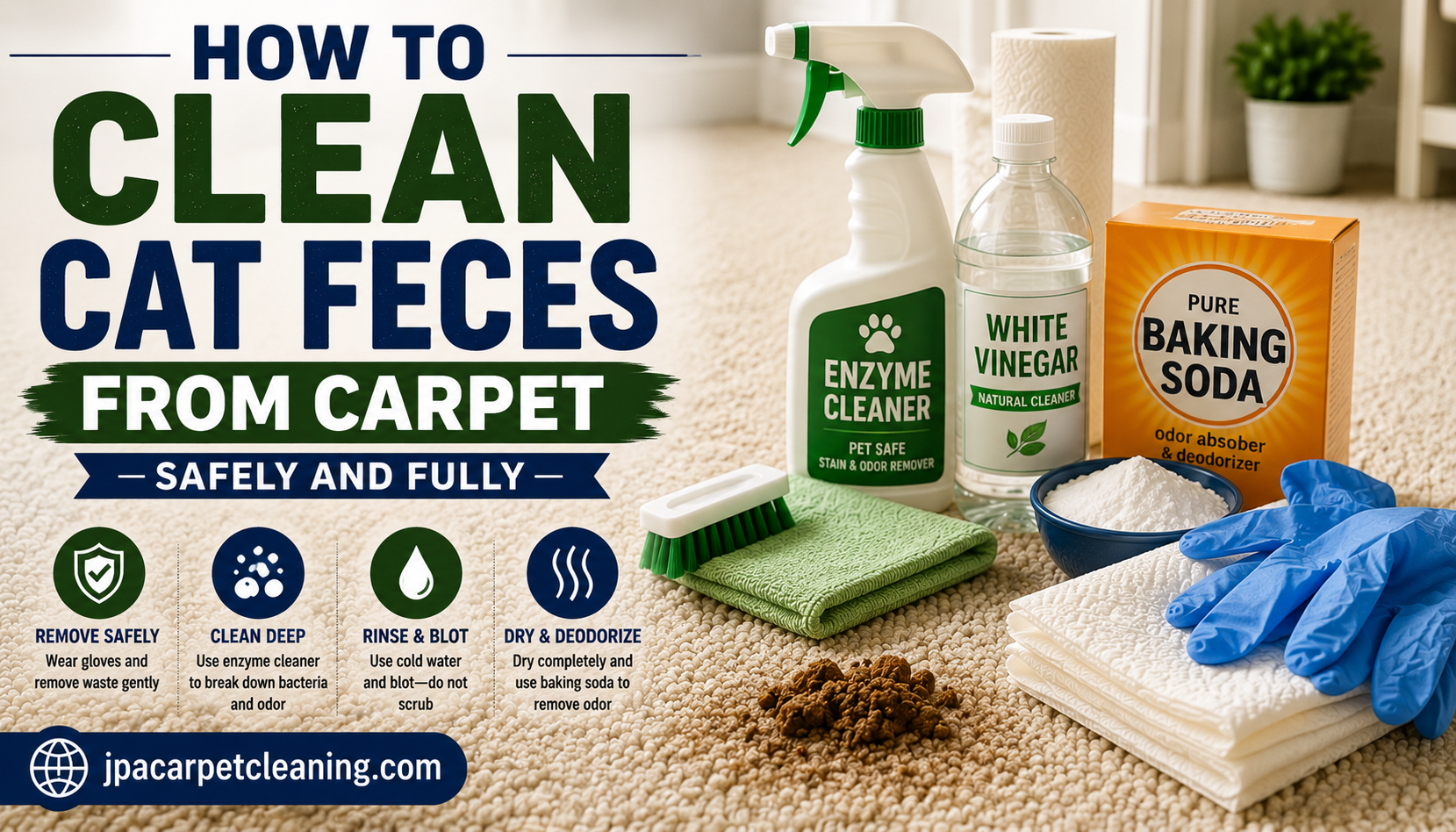
A cat accident on carpet needs quick, careful handling, and knowing how to clean cat feces from carpet properly keeps a bad moment from turning into a lasting stain. Paper towels and disposable gloves handle the first part of the job, before anything else touches the spot.
From there, an enzyme cleaner does the real work, breaking down what regular cleaners only push around, while cold water and baking soda finish the job without setting anything into the fibers. Skipping any of these steps tends to leave a smell that keeps coming back.
This guide covers solid waste, diarrhea, dried stains, odor removal, and the point where padding contamination needs more than another round of home cleaning.
Why Cat Feces Must Be Cleaned Immediately
Cat feces can carry bacteria and parasites, which makes prompt, careful cleanup a hygiene matter as much as a carpet-care one. Waiting doesn’t just risk a lingering stain, it also gives whatever’s in the waste more time to sit on a surface people and pets walk across daily.
Odor gets stronger the longer waste sits and dries, since the compounds responsible for the smell continue breaking down and spreading as moisture evaporates. Waste can also work its way past the visible carpet fibers into the padding underneath, especially with diarrhea, which soaks in far faster than solid waste does.
Quick cleanup limits staining and keeps odor from setting in permanently. Wearing gloves and washing your hands thoroughly afterward protects you throughout the process, not just the carpet.
Supplies You’ll Need
- Disposable gloves
- Paper towels
- Disposable spoon or plastic spatula
- Disposable bag
- Enzyme cleaner
- White microfiber cloths
- Cold water
- Spray bottle
- Baking soda
- Soft brush
- Vacuum cleaner
- Bucket
Always wear gloves during cleanup, and wash your hands thoroughly once you’re finished. Spot-test any enzyme cleaner on a hidden section of carpet before applying it to a visible stain.
How to Clean Cat Feces from Carpet
The Cleaning Process
Removing solid waste first matters because cleaning around it, rather than through it, keeps the mess from being pushed further into the carpet.
1. Remove the Waste
Scoop up solids immediately using paper towels, a disposable spoon, or a plastic spatula, lifting gently rather than pressing down into the carpet. Place everything into a sealed disposal bag right away, and avoid smearing the area while you work.
Gentle lifting protects the fibers underneath. Pressing down or dragging the waste across the carpet pushes it deeper into the pile instead of removing it cleanly.
2. Apply an Enzymatic Cleaner
Saturate the stained area with a pet-safe enzyme cleaner, using enough to reach the carpet fibers and, if the accident was significant, the padding underneath. Let it sit for 10–15 minutes, or follow the specific dwell time listed on the product label.
Enzymes work by breaking down the organic matter causing both the stain and the smell, rather than simply masking odor the way a scented spray or air freshener would.
3. Blot (Don’t Scrub)
Blot the area with a clean white cloth, working from the outside edge toward the center, and switch to a clean section of cloth as needed. Never scrub.
Scrubbing spreads contamination across a wider area and can damage carpet fibers in the process, which works against everything the enzyme cleaner is trying to accomplish.
4. Rinse and Dry
Rinse lightly with cold water, then blot again with clean towels. Lay dry paper towels over the damp area and place a heavy object on top for 20–30 minutes to draw out remaining moisture, then let the carpet air dry completely.
Thorough drying is what actually prevents lingering odor and mold. Moisture left sitting in the fibers or padding gives both a much better chance to take hold.
5. Deodorize if Needed
Once the carpet is fully dry, sprinkle baking soda over the area and leave it for several hours or overnight. Vacuum thoroughly afterward.
If odor is still noticeable at this point, that’s usually a sign the enzyme treatment needs to be repeated rather than a sign the process failed outright.
Handling Diarrhea
Handling Diarrhea
Diarrhea calls for a different approach than solid waste, mainly because it spreads and soaks in far faster. Scoop up as much liquid waste as possible using disposable tools or a folded piece of cardboard, working carefully to avoid pushing it wider.
Cover the area with a generous layer of baking soda to absorb the remaining moisture, and leave it for several hours before vacuuming thoroughly. Follow with a full enzyme cleaner treatment, and repeat the process if odor remains once everything has dried.
Diarrhea penetrates deeper into carpet padding than solid waste does, since there’s no solid mass to scoop away first. That deeper penetration is exactly why this type of accident often needs more than one treatment cycle to fully resolve.
Removing Cat Feces Odor from Carpet
Lingering odor almost always comes down to the same combination of factors: an enzyme cleaner that reaches deep enough, thorough drying, and good air circulation while everything dries out. Baking soda plays a supporting role here, absorbing what’s left on the surface once the carpet is dry rather than replacing the enzyme treatment itself.
Padding contamination is the most common reason odor persists despite repeated surface cleaning, since the source of the smell sits below what a spot treatment can reach. Ordinary air fresheners don’t solve any of this — they only mask the smell temporarily, and it tends to return once the scent fades.
Fresh vs Dried Cat Feces
Fresh Waste
Caught quickly, fresh waste responds well to the standard cleaning process above and typically clears with a single enzyme treatment.
Dried Waste
Dried feces needs to be gently broken up and removed before treatment, then usually requires a longer enzyme dwell time and possibly a repeat application.
Stains Left Behind
Even after waste is fully removed, discoloration can remain, especially with dried accidents. Repeat enzyme treatment paired with careful blotting usually lifts what’s left.
| Type | Cleaning Difficulty | Recommended Method | Odor Removal Expectations |
|---|---|---|---|
| Fresh Waste | Low | Scoop, then enzyme treatment | Full removal likely with one treatment |
| Dried Waste | Moderate | Break up, remove, then enzyme treatment | May need repeat applications |
| Diarrhea | High | Absorb, vacuum, then enzyme treatment | Often requires multiple treatments |
Homemade vs Commercial Cleaners
Mild dish soap, baking soda, and cold water can help with light residue and general freshening, but none of them break down the organic compounds responsible for feces odor the way enzyme products do. Commercial options — enzyme cleaners, dedicated pet stain removers, and carpet deodorizing products — are built specifically to address that gap.
| Option | Cleaning Strength | Odor Removal | Safety | Cost | Best Use Case |
|---|---|---|---|---|---|
| Mild Dish Soap | Mild | Minimal | Safe for most carpets | Low | Light surface residue |
| Baking Soda | Mild | Moderate (surface only) | Safe for most carpets | Low | Post-cleaning deodorizing |
| Cold Water | Mild | None on its own | Safe for most carpets | Low | Rinsing after treatment |
| Enzyme Cleaner | Strong | Strong | Generally safe | Moderate | Solid waste, diarrhea, dried stains |
| Pet Stain Remover | Strong | Strong | Follow label directions | Moderate | Set-in or recurring stains |
Common Mistakes to Avoid
- Scrubbing aggressively — spreads contamination and damages fibers.
- Using hot water — can set proteins in the waste and make odor worse.
- Skipping enzyme cleaner — leaves the odor source untreated, even if the stain looks gone.
- Using bleach — risks fiber damage and can react dangerously with other cleaners.
- Leaving moisture behind — invites mold and lets odor linger.
- Delaying cleanup — gives bacteria and odor-causing compounds more time to set in.
- Not cleaning the carpet padding — surface treatment alone won’t resolve deep contamination.
- Mixing incompatible cleaning chemicals — some combinations produce hazardous fumes.
When Should You Replace Carpet Padding?
Severe diarrhea accidents, repeated contamination in the same spot, and persistent odor that survives multiple enzyme treatments are all signs the padding itself may be affected rather than just the visible carpet. Moisture trapped in the padding, along with any signs of mold, are clear indicators that cleaning alone won’t resolve the problem.
At that point, professional extraction or padding replacement becomes the more reliable option. Continuing to treat the surface when the contamination has already reached the padding usually just delays a fix that needs to happen eventually.
Preventing Future Cat Accidents
- Keep litter boxes clean and scooped daily.
- Address stress or behavioral changes that might be contributing to accidents.
- Schedule a veterinary evaluation for any sudden change in bathroom habits.
- Clean odors completely rather than just masking them, since lingering smell can encourage repeat accidents in the same spot.
- Monitor kittens and senior cats more closely, since both groups are more prone to accidents outside the litter box.
Bacteria, Parasites, and Hygiene Precautions
Cat feces can carry bacteria and, in some cases, parasites that pose a health risk during handling, which is why gloves aren’t optional here. Avoid direct skin contact throughout the process, and wash your hands thoroughly with soap and water once cleanup is finished, even if you wore gloves the entire time.
Carpet-Specific Notes
Nylon and polyester carpets generally tolerate enzyme cleaners and the full rinse-and-dry process well. Wool carpet needs a gentler touch and a spot test first, since some enzyme formulas can affect natural fibers differently. Berber loops can trap residue at the base, so plan on more thorough vacuuming and extraction. Area rugs can often be treated outside, which makes saturation and drying considerably easier to manage.
Cleanup Timeline
Within 5 minutes: scoop up solid waste or blot liquid waste, working gently to avoid spreading it further.
Within 15 minutes: apply the enzyme cleaner, saturating deeply enough to reach any contamination beneath the surface.
Within 1 hour: rinse, blot, and begin the drying process with weighted paper towels over the area.
After the stain dries: check for lingering odor or discoloration, and repeat treatment or apply baking soda as needed.
Products That Should Never Be Mixed
- Bleach and ammonia-based cleaners — produces hazardous fumes.
- Bleach and vinegar — also releases dangerous gas.
- Multiple enzyme cleaners layered together — can reduce effectiveness rather than improve it.
- Enzyme cleaner followed immediately by a strong chemical cleaner — the chemicals can kill the enzymes before they finish breaking down the waste.
Sanitizing Reusable Cleaning Tools
Wash any reusable spatulas, brushes, or cloths separately from other household items, using hot water and soap or a diluted disinfectant afterward. Let them dry completely before storing, and consider designating specific tools for pet cleanup only to avoid cross-contamination with anything else in the house.
Troubleshooting Cat Feces Stains
Lingering odors: usually mean contamination reached the padding and wasn’t fully treated, or that moisture wasn’t fully dried out. Repeat the enzyme treatment and extend drying time.
Recurring stains: often point to residue still present below the surface, which wicks back up as the carpet dries. Full extraction, followed by another enzyme application, typically resolves it.
Discoloration: can result from dried waste that sat too long before treatment. Continued gentle enzyme treatment usually lightens it over a few applications.
Carpet padding contamination: shows up as odor that won’t go away no matter how many times the surface is cleaned, which is the clearest sign that padding replacement may be necessary.
Frequently Asked Questions
What’s the best cleaner for cat feces?
An enzyme cleaner, since it breaks down the organic compounds responsible for both the stain and the smell rather than just masking them.
Can vinegar remove cat feces odor?
Vinegar can help with light residual odor after the area has already been treated with an enzyme cleaner, but it doesn’t break down organic waste the way enzymes do.
Why does my carpet still smell after cleaning?
Usually because contamination reached the padding, or because the enzyme cleaner didn’t have enough dwell time or coverage to fully break down the waste.
Is baking soda enough to remove odors?
On its own, no. It works well for absorbing light residual smell after proper cleaning, but it doesn’t address the underlying source the way an enzyme cleaner does.
Can I use bleach on carpet?
It’s not recommended. Bleach can damage carpet fibers and doesn’t address odor the way enzyme cleaners do, and it can react dangerously with other cleaning products.
How do I clean dried cat poop?
Gently break it up and remove it before applying an enzyme cleaner, since dried waste typically needs a longer dwell time and sometimes a repeat treatment.
When should I replace carpet padding?
When odor persists after multiple enzyme treatments, when accidents have been severe or repeated, or when the padding shows signs of trapped moisture or mold.
Conclusion
Cleaning cat feces from carpet comes down to careful handling at every stage: remove solid waste gently, apply an enzyme cleaner that reaches deep enough to matter, and blot rather than scrub throughout the process. Rinse with cold water and dry the area completely before considering the job finished.
If odor remains, baking soda handles light residual smell, but persistent odor after repeated treatment usually points to padding contamination that needs deeper extraction or replacement. Acting quickly, every time, is what keeps a cat accident from becoming a lasting problem.