
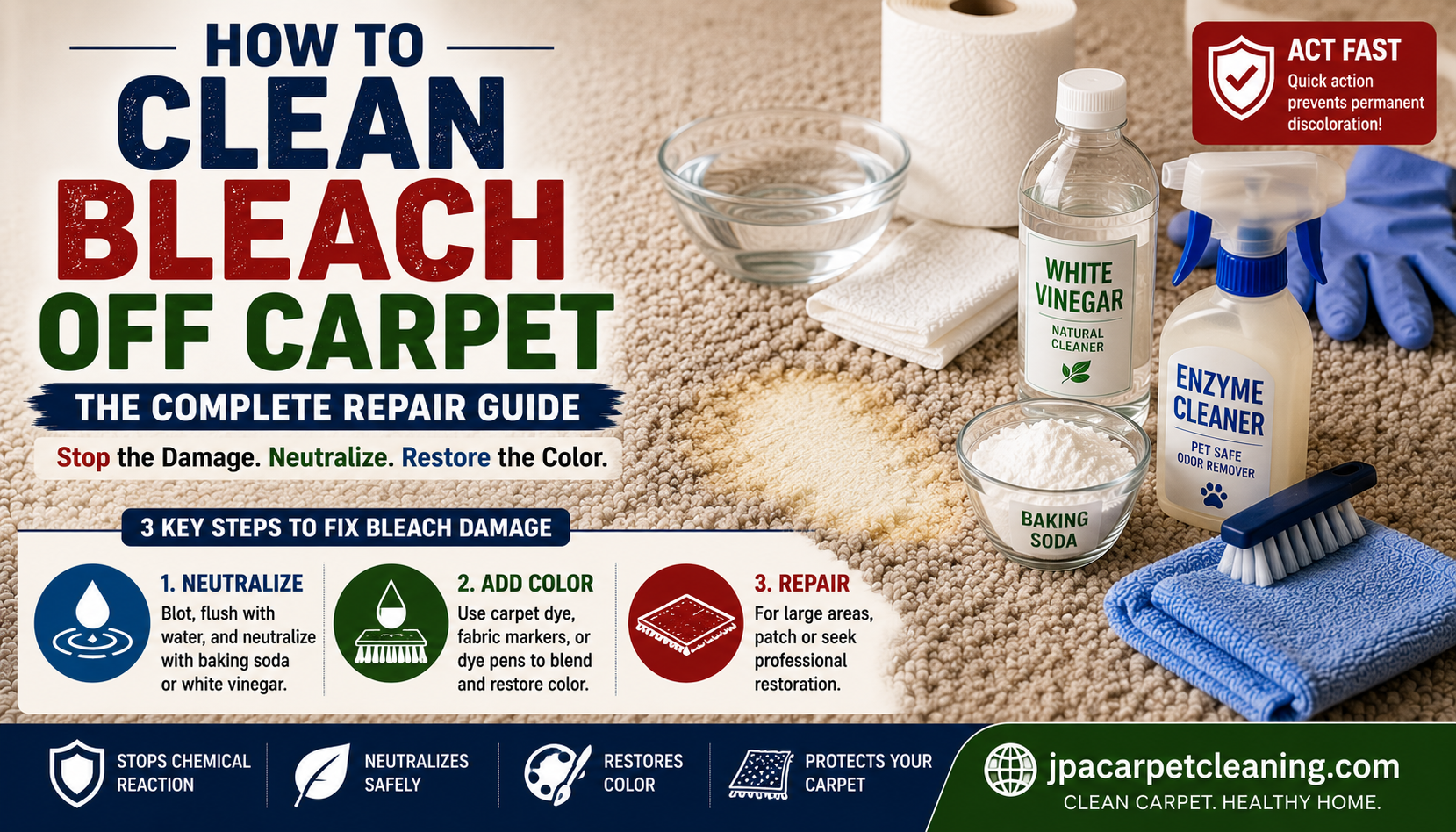
Spilling bleach on your floors is stressful, but knowing how to clean bleach off carpet starts with immediate action. Grabbing clean water and white paper towels is your very first step to limit the damage.
Once the liquid is diluted, you can use baking soda or white vinegar to neutralize any remaining active chemicals safely. This stops the bleaching process before it spreads further into the fibers.
Finally, restoring the look involves using carpet dye for small spots or a patch repair for larger areas. While bleach removes color permanently, these methods bring your floors back to life.
Can Bleach Actually Be Removed from Carpet?
Many people mistakenly believe bleach leaves a stain that can be washed out. In reality, bleach is not a stain at all. It is a harsh chemical that permanently removes the dye from your carpet fibers through a rapid oxidation reaction that breaks down the color molecules. Because the pigment is destroyed, cleaning alone cannot restore the missing color.
You are not dealing with a surface spill, but rather a complete loss of the fiber’s original hue. Repair focuses on stopping the chemical reaction and adding color back to the affected area. However, if you catch a fresh spill quickly, you can limit the damage before permanent discoloration sets in. Acting fast prevents the bleach from penetrating deeper into the carpet backing and subfloor.
Supplies You’ll Need
Before starting your carpet bleach repair, gather the right tools. You will need white paper towels, white microfiber cloths, cold and warm water, baking soda, white vinegar, mild dish soap, a spray bottle, and a bucket. For color restoration, keep carpet dye or fabric dye, fabric markers or carpet dye pens, and a carpet repair kit handy. A wet/dry vacuum and fans are also highly recommended for drying.
Safety is critical when handling harsh chemicals. Always wear rubber gloves and open windows for proper ventilation. Never mix bleach with ammonia or other household chemicals, as this creates toxic gas. Keep a mental checklist of incompatible chemicals like acids, alcohols, and hydrogen peroxide nearby to avoid dangerous combinations.
How to Clean Bleach Off Carpet
Addressing a bleach spill on carpet requires a systematic approach to stop the chemical reaction and restore the floor. You must first neutralize the active chemicals before attempting any color restoration. The following steps guide you through the exact process professionals use.
1. Neutralize the Bleach
If the bleach spill on carpet is fresh, your first goal is to stop active damage. Blot the area immediately with dry white paper towels. Then, dilute the spot thoroughly with plenty of clean water to flush out the chemical. Once flushed, apply a neutralizing solution. Mix 1 tablespoon of baking soda with 1 cup of warm water. Alternatively, use equal parts white vinegar and water, but only after the excess bleach has been thoroughly diluted and removed. Never mix vinegar directly with concentrated bleach.
Blot the solution from the outside inward to prevent spreading. Rinse the area with cold water and blot dry thoroughly. This stops any remaining active bleach from spreading while avoiding unsafe chemical mixing.
2. Add Color Back (DIY Fixes)
Since bleach removes pigment, you must replace it. For a bleach stain on carpet, use a matching carpet dye. Apply it gradually with a sponge or spray bottle, blending carefully into the surrounding fibers to avoid harsh lines. Always test the dye on a hidden fiber first to ensure a proper color match. For very small bleach spots, fabric dye pens work well. Dab the color gently instead of coloring aggressively.
You can also use the crayon method for an emergency cosmetic repair by choosing a closely matching crayon and blending it lightly with a damp cloth. Remember that these DIY methods restore appearance but do not reverse the actual bleach damage. If you encounter uneven dye application, faded repairs, or a color mismatch, lightly mist the area with water and blot to soften the edges and blend the color better.
3. Professional Repair and Patching
When DIY fixes fall short, professional carpet bleach repair offers lasting results. Pros can perform expert carpet dyeing or fiber transplantation, where healthy fibers are glued into the bleached area to restore texture and color seamlessly. For larger damaged areas, an invisible patch repair is the best option. Technicians cut out the bleached section and replace it using donor carpet taken from a closet or remnant.
If you have leftover carpet from the original installation, this ensures an exact match. Professional repair provides much better results than DIY methods for extensive bleach discoloration carpet issues. If the damage is too widespread for a patch, full section replacement might be necessary. Experts ensure the new section blends perfectly with the pile direction and faded age of your existing floors.
What to Do Immediately After a Fresh Bleach Spill
Acting within the first few minutes is critical to reduce additional fiber damage. Blot the spill immediately with clean, dry towels to lift as much liquid as possible. Avoid rubbing, which only scrubs the bleach deeper into the carpet backing. Use plenty of clean water to dilute the bleach and flush the fibers. Remove the excess liquid using more towels or a wet/dry vacuum. Finally, improve ventilation by opening windows and turning on fans to speed up the drying process.
This rapid response is especially important for specific materials. Nylon and wool are highly susceptible to permanent color loss, while polyester is slightly more resistant. For patterned carpets or Berber loops, quick dilution prevents the bleach from wicking up the yarns and ruining the detailed design. Quick action limits the chemical reaction before it destroys the dye completely.
DIY Repair Methods Compared
Choosing the right repair method depends on the size of the damage and your budget. Each technique offers distinct advantages for fixing a bleach stain on carpet. Below, we break down the most common DIY options to help you choose the best path.
Carpet Dye
Liquid carpet dye is ideal for medium-sized bleach spots. It penetrates the fibers evenly, offering a natural look that blends well with the surrounding area when applied carefully.
Fabric Dye Pens
These pens offer precise control for tiny spots. They are easy to use but can sometimes leave a stiff texture if too much product is applied to the fibers.
Fabric Markers
Standard fabric markers are a quick, cheap fix for pinprick bleach spots. However, they often look painted on and can fade quickly under foot traffic or deep cleaning.
Carpet Fiber Transplant
This advanced DIY method involves gluing donor fibers into the bleached spot. It restores the physical texture of the carpet, though color matching the transplanted fibers can be tricky.
Full Carpet Patch
Cutting out the damaged area and inserting a donor patch provides a permanent fix. Using leftover carpet from a closet ensures an exact match for both color and pile height.
| Repair Method | Cost | Difficulty | Best Repair Size | Appearance | Durability |
|---|---|---|---|---|---|
| Carpet Dye | $15 – $30 | Medium | Medium spots | Very Natural | High |
| Fabric Dye Pens | $10 – $15 | Easy | Tiny spots | Natural | Medium |
| Fabric Markers | $5 – $10 | Easy | Pinprick spots | Painted look | Low |
| Fiber Transplant | $20 – $40 | Hard | Small spots | Textured | High |
| Full Carpet Patch | $50 – $150 | Hard | Large areas | Perfect match | Permanent |
Decision Chart:
- Fresh spill: Dilute immediately with water and neutralize.
- Small bleach spot: Use fabric markers or dye pens.
- Multiple spots: Use liquid carpet dye or hire a pro.
- Large damaged area: Perform a full carpet patch or replace.
Cost Comparison: DIY repairs range from $10 to $50. Professional repair typically costs $100 to $300. Full carpet replacement starts at $500 and goes up significantly based on room size.
Common Mistakes to Avoid
Avoid scrubbing the bleach deeper into the fibers or waiting too long before rinsing. Never use ammonia, and never mix bleach with vinegar or other chemicals before the bleach has been completely flushed away, as this creates toxic fumes. Using excessive heat can set the damage, while choosing the wrong dye color or coloring too heavily with markers creates an obvious, unnatural blotch.
Always test dyes in a hidden area first to avoid a color mismatch. Finally, never ignore ventilation when working with chemicals or dyes. Poor airflow not only creates a safety hazard but also slows down the drying process, allowing moisture to damage the carpet backing and subfloor.
When Should You Replace Carpet Instead?
Sometimes, repairing a bleach damaged carpet is not practical. Large bleach spills or multiple bleach spots scattered across a room often cost more to fix than simply replacing the flooring. Patterned carpets and heavily faded older carpets are also prime candidates for replacement. Matching the exact dye lot or pattern of an aged floor is nearly impossible, making visible patches or dye jobs stand out terribly.
If you notice extensive backing damage or if the bleach has reached the subfloor, replacement is the only safe option. In these cases, full replacement provides a fresh, uniform look that DIY repairs simply cannot achieve.
Preventing Future Bleach Damage
Prevention is always easier than a carpet patch repair. Store bleach safely in sealed containers and keep it completely away from carpeted rooms whenever possible. When cleaning or painting, dilute bleach outdoors or in hard-surfaced areas. Always use protective drop cloths to catch any accidental drips before they reach your floors.
Finally, clearly label all spray bottles. Misidentifying a cleaning solution is a common cause of accidental spills, and knowing exactly what is in your bottle prevents catastrophic mistakes. Taking these simple precautions protects your floors and keeps your household safe from accidental chemical exposures.
Frequently Asked Questions
Can bleach stains be removed from carpet?
No, bleach removes the dye permanently. You must recolor the bleach stain carpet fibers rather than clean the bleach out.
Does vinegar fix bleach stains?
Vinegar neutralizes the chemical to stop damage, but it does not add color back. You still need carpet dye to fix the white spot.
Can carpet dye restore the original color?
Yes, professional or high-quality DIY carpet dye can closely match the original color, though it may not be perfect on heavily faded floors.
Can I use fabric markers?
Yes, for very tiny spots. However, they can look painted on and may not withstand deep cleaning.
Should I replace my carpet?
If the damage is extensive, spans multiple rooms, or involves patterned carpets, replacement is often more cost-effective and visually pleasing.
Can professional carpet cleaners fix bleach damage?
Standard cleaners cannot fix bleach damage. You need a specialized carpet repair technician to dye or patch the floor.
What if I don’t have spare carpet for patching?
A pro can take a small piece from a hidden area, like inside a closet, to use as the donor patch for the visible repair.
Conclusion
Learning how to clean bleach off carpet requires quick action to flush fresh spills and stop additional damage immediately. Remember that bleach removes color permanently, so your focus must shift from basic cleaning to restoring the missing pigment safely.
You can successfully restore your floor’s appearance using carpet dye for minor spots or a patch repair for larger areas. For extensive damage, consider professional repair to ensure a seamless, lasting result that perfectly protects your home.