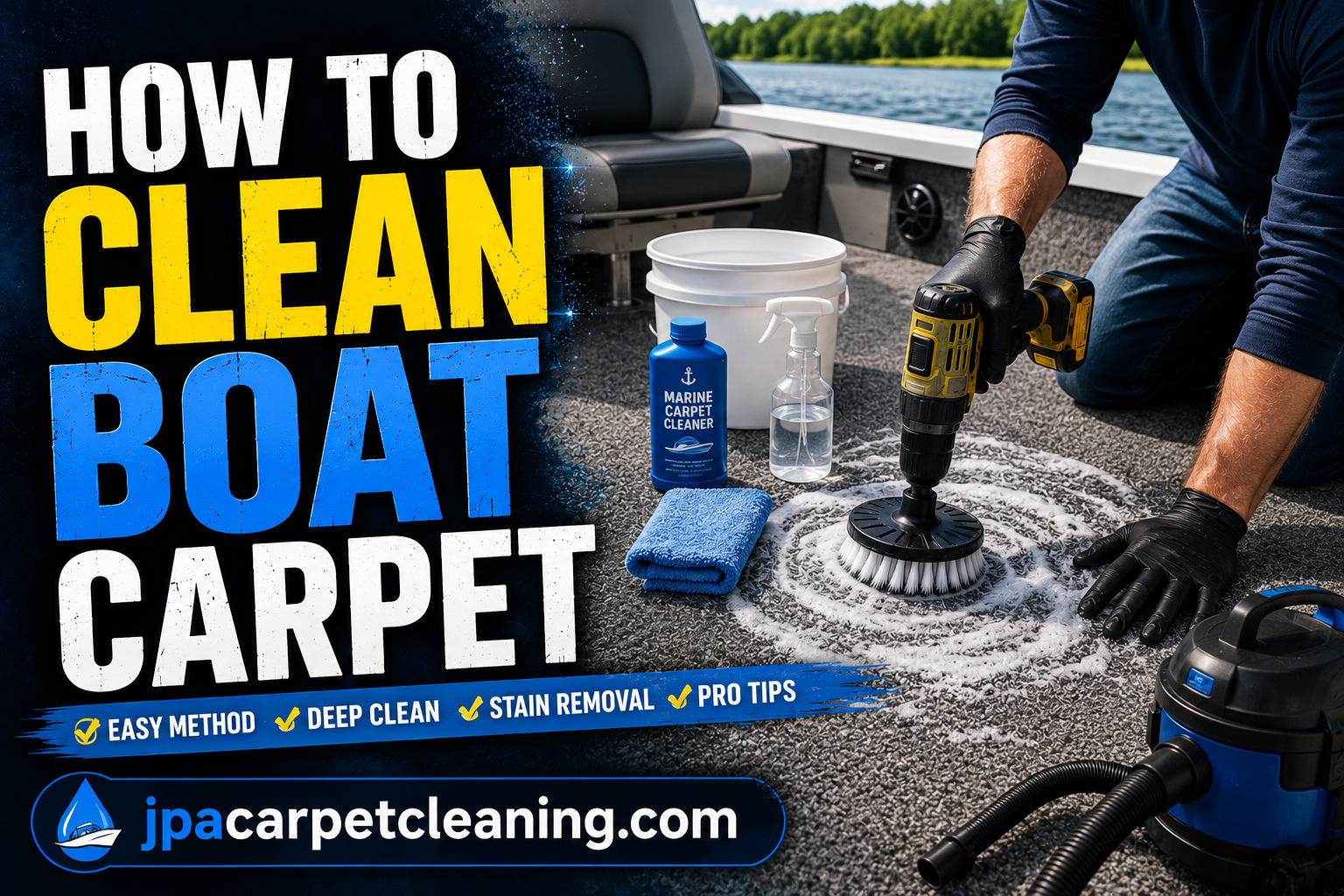
A season on the water leaves marine carpet coated in more than ordinary dirt, which is exactly why learning how to clean boat carpet properly makes such a difference. A garden hose, shaving cream, and a drill brush handle most of the job, with a wet/dry vacuum and marine carpet cleaner stepping in for anything tougher.
Getting the process right protects the carpet backing and adhesive underneath, both of which are more sensitive to harsh cleaning than most boat owners expect. Skipping steps or rushing the drying stage tends to be what causes lasting problems down the line.
This guide covers routine cleaning, deep cleaning, stain-specific treatment, drying, and a seasonal schedule to keep boat carpet in good shape.
Why Boat Carpet Needs Special Cleaning
Marine carpet takes on a mix most household carpet never sees, including water, mud, sand, fish slime, bait residue, sunscreen, food spills, and mildew from sitting in a humid environment between trips. That combination adds up fast over a season on the water.
Marine carpet is built tougher than indoor carpet, but it’s still not immune to damage from the wrong cleaning approach. Soap residue left behind attracts dirt just as it would on any other carpet, and trapped moisture underneath creates ideal conditions for mold and mildew to take hold.
Routine cleaning between deep cleans is what actually extends the carpet’s lifespan, since it keeps grime from working its way in before it has a chance to set.
Supplies You’ll Need
- Garden hose
- Wet/dry shop vacuum
- Marine carpet cleaner
- Unscented shaving cream
- Mild dish soap
- Marine-safe detergent
- White vinegar
- Bucket
- Spray bottle
- Soft or medium-stiff scrub brush
- Drill brush attachment (optional)
- Microfiber towels
- Fans
Open all storage compartments before drying begins, avoid harsh household chemicals, and test any cleaner on a hidden section of carpet first.
How to Clean Boat Carpet
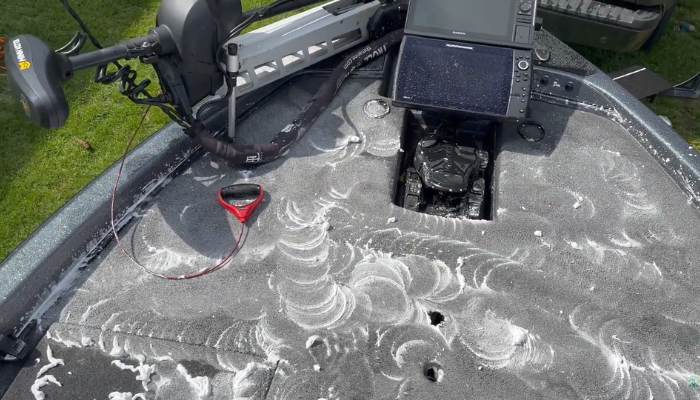
The Shaving Cream and Drill Brush Method
This method has become popular among boat owners for good reason. It’s especially effective at cutting through fish slime, ground-in dirt, and oily residue, and it tends to restore the appearance of marine carpet better than a simple hose-down on its own.
1. Prep the Area
Remove snap-in carpet sections if your boat has them, along with seats and any loose equipment sitting on the carpet. Open the drain plug and, if you’re working with the boat on a trailer, position the trailer on a slight downhill slope so water has somewhere to go.
Vacuum or brush away loose debris before introducing any water. Starting with dry debris removed keeps that dirt from turning into mud once the carpet gets wet, and proper drainage setup at this stage makes the rinse step far more effective later on.
2. Saturate
Wet the carpet thoroughly with a garden hose, working in sections rather than trying to soak the entire boat at once. Avoid pressure washers on high settings during this step.
Excessive pressure can loosen the adhesive holding the carpet in place, especially on glued-in sections, so a steady hose stream is the safer choice for this part of the process.
3. Apply the Cleaner
You have a few solid options here. Plain unscented shaving cream works surprisingly well and is a favorite among anglers for cutting through slime and residue. A dedicated marine carpet cleaner is another reliable choice, and mild dish soap diluted with water handles lighter dirt and everyday grime.
Apply whichever option you choose evenly across the section you’re working on, and let it sit for a few minutes before scrubbing. Focus extra product on visibly stained areas rather than spreading it evenly regardless of soil level.
4. Scrub
Work the cleaner in with a drill brush attachment or a medium-stiff hand brush, moving section by section rather than trying to cover the whole boat in one pass. The goal is lifting dirt out of the fibers, not grinding it deeper in, so avoid overly aggressive scrubbing.
Circular, overlapping motions clean more evenly than back-and-forth strokes, since they cover the same section of fiber from multiple angles instead of pushing dirt in one direction repeatedly.
5. Rinse
Rinse thoroughly with a garden hose, continuing until the runoff coming off the carpet looks clear rather than soapy. Every trace of soap residue needs to go at this stage.
Leftover soap does the same thing on a boat that it does on household carpet: it attracts dirt fast, which undoes a lot of the work you just put into cleaning the carpet in the first place.
6. Extract and Dry
Use a wet/dry vacuum to pull out as much moisture as possible before you move on. Leave storage compartments open, position the boat in full sun if you can, and run fans if drying conditions aren’t ideal.
Complete drying is what actually prevents mildew from setting in. Moisture trapped under a closed hatch or compartment gives mold everything it needs, even if the visible carpet looks dry on the surface.
Traditional Detergent Method
Traditional Detergent Method
For oily or heavily stained sections, mix a marine-safe detergent, or dish soap diluted well beyond normal strength, with warm water. Apply it directly to the affected area rather than treating the whole boat with this stronger solution.
Scrub gently rather than aggressively, then rinse thoroughly until no soap residue remains. Extract the excess water with a wet/dry vacuum just as you would with the shaving cream method, since leftover moisture causes the same mildew risk regardless of which cleaning method got you there.
Removing Common Boat Carpet Stains
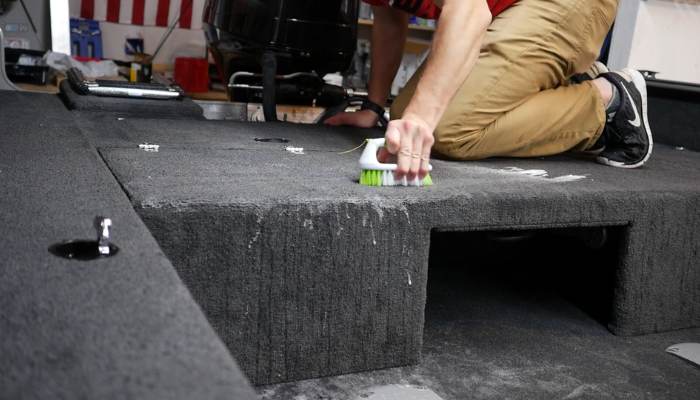
Fish Blood
Rinse with cold water immediately, since hot water can set the stain. Follow with the shaving cream or dish soap method, scrubbing gently until the color lifts.
Fish Slime
Cold water rinse first, then a thorough application of shaving cream or marine carpet cleaner, since slime tends to respond better to a cleaner with some grip than to water alone.
Mud
Let it dry completely before touching it, then vacuum or brush it away before wetting the area. Treating wet mud just smears it deeper into the fibers.
Mold and Mildew
Treat with a diluted white vinegar solution or a dedicated marine mold and mildew remover, then rinse and dry the area completely, since any leftover moisture invites the problem right back.
Oil and Grease
Apply dish soap directly to the spot before rinsing, since soap breaks down oil more effectively than water alone. Avoid hot water, which can spread grease further into the fibers.
Food and Drink Spills
Rinse promptly with clean water, then use the shaving cream or dish soap method on any remaining residue, scrubbing gently rather than letting the spill sit and set.
Homemade vs Commercial Boat Carpet Cleaners
DIY options like dish soap, white vinegar, and shaving cream cover most routine cleaning and light staining at low cost, and they’re generally safe across common marine carpet types. Commercial products, including marine carpet shampoo, dedicated marine stain removers, and mold and mildew removers, offer more targeted strength for stains or odor that DIY methods don’t fully resolve.
| Option | Cleaning Strength | Odor Removal | Marine Safety | Cost | Best Uses |
|---|---|---|---|---|---|
| Dish Soap | Mild to moderate | Minimal | Generally safe | Low | Everyday dirt, light oil |
| White Vinegar | Mild | Moderate | Generally safe | Low | Mildew, light odor |
| Shaving Cream | Moderate | Minimal | Generally safe | Low | Fish slime, ground-in dirt |
| Marine Carpet Shampoo | Strong | Moderate | Formulated for marine use | Moderate | Deep cleaning |
| Marine Stain Remover | Strong | Moderate | Formulated for marine use | Moderate | Set-in stains |
| Mold & Mildew Remover | Strong | Strong | Formulated for marine use | Moderate | Mildew and musty odor |
Pressure Washer, Steam Cleaner, or Garden Hose?
A garden hose is the safest all-around option for both saturating and rinsing boat carpet, since it provides steady water flow without risking the adhesive underneath. Electric pressure washers can work if kept on a low setting and a wide-angle nozzle, but they carry more risk than a hose if used carelessly.
Gas pressure washers generate more force than most marine carpet can safely handle and are best avoided unless used at a significant distance and low pressure setting. Steam cleaners introduce heat that can affect certain adhesives, so they’re better suited to fabric upholstery than carpet backing. A carpet extractor, where available, gives the deepest clean of the group but is generally reserved for heavier, less frequent deep cleaning sessions.
| Method | Cleaning Performance | Risk to Adhesive | Drying Time | Recommended Uses |
|---|---|---|---|---|
| Garden Hose | Good | Low | Moderate | Routine rinsing and saturation |
| Electric Pressure Washer | Very good | Moderate if misused | Moderate | Occasional deeper rinse, low setting only |
| Gas Pressure Washer | Strong | High if misused | Moderate | Not generally recommended |
| Steam Cleaner | Good on surface grime | Moderate to high | Fast | Fabric upholstery more than carpet |
| Carpet Extractor | Excellent | Low when used correctly | Fast | Seasonal deep cleaning |
Light pressure washing can be acceptable when used carefully, with a wide nozzle held at a reasonable distance, but excessive pressure at close range can damage carpet fibers or loosen the adhesive holding the carpet down.
Common Mistakes to Avoid
- Using excessive pressure — can loosen carpet adhesive, especially on glued-in sections.
- Over-soaking the carpet — extends drying time and increases mildew risk.
- Leaving soap residue — attracts dirt and undoes the cleaning you just did.
- Closing storage compartments before drying — traps moisture and encourages mold.
- Using harsh household chemicals — can damage marine-grade adhesive and fibers.
- Ignoring mildew — allows it to spread and become harder to remove over time.
- Skipping vacuuming — lets dry dirt turn into mud once water is introduced.
- Storing the boat while carpet is still damp — one of the most common causes of lasting mildew odor.
Each of these mistakes shortens the carpet’s usable life, either by damaging the material directly or by creating conditions that mold and mildew thrive in.
Boat Carpet Maintenance Schedule
After Every Trip
- Remove loose debris and rinse off visible dirt.
- Dry the carpet, or at minimum the wettest sections, before storing.
Monthly
- Spot clean any visible stains.
- Vacuum the carpet thoroughly, including corners and under removable seats.
Seasonal
- Run a full deep clean using the shaving cream or traditional detergent method.
- Inspect closely for early signs of mildew.
- Apply a marine carpet protectant if you’d like extra stain resistance going forward.
Maintenance checklist:
- Rinse after every trip
- Dry before storage
- Spot clean monthly
- Vacuum monthly
- Deep clean seasonally
- Inspect for mildew each season
- Reapply protectant as needed
Marine Carpet Types and Cleaning Considerations
Snap-in carpet can be fully removed for cleaning, which makes it easier to rinse and dry completely compared to carpet that’s fixed in place. Glued-in carpet needs a gentler approach around pressure and moisture, since the adhesive underneath is the most vulnerable part of the system. Pontoon carpet often covers a large, flat area, so working in clearly defined sections helps keep the cleaning and rinsing process organized. Bass boat carpet, which tends to see heavier fish slime and bait residue, usually benefits from the shaving cream method as a first line of treatment before moving to a stronger cleaner.
Safe and Unsafe Cleaners for Marine Carpet
Generally safe: mild dish soap, white vinegar, unscented shaving cream, marine-safe detergent, and products specifically labeled for marine carpet use.
Best avoided: bleach, ammonia-based cleaners, undiluted harsh degreasers, and any household cleaner not tested on a hidden section first, since these carry a higher risk of damaging carpet fibers or the adhesive underneath.
Drying Boat Carpet Properly
Humidity plays a bigger role in drying time than most boat owners expect, since a muggy day can stretch a normally quick dry into an overnight process. Airflow matters just as much — open compartments and a breeze moving across the carpet dry it far faster than a closed, still environment.
Compartment ventilation deserves particular attention, since closed hatches trap moisture even after the visible carpet surface looks dry. Leaving compartments open and running fans when natural airflow isn’t enough addresses both problems at once.
Cost Comparison: DIY, Rental Extractor, or Professional Detailing
| Option | Typical Cost | Best For | Trade-Offs |
|---|---|---|---|
| DIY Cleaning | Low | Routine and seasonal cleaning | Requires time and physical effort |
| Rental Carpet Extractor | Moderate | Deeper seasonal cleans without buying equipment | Still requires DIY labor |
| Professional Marine Detailing | Higher | Heavy staining, mildew, or infrequent deep cleaning | Highest cost, most consistent results |
Troubleshooting Boat Carpet Problems
Mildew odor: usually points to trapped moisture from a previous cleaning or storage session. A vinegar treatment followed by complete drying, with compartments open, typically resolves it.
Stiff carpet fibers: often caused by leftover soap residue that wasn’t fully rinsed out. A plain water rinse, followed by full drying, usually restores normal texture.
Soap residue: a sign the rinse step needs another pass. Continue rinsing with a hose until runoff comes off completely clear.
Loose adhesive: typically results from excessive pressure washing or repeated over-soaking. Avoid high-pressure settings going forward, and consult a marine carpet professional if sections have already lifted.
Recurring stains: often mean the original treatment didn’t fully break down oily or organic residue. Repeat with the traditional detergent method, focusing extra dwell time on the affected spot.
Frequently Asked Questions
Can you pressure wash boat carpet?
Yes, carefully. A low setting with a wide-angle nozzle held at a reasonable distance is generally fine, but high pressure at close range risks damaging fibers or loosening the adhesive.
Is shaving cream safe for marine carpet?
Yes, unscented shaving cream is a widely used and generally safe option for cutting through fish slime and ground-in dirt.
What’s the best cleaner for boat carpet?
It depends on the mess. Shaving cream works well for slime and general grime, a marine-safe detergent handles oily or heavier stains, and dedicated marine mold and mildew removers are best for mildew specifically.
How do I remove fish smell from boat carpet?
A thorough cleaning followed by complete drying handles most odor, with white vinegar or a marine odor-eliminating product helping with anything that lingers afterward.
Can I use Simple Green or Dawn dish soap?
Both are commonly used by boat owners in diluted form and are generally considered safe, though testing on a hidden section first is still a good habit.
How long does boat carpet take to dry?
Typically several hours in good sun and airflow, though high humidity or closed compartments can extend that considerably.
How often should boat carpet be deep cleaned?
Once per season for most boats, with monthly spot cleaning and vacuuming in between to keep dirt from building up.
Conclusion
Cleaning boat carpet comes down to following the right order: vacuum first, saturate thoroughly with a hose, apply a cleaner suited to the mess, then scrub gently rather than aggressively. Rinsing until the runoff is completely clear matters just as much as the scrubbing itself, since leftover soap undoes a lot of that work.
Removing as much water as possible and drying the carpet completely before storing the boat is the step that protects against mildew long-term. A consistent routine between deep cleans keeps marine carpet looking good and lasting through many seasons on the water.