
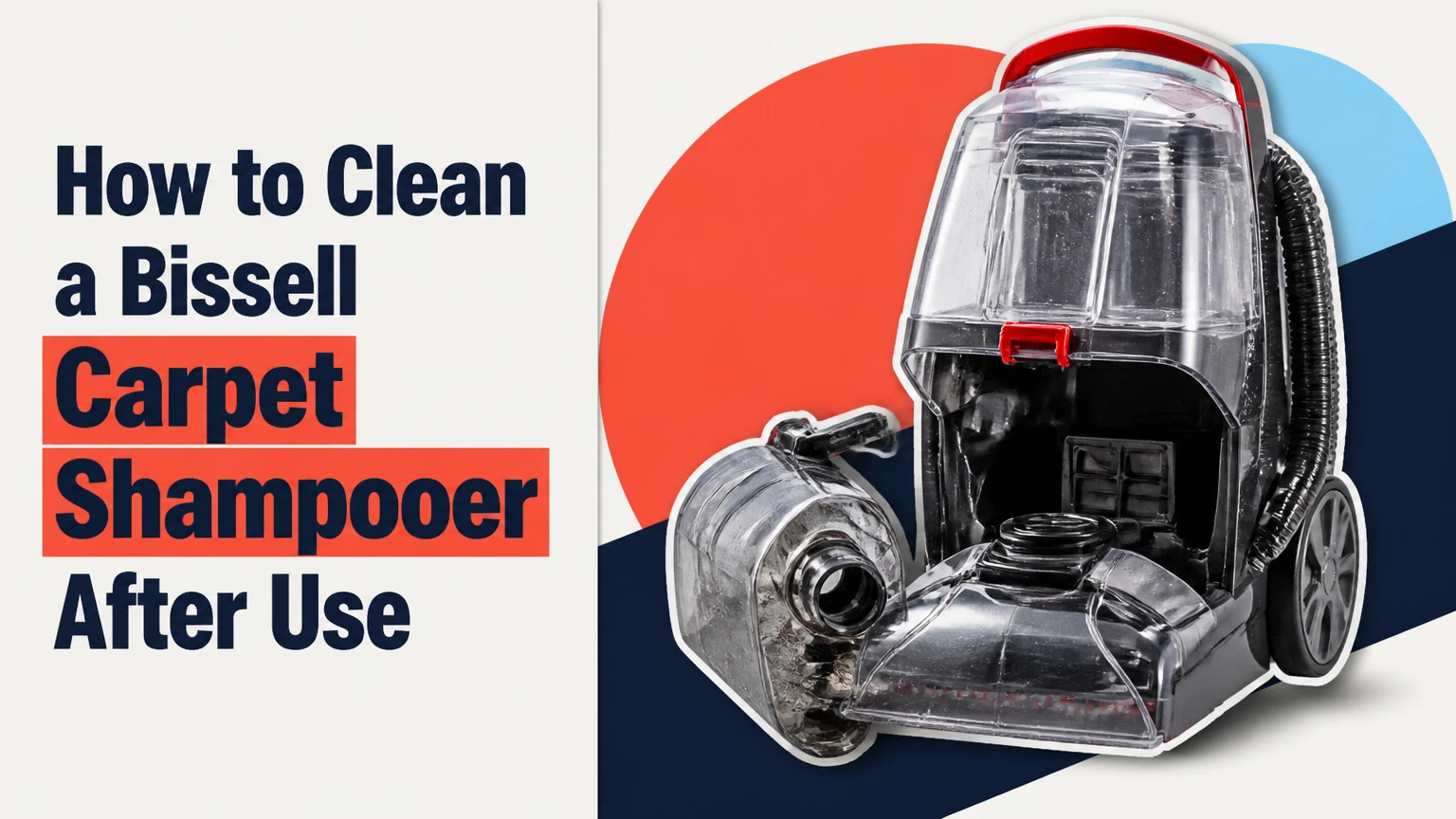
Finishing a carpet cleaning session often leaves dirty water, leftover solution, hair, and debris trapped inside the machine. Ignoring this residue can quickly turn a helpful appliance into a source of foul odors and mechanical issues.
Proper maintenance is essential to keep your equipment running smoothly. Learning how to clean bissell carpet shampooer components correctly ensures optimal suction, prevents clogs, and extends the lifespan of your investment.
Because Bissell manufactures a wide variety of carpet-cleaning models, the exact removable parts and specific procedures can vary. Always refer to your specific unit’s manual before disassembling any components.
Why You Should Clean Your Bissell Carpet Shampooer
Post-use maintenance is critical for the longevity and performance of your machine. Leftover dirty water sitting in the collection tank can quickly create unpleasant, lingering odors. Additionally, cleaning solution residue can accumulate and harden inside the tanks and internal lines if not rinsed away.
Hair and carpet fibers naturally collect around the brush roll during operation. If left unchecked, this debris can restrict the nozzle or suction path, severely impacting cleaning performance. Moisture left inside the machine also contributes to buildup and potential mold growth. Regular maintenance prevents these issues and helps keep the machine working properly for years.
What You Need
Gathering the right supplies ensures a safe and effective cleaning process. You will need clean warm water, a clean microfiber or soft cloth, and access to a sink or suitable drain. A soft brush and the manufacturer-supplied cleaning tool (if included with your model) are highly recommended for removing trapped debris. Keep a dry towel handy for wiping down components.
It is important to note that you should not automatically put household cleaners such as bleach, vinegar, dish soap, or other harsh chemicals into the machine. Only use cleaning agents if the specific manufacturer instructions for your model explicitly allow them. Using unapproved chemicals can degrade seals, damage internal pumps, and void your warranty.
How to Clean a Bissell Carpet Shampooer
The exact removable parts differ by model, but the following maintenance sequence covers the main areas that commonly require cleaning. Following these steps ensures you remove grime without damaging internal components or electrical systems.
Turn Off and Unplug the Machine
Safety always comes first. Turn the machine off and unplug it from the wall outlet. Wait until all moving components, such as the brush roll, have come to a complete stop. Place the machine in a well-lit area suitable for maintenance, such as a utility sink or garage floor. Always follow the specific model’s instructions before removing any components.
Empty and Rinse the Dirty Water Tank
Remove the dirty-water or collection tank from the machine and empty its contents into a suitable drain. Rinse the tank thoroughly with clean water to remove all residual dirt and cleaning solution. Remove any visible debris by hand. If your model allows, clean additional tank components such as a float stack, separator, or filter. Leave the tank open to air dry.
Rinse the Clean Water Tank
Empty any remaining water or cleaning solution from the clean-water tank. Rinse the interior thoroughly to prevent dried solution from building up. Check the cap and fill opening, removing any residue where appropriate. Allow the tank to dry according to the model’s instructions. Do not assume leftover cleaning solution should remain in the tank between uses.
Flush the Internal Lines
Flushing the internal spray system is an important step that prevents dried solution from clogging the machine’s internal pathways. Some Bissell models recommend running clean water through the spray system after carpet cleaning to clear the lines.
To do this, fill the clean-water tank with the recommended amount of clean, warm water (without adding any detergent). Reinstall the tank securely, turn the machine on, and press the spray trigger while moving the machine as directed by your model’s manual. Release the trigger, and use the machine’s suction function to recover the remaining water where the instructions call for it.
It is important to note that the flushing time is model-specific. Some official instructions may specify a 15-second trigger cycle as an example, but do not assume that every Bissell carpet shampooer must be flushed for exactly 15 seconds. Always defer to your specific user manual.
Clean the Brush Roll and Brush Roll Cover
Hair, fuzz, lint, and carpet fibers frequently accumulate around the brush roll. This buildup can cause the brush to stop spinning or strain the motor.
Remove the brush-roll cover only as instructed for your specific model. Remove visible hair and fibers by hand or by using the manufacturer-supplied cleaning tool. Clean any removable parts according to the instructions, and inspect the brush roll itself for excessive wear or damage. Reinstall all components correctly and securely. Do not recommend forcing or cutting components if the model does not provide for that type of cleaning.
Clean the Nozzle and Suction Area
The nozzle and suction area are prone to collecting hair, carpet fibers, dirt, debris, and solution residue. A partially blocked nozzle can significantly affect water pickup and overall cleaning performance.
Remove the nozzle if your model permits it. Rinse it under warm water if instructed, and check all openings for blockages. Remove any trapped debris and inspect seals or gaskets where applicable. Allow the parts to dry as directed before reinstalling them securely to ensure a proper vacuum seal.
Clean the Filters and Float Components
Bissell models differ significantly in their filter and float designs. Proper care of these components is essential for maintaining strong suction.
Clean Washable Filters
First, identify whether your machine’s filter is washable by checking the user manual. If it is, follow the model instructions carefully. Rinse the filter only if permitted, and gently squeeze out excess water. Do not reinstall a wet component if the instructions explicitly require it to be completely dry, as this can cause mold or suction loss.
Clean the Float Stack
For models equipped with a float stack, remove it according to the instructions. Rinse away any trapped dirt or debris that may prevent the float from moving freely. Rinse it thoroughly and reinstall it correctly. Do not suggest that every Bissell machine has a float stack, as many smaller models do not.
Clean the Machine Exterior
Wiping down the exterior keeps the machine looking professional and prevents dirt from transferring to your hands or carpets. Use a clean, damp cloth to wipe the handle, tank housing, exterior panels, the foot, and the areas surrounding the brush roll.
For safety, never pour water directly over the machine or submerge any electrical components. Moisture inside the motor housing can cause permanent damage or create a shock hazard.
Clean the Hose and Attachments
Many Bissell models include upholstery tools or hose attachments that also require regular maintenance.
Rinse the Cleaning Attachment
Remove the attachment from the hose. Rinse it under warm water where the model instructions permit. Remove any visible debris or hair, and allow the attachment to drain and dry completely before storing it.
Flush the Hose
For models that support hose flushing, run clean water through the hose to clear out any trapped dirt or solution residue. Remove visible debris, allow the hose to drain completely, and dry it according to the model instructions. Make it clear that hose-cleaning procedures vary between machines, so always check your manual.
Let the Parts Dry Before Storage
Proper drying is just as important as the cleaning process itself. Leaving components damp invites mold, mildew, and unpleasant odors.
Leave the tanks open and allow all removable components to dry completely. Do not trap wet parts inside closed compartments. Let the hose drain fully, and allow brush and nozzle components to dry according to manufacturer guidance. Storing a damp machine will inevitably contribute to buildup and foul smells.
How to Store a Bissell Carpet Shampooer
Proper storage protects the machine between uses. Follow this simple sequence: empty the tanks, rinse them, and clean all removable components. Allow all parts to dry as directed, then reassemble the machine. Wrap or store the power cord properly to prevent fraying, and store the unit in a clean, dry location away from extreme temperatures.
How Often Should You Clean a Bissell Carpet Shampooer?
A consistent maintenance schedule prevents major issues.
After every use: Empty the dirty water, rinse both tanks, remove visible debris, and inspect the brush and nozzle areas.
Regularly: Inspect filters, check the hose for cracks or clogs, inspect the brush roll for wear, and check suction and spray performance.
When necessary: Deep-clean removable components and replace worn or damaged parts according to the model’s instructions. Do not invent universal replacement intervals, as Bissell models differ.
What If My Bissell Carpet Cleaner Smells Bad?
A foul odor is usually a sign of trapped moisture or organic buildup. Common causes include leaving the dirty-water tank closed, using old cleaning solution, storing a wet brush roll, hair and debris buildup, a dirty filter, moisture remaining inside the housing, or hose buildup.
To troubleshoot, empty and rinse all tanks, remove and clean the brush roll and filter, run a fresh water flush cycle, and ensure everything is completely dry before reassembling.
What If My Bissell Carpet Cleaner Leaves Dirty Water Spots?
If your machine leaves spots, it is likely failing to pick up dirty water effectively. Possible causes include a dirty or obstructed nozzle, poor water pickup, a tank seating problem, debris around the foot, a dirty brush area, or a restricted suction path.
Inspect the tank seals to ensure they are locked into place, clear the nozzle opening of any blockages, and ensure the brush roll spins freely without tangled debris.
Bissell Carpet Shampooer Cleaning by Model
Cleaning instructions vary by machine. Always check your exact model number before following disassembly instructions, as components are not identical across the brand.
ProHeat 2X Revolution
This model typically requires specific attention to its flushing cycle, dual-tank system, float-stack maintenance, and brush-area cleaning.
TurboClean
Maintenance for this lightweight model focuses on the tank, nozzle, gasket, and related compact components.
PowerForce
The exact procedure varies by series and model within the PowerForce line. Always consult the specific manual for tank and brush removal steps.
Big Green
This professional-grade machine requires thorough tank, hose, tool, and brush-related maintenance due to its heavy-duty usage.
Common Mistakes to Avoid
- Leaving dirty water in the machine after use.
- Leaving cleaning solution inside for extended periods.
- Storing the machine while it is excessively wet.
- Ignoring hair wrapped around the brush roll.
- Ignoring a clogged nozzle or suction path.
- Using chemicals that aren’t approved for the machine.
- Cleaning electrical components that aren’t designed to be submerged.
- Reassembling parts incorrectly, leading to suction loss.
- Following instructions intended for a different Bissell model.
- Ignoring an unusual loss of suction or spray performance.
Frequently Asked Questions
Can I leave cleaning solution in my Bissell carpet cleaner overnight?
It is generally not advisable. Leaving solution sitting unnecessarily can lead to residue buildup, clogs, or degraded pump components over time. Always follow your specific model’s storage instructions, which typically recommend emptying and rinsing the tanks after every use.
Why is my Bissell carpet cleaner losing suction?
Loss of suction is often caused by an improperly seated dirty-water tank, a full collection tank, a clogged filter, or a blockage in the airflow path. Check that all tanks are locked firmly into place and inspect the nozzle and filters for obstructions.
Why is my Bissell carpet cleaner not spraying water?
This can occur if the clean-water tank is empty or improperly seated, if the spray system has an airlock, or if there is a blockage in the spray tip. In some cases, it may indicate a pump-related problem requiring model-specific support.
How do I know if my Bissell carpet cleaner filter needs replacing?
Signs include visible physical damage, persistent clogging that rinsing cannot fix, material deterioration, or a noticeable drop in suction performance even after cleaning. Replacement requirements and filter types vary significantly by model.
Can I use my Bissell carpet cleaner immediately after washing its parts?
No, you should wait until all components are completely dry. Using the machine while parts are excessively wet can trap moisture inside the housing, leading to mold growth, electrical issues, or compromised suction performance.
Conclusion
Properly maintaining your equipment after every use is the best way to ensure reliable performance. Regularly emptying the tanks, clearing the brush and nozzle areas, and allowing all components to dry completely prevents odors and mechanical failures.
Because procedures vary, always consult your specific manual to learn exactly how to clean bissell carpet shampooer parts for your unit. Following the manufacturer’s guidelines protects your machine and keeps your floors looking their best.