
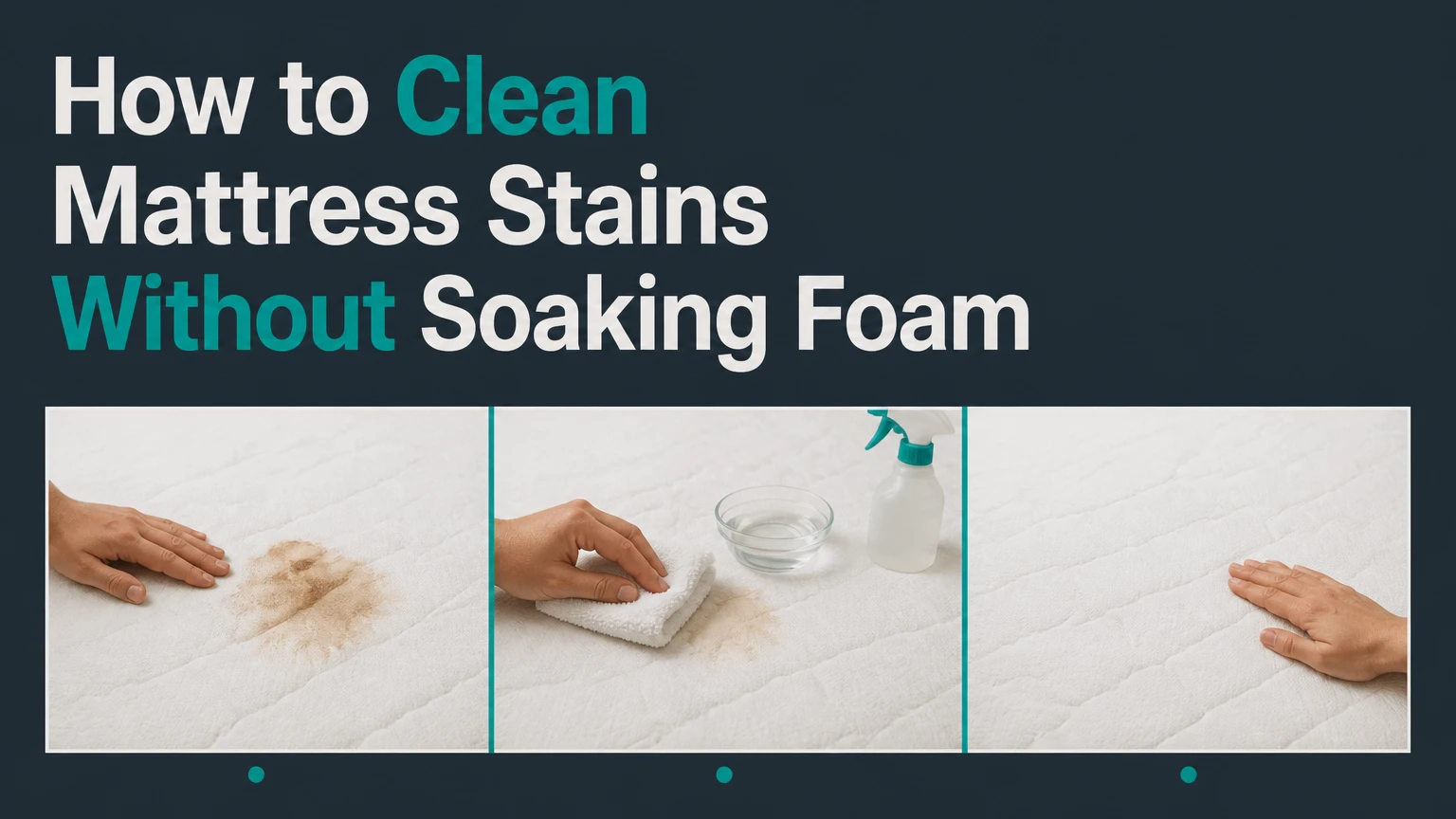
To clean mattress stains, remove the bedding, blot excess liquid, apply a small amount of stain-specific cleaner, blot away residue, deodorize only after the surface is nearly dry, and ventilate until the mattress is completely dry. Cold water suits blood, enzyme cleaner suits urine and vomit, and diluted detergent suits coffee, juice, and body oil.
Key facts at a glance
A fresh mattress stain is easier to remove because pigment and odor compounds have not fully bonded to the fabric or foam.
Use a white cloth and blot from the outside of the stain toward the center to reduce spreading and color transfer.
Spray cleaner onto a cloth whenever possible; direct spraying limits the liquid entering memory foam and latex.
Use 3% hydrogen peroxide for a small, tested area, not concentrated peroxide or chlorine bleach.
Baking soda reduces some surface odor but does not disinfect a mattress or remove urine trapped in foam.
A mattress may need 6-12 hours to dry, depending on humidity, foam thickness, airflow, and the amount of liquid used.
What Causes Mattress Stains?
Mattress stains usually come from water-based biological fluids, colored drinks, or oil-based products, and each category needs a different cleaning mechanism. Blood, sweat, urine, and vomit contain proteins; coffee and wine contain colored plant compounds; skin oil, lotion, and makeup contain lipids that repel water.
The mattress cover, called ticking, is the first cleaning surface. Beneath it may be cotton, polyester, wool, latex, polyurethane foam, springs, or several bonded layers. A liquid that appears to be a small spot can spread sideways through the ticking and downward through foam, so visible stain size does not reliably indicate contamination depth.
Moisture management determines whether cleaning helps or harms. The U.S. Environmental Protection Agency states, “The key to mold control is moisture control.” That principle applies here: do not treat a mattress like washable carpet, and do not replace clean bedding until the mattress is dry inside and out.
How does stain chemistry affect the cleaner?
Protein stains respond to enzymes or oxidation, oil responds to surfactants, and tannin stains respond to controlled water-based detergent treatment. Enzyme cleaners digest suitable organic residues; surfactants surround oily particles so they can be lifted; peroxide can lighten certain pigments through oxidation.
No household cleaner removes every stain safely. Peroxide may lighten a dark ticking, vinegar may leave an odor or affect some finishes, and aggressive detergent use can create a sticky residue that attracts soil.
Before You Start
| Requirement | Typical specification | Why it matters |
|---|---|---|
| Active cleaning time | 15-30 minutes | Covers setup, treatment, and blotting |
| Drying time | 6-12 hours | Varies with humidity, foam, and airflow |
| Difficulty | Low | Requires controlled moisture, not specialized skill |
| Basic tools | 4 white cloths, vacuum, fan, gloves | Prevents dye transfer and speeds drying |
| Cleaner quantity | 1-2 teaspoons per 30 cm spot | Limits penetration into foam |
| Working position | Mattress flat or slightly tilted | Reduces cleaner migration |
| Cost | $1-$25 DIY | Depends on household supplies or enzyme spray |
Read the mattress warranty and care label before applying liquid. Remove sheets, blankets, and the protector, then wash each item according to its label. Wear disposable gloves for blood, vomit, urine, feces, or unknown bodily fluids, and wash hands after handling contaminated laundry.
Test every solution on a hidden seam for 10-15 minutes. Check for color transfer, bleaching, texture change, or a lingering odor before treating the visible stain.
How to Clean Mattress Stains: Six Steps
The safest general method takes six steps: strip the bed, vacuum, blot, treat, rinse-blot, and dry. A small fresh spot may take 20 minutes of hands-on work, while a damp mattress commonly needs 6-12 hours before bedding can return.
Step 1: Remove bedding and vacuum the surface
Strip the mattress completely and place contaminated laundry in a separate hamper or washable bag. Vacuum the top, sides, seams, and crevices with a clean upholstery attachment, using low suction on delicate ticking.
Vacuuming first removes hair, skin flakes, dust, and loose powder that would otherwise become muddy when wet. Do not use a rotating brush on loose, knitted, or damaged fabric.
You will know it worked when: the surface has no loose debris and the stain boundary is visible.
Common mistake: shaking dirty bedding over the mattress, which redistributes dust and allergens.
Step 2: Blot fresh liquid immediately
Place a folded white microfiber cloth over the wet area and press straight down for 10-20 seconds. Replace the cloth as it becomes damp, continuing until little moisture transfers.
Work from the outer edge toward the center. Rubbing spreads pigment, roughens fibers, and drives liquid below the ticking.
You will know it worked when: a dry cloth picks up only a faint damp mark rather than a wet patch.
Common mistake: using colored towels, whose dye can transfer when exposed to peroxide or detergent.
Step 3: Apply a stain-specific cleaner sparingly
Choose the cleaner from the table below. Apply it to a cloth or use a fine mist, keeping the treatment area slightly larger than the visible mark but avoiding a soaked perimeter.
For a 30 cm spot, begin with 1-2 teaspoons of solution. Foam should feel lightly damp, never spongy or saturated.
You will know it worked when: the solution contacts the ticking without pooling or running toward a seam.
Common mistake: pouring cleaner directly onto the bed, which increases drying time and pushes contamination into the core.
Step 4: Allow controlled dwell time
Leave the cleaner in place for 5-15 minutes, following a commercial product’s label if it specifies a different period. Enzymatic products need enough contact time to work, but they must not dry into a heavy residue.
Keep children and pets away during treatment. Do not combine peroxide, vinegar, chlorine bleach, ammonia, or other cleaners in the same container or on the same wet area.
You will know it worked when: the stain looks lighter or loosens onto a clean cloth during the next blot.
Common mistake: scrubbing immediately, which damages ticking before chemistry has loosened the residue.
Step 5: Blot away cleaner and residue
Dampen a clean white cloth with cool distilled water, wring it nearly dry, and press it against the treated area. Follow with a dry towel, applying firm vertical pressure to extract diluted residue.
Repeat once if the area feels soapy. Excess detergent can leave a stiff ring and attract new soil.
You will know it worked when: the cloth no longer picks up visible pigment and the fabric does not feel slick.
Common mistake: rinsing by pouring water, which replaces a stain problem with a deep-moisture problem.
Step 6: Dry the mattress completely
Stand the mattress on its side if the manufacturer permits, or raise one end to increase air circulation. Aim a fan across the surface, open windows when outdoor humidity is lower, and keep the mattress uncovered for at least 6-12 hours.
Apply baking soda only when the area is slightly damp or dry, not wet. Leave a thin layer for 30-60 minutes, then vacuum slowly with an upholstery attachment. Baking soda can reduce surface odor, but it cannot pull all dissolved urine from deep foam through capillary action.
You will know it worked when: the mattress feels dry and cool rather than clammy, has no musty odor, and shows no darker damp area when pressed with a dry towel.
Common mistake: replacing sheets after the surface feels dry while the foam underneath remains damp.
Which Cleaner Works for Each Mattress Stain?
The best cleaner depends on the stain’s chemistry and age. Enzyme cleaner is usually the strongest option for urine and vomit, cold water and cautious peroxide suit blood, diluted detergent suits colored drinks, and a small amount of degreasing detergent suits oil.
| Stain type | First choice | Quantity for 30 cm spot | Contact time | Main caution |
|---|---|---|---|---|
| Fresh urine | Enzyme cleaner | 15-30 ml | Label-directed, typically 10-15 min | Avoid saturating foam |
| Dried urine odor | Enzyme cleaner | Enough to reach odor depth, extracted afterward | 15-30 min | Surface mist may not reach core |
| Blood | Cold water, then 3% peroxide test | 1-2 tsp peroxide | 1-5 min | Heat sets protein; peroxide may bleach |
| Vomit | Enzyme cleaner after removal | 15-30 ml | 10-15 min | Wear gloves and remove solids first |
| Sweat | Diluted detergent | 1 tsp in 240 ml cool water | 5-10 min | Yellowing may be oxidation, not removable soil |
| Coffee or juice | Detergent solution | 1 tbsp detergent in 500 ml water | 5-10 min | Blot quickly to limit wicking |
| Wine | Diluted detergent | 1 tbsp detergent in 500 ml water | 5-10 min | Do not add excessive water |
| Body oil or makeup | Degreasing dish detergent | 1-2 drops in 120 ml water | 5-10 min | Rinse-blot thoroughly |
How do you remove urine, sweat, and vomit?
Use a labeled enzymatic cleaner for urine, sweat residue, or vomit because protease and related enzymes can break down organic residues that detergent leaves behind. Remove solids first, blot liquid, apply the product sparingly, follow its dwell time, then extract residue and ventilate.
Commercial enzyme cleaners are preferable to improvised mixtures when urine has entered foam. A common homemade peroxide, baking soda, and dish-soap formula may lighten a fresh surface mark, but it is not an enzyme treatment and cannot reliably digest deep uric-acid residue.
For a pet or child accident, treat an area extending 5-10 cm beyond the visible edge. If odor returns after drying, the original liquid likely traveled deeper than the first application. A wet-dry extractor may help, but use the lowest practical moisture volume and dry aggressively.
How do you remove blood from a mattress?
Blot fresh blood with cold water, then test 3% hydrogen peroxide on a hidden seam before applying a tiny amount to the stain. Let the peroxide fizz for 1-5 minutes, blot immediately, and repeat cautiously rather than flooding the fabric.
Hot water can denature and set blood proteins, making removal harder. Do not use meat tenderizer on a mattress: although papain can break down protein, the paste is difficult to remove from foam and may introduce fragrance, salt, or other residue.
Dried blood often needs several short treatments. Stop when the remaining mark is stable and the fabric begins to lighten, because continued peroxide use can damage or bleach ticking.
How do you remove coffee, wine, and juice?
Mix 1 tablespoon of clear dish detergent with 500 ml of cool water, apply the solution to a cloth, and blot the colored drink stain from its edge inward. Follow with a nearly dry water cloth to reduce soap residue, then press with dry towels.
Coffee, wine, and juice contain pigments that can bind quickly to textile fibers. Vinegar is sometimes used in a 1 tablespoon vinegar to 500 ml water solution, but it is not automatically safer for every mattress cover and should never be combined with peroxide.
If a pale ring forms, the treatment was too wet or the dissolved soil migrated outward while drying. Re-blot the entire affected zone lightly with distilled water, then dry the area evenly with towels and airflow.
How do you remove body oil, lotion, and makeup?
Use 1-2 drops of degreasing dish detergent in 120 ml of cool water, dab the mixture onto a cloth, and press it into the oily mark. Blot with a barely damp cloth, then use a dry towel to remove moisture and loosened grease.
Cornstarch can absorb surface oil from a dry ticking, but it is not a substitute for detergent when lotion or makeup has penetrated the fabric. Leave a thin layer for 30-60 minutes and vacuum it completely; do not brush powder into foam.
Avoid a soft toothbrush unless the care label permits agitation. Brushing can pull fibers from quilted ticking and create a permanent rough patch.
Which Mattress Materials Need Different Treatment?
Memory foam and latex require the most conservative moisture approach because liquid can remain inside their closed or semi-closed cells. Innerspring mattresses may allow more airflow, but their padding, edge foam, and fabric still should not be saturated.
| Mattress material | Safe general approach | Avoid | Typical drying priority |
|---|---|---|---|
| Memory foam | Cloth-applied cleaner, minimal water, fan | Steam, soaking, forceful extraction | 12-24 hours if noticeably damp |
| Latex foam | Manufacturer-approved spot cleaner, light blotting | Solvents, bleach, prolonged wetness | 8-12 hours |
| Innerspring | Controlled spot treatment, both-side airflow | Flooding quilted top | 6-12 hours |
| Hybrid | Treat foam layers like memory foam | Steam and deep wetting | 12-24 hours |
| Removable cover | Follow sewn care label, usually machine wash if allowed | Assuming cover treatment cleans foam | Dry cover separately |
Can you steam-clean a mattress?
Steam cleaning is not a universal mattress solution. Steam may be appropriate only when the manufacturer explicitly permits it and a professional can extract and dry the material; memory foam, latex, and hybrid mattresses commonly carry warnings against high heat and excess moisture.
Steam can reduce some surface organisms, but it does not remove deep urine salts without extraction. Heat can also set protein stains, distort foam, weaken adhesives, or leave moisture trapped below the cover.
Which Cleaning Method Should You Choose?
| Method | Typical cost | Best use | Limitation | Drying expectation |
|---|---|---|---|---|
| Cool water and blotting | $0-$2 | Fresh blood or small drink spill | Limited on dried stains | 2-6 hours |
| Diluted dish detergent | $1-$4 | Coffee, juice, oil, sweat | Residue if overused | 6-12 hours |
| 3% hydrogen peroxide | $2-$5 | Small blood or pigment mark | Can bleach fabric | 6-12 hours |
| Commercial enzyme spray | $10-$25 | Urine, vomit, pet accidents | May need extraction for depth | 8-24 hours |
| Professional extraction | $80-$200 | Large or deep contamination | Cost and scheduling | Provider-dependent |
DIY cleaning is appropriate for a small, localized stain with no mold, flooding, or persistent deep odor. Professional extraction becomes more reasonable when a large volume of liquid entered a thick mattress, multiple treatments failed, or the mattress cannot be dried safely at home.
Professional cleaning is not a guarantee of recovery. A technician cannot always remove urine salts from every foam layer, and extraction that leaves the mattress damp creates its own risk.
What Are the Most Common Mattress-Cleaning Mistakes?
Saturating the mattress
Large liquid volumes travel into foam and extend drying time. Use measured teaspoons for small areas, apply cleaner to cloth, and extract with towels after every wet application.
Using chlorine bleach
Chlorine bleach can discolor ticking, weaken fibers, damage foam, and create hazardous fumes when mixed with acids or ammonia. Do not use it on a mattress unless the manufacturer specifically approves the product and concentration.
Mixing cleaning chemicals
Never combine vinegar with hydrogen peroxide, chlorine bleach with ammonia, or multiple commercial cleaners. Chemical combinations can release irritating or toxic gases, while competing products can reduce cleaning performance.
Rubbing a protein stain
Rubbing spreads blood, urine, and vomit through the ticking and may drive residue deeper. Press vertically with a clean cloth, changing cloth sections as pigment transfers.
Applying baking soda to a wet mattress
Wet baking soda forms a paste that can lodge in seams and foam. Allow the mattress to become nearly dry first, use a thin layer, and vacuum slowly.
Replacing bedding too soon
A dry-feeling surface does not prove that the foam core is dry. Press a folded dry towel onto the spot for 30 seconds; any cool dampness or odor means more ventilation is needed.
How Do You Fix Rings, Odor, and Stubborn Marks?
A yellow ring usually results from uneven moisture and wicking rather than a new stain. Lightly mist the complete ring with distilled water, blot from the outside inward with dry towels, and dry the whole area evenly instead of concentrating heat on one point.
Persistent urine odor means the cleaner did not reach the same depth as the original accident, or urine salts remained after surface drying. A labeled enzyme product may require controlled deeper application followed by extraction, but repeated soaking is unsafe for foam.
If baking soda becomes a paste, let it dry completely. Break the crust gently with a spoon or upholstery tool, then vacuum without forcing the powder into the ticking.
A stain that remains faintly yellow after odor removal may be permanent oxidation or fabric discoloration. Cleaning can remove soil and odor without restoring the original color, especially on older cotton covers.
When Should You Replace the Mattress?
Replace a mattress when mold has penetrated the interior, floodwater has contaminated the core, bodily fluids cover a large area, or repeated drying and professional extraction cannot remove odor. Surface discoloration alone does not automatically require replacement.
Do not sleep on a mattress with visible active mold, a persistent musty smell, or wet foam. The U.S. EPA recommends addressing moisture and porous materials promptly because mold can grow within materials that cannot be thoroughly dried.
A mattress protector is the most effective prevention measure. Choose a waterproof, breathable protector that fits the mattress depth, wash it according to its label, and inspect seams after accidents.
How Often Should You Clean a Mattress?
Vacuum the mattress surface every 3-6 months and spot-clean spills immediately. Wash a removable cover or mattress protector according to its label, often monthly for allergy-sensitive households and after every accident.
Routine vacuuming removes loose dust and skin debris, but it does not sterilize foam or remove embedded stains. Baking soda freshening is optional and should not replace ventilation, laundering, or a properly fitted waterproof protector.
Clean more often when a household includes pets, young children, heavy sweating, allergies, or frequent food and drink in bed. Use the care label and warranty as the final authority because mattress constructions vary.
Frequently Asked Questions
Can I clean a mattress stain with only baking soda?
Baking soda can reduce some surface odor and absorb limited moisture, but it cannot remove deep urine, dissolve grease, or sanitize foam. Apply it only after wet cleaning has nearly dried, leave it for 30-60 minutes, and vacuum thoroughly with an upholstery attachment.
Is vinegar safe for every mattress?
Vinegar is not safe for every mattress material or finish. A diluted solution may suit some fabric covers, but test a hidden area first, use minimal moisture, ventilate the room, and never apply vinegar in the same treatment as hydrogen peroxide or chlorine bleach.
How long can a wet mattress stay damp?
Dry a lightly treated spot within 6-12 hours when possible, using airflow and an uncovered surface. Thick memory foam, high humidity, or a large spill may require 12-24 hours. If the mattress remains damp or smells musty, stop using it and reassess the damage.
Does hydrogen peroxide disinfect a mattress?
3% hydrogen peroxide can oxidize some stains and reduce certain microorganisms on the treated surface, but household application does not guarantee mattress disinfection. Peroxide also may bleach fabric, so patch testing and short contact times are necessary.
Can I put a mattress in the washing machine?
Only a manufacturer-approved removable mattress cover belongs in a washing machine. The foam or spring mattress core should never be placed in a washer, because agitation, heat, and uncontrolled water can destroy its structure and leave internal moisture.
How do I prevent stains from returning?
Use a waterproof, breathable mattress protector, keep food and drinks away from the bed, and treat accidents before liquid reaches the foam core. Inspect the protector after laundering because a split seam or worn waterproof layer can allow repeated leakage.
The Bottom Line
How to clean mattress stains safely depends on three decisions: identify the stain, use the least-wet effective cleaner, and dry the mattress completely before reuse. Blot fresh liquid, use enzymes for urine or vomit, cold treatment for blood, diluted detergent for drinks and oils, and professional extraction or replacement when contamination is deep, widespread, moldy, or impossible to dry.