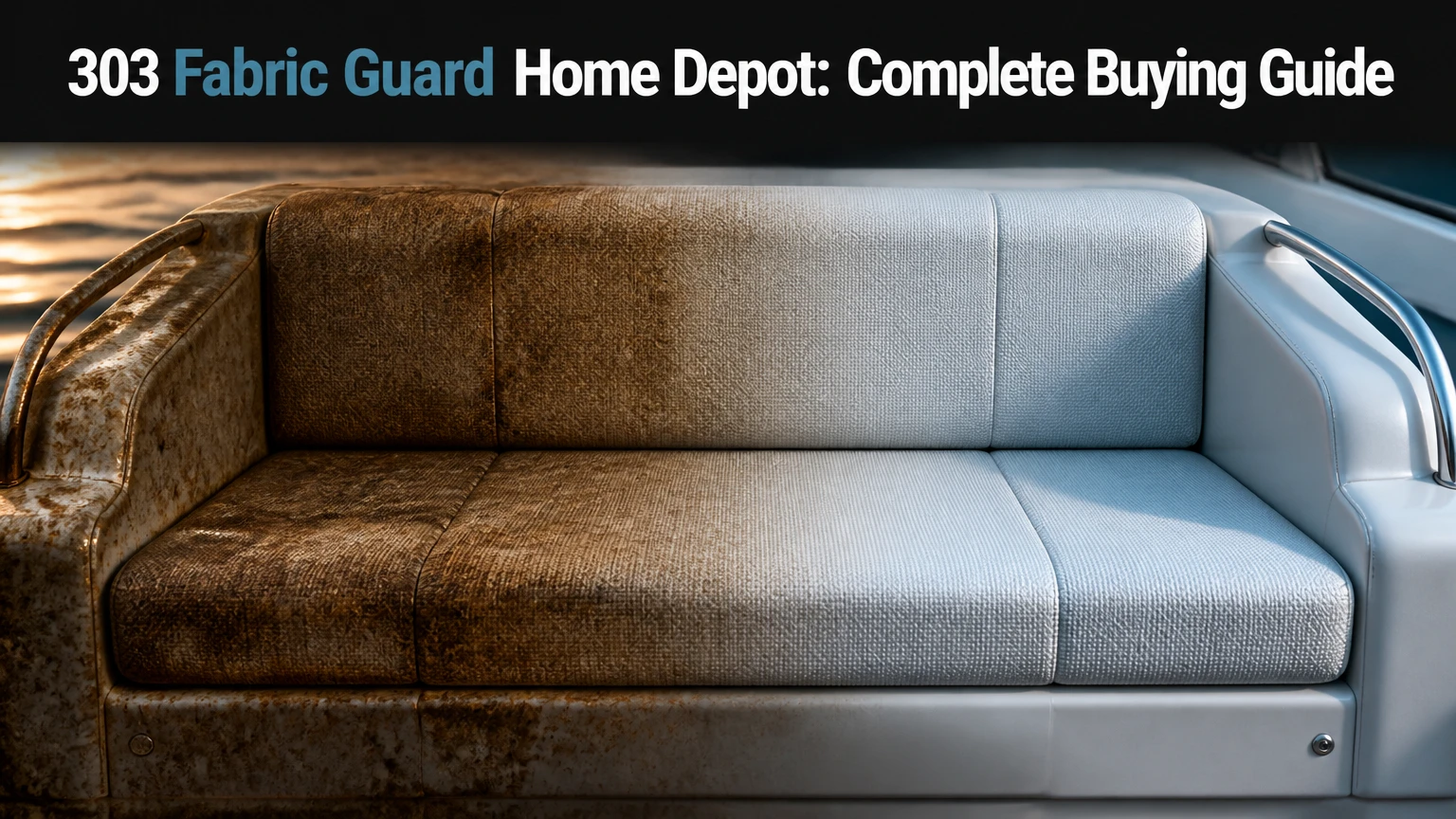
303 Fabric Guard is a solvent-based fabric protectant commonly sold through Home Depot and other retailers for outdoor canvas, patio cushions, boat covers, awnings, umbrellas, and convertible tops. It restores water and stain repellency after cleaning, but success depends on residue-free fabric, complete drying, temperatures of at least 70°F, and protection from moisture during its 12-24-hour cure.
Key Facts
303 Fabric Guard is applied to clean, completely dry fabric, not vinyl, glass, rubber, or painted surfaces.
Gold Eagle recommends applying the product when the air and fabric temperature are at least 70°F.
Typical coverage ranges from about 40 sq. ft. for 16 oz. to about 320 sq. ft. for 1 gallon.
A treated surface should remain dry and undisturbed for 12-24 hours.
Sunbrella recommends 303 Fabric Guard for restoring water repellency on suitable Sunbrella fabrics.
Fabric Guard repels future liquid and oily contamination; it does not remove existing mildew, grease, or embedded stains.
What Is 303 Fabric Guard?
303 Fabric Guard is a fabric water and stain repellent made by Gold Eagle for outdoor textiles exposed to rain, spills, ultraviolet light, and repeated handling. The product is intended for absorbent fabric surfaces such as acrylic canvas, polyester, cotton canvas, and comparable upholstery materials, subject to the fabric maker’s care instructions.
The product is especially associated with Sunbrella restoration. Sunbrella’s care guidance identifies 303 Fabric Guard as a suitable product for restoring repellency after cleaning, but compatibility should still be checked for specialty coatings, printed textiles, and older fabrics.
303 Fabric Guard is not a cleaner, mildew remover, vinyl dressing, waterproofing membrane, or permanent repair. A cushion with degraded stitching, torn backing, open seams, or failing foam can still admit water after the face fabric beads correctly.
What Does Fabric Guard Protect Against?
303 Fabric Guard reduces absorption from rain, water-based spills, and many oily contaminants. It is most useful after a deep cleaning removes the dirt layer that has already destroyed the fabric’s original finish.
The protection is surface-dependent. Horizontal boat covers and seat cushions receive more standing water, abrasion, sunscreen, and bird waste than vertical awnings, so their practical service life is usually shorter.
303 Fabric Guard Home Depot Buying Guide
Home Depot inventory varies by store, ZIP code, season, and marketplace seller, so verify the current product name, bottle size, seller, and pickup status before ordering. Search for 303 Fabric Guard rather than assuming that the similarly branded 303 Multi-Surface Cleaner provides water repellency.
| Product | Typical package | Typical coverage | Best fit |
|---|---|---|---|
| 303 Fabric Guard | 16 oz trigger bottle | About 40-75 sq. ft. | Two to four chair cushions or a small umbrella |
| 303 Fabric Guard | 32 oz trigger bottle | About 80-150 sq. ft. | Patio loveseat, several cushions, or a small awning |
| 303 Fabric Guard | 1-gallon refill | About 320-600 sq. ft. | Large canvas cover, RV awning, or repeated maintenance |
| 303 Multi-Surface Cleaner | 1 gallon common size | Depends on soil and dilution | Pre-cleaning fabric and surrounding hard surfaces |
Coverage varies because porous, faded, textured, or heavily absorbent fabric consumes more liquid than tightly woven, previously treated material. Treat the manufacturer’s coverage as a planning range, not a guaranteed yield.
Which Size Fits Your Project?
Buy the 32 oz bottle for a typical patio set, the 16 oz bottle for a small repair or a few cushions, and the gallon container when the fabric area exceeds approximately 150 sq. ft. or when several large items require treatment.
Estimate the face area of every fabric panel, add both sides only when both sides require protection, then add 10-20% for overlap and absorption. For a 100 sq. ft. patio project, a 32 oz bottle may be sufficient, but a porous cushion set can justify extra product.
How Does 303 Fabric Guard Work?
303 Fabric Guard leaves a water-repellent treatment on fabric fibers that lowers the tendency of liquid to spread and penetrate the weave. Proper application preserves the textile’s flexibility and air permeability better than a heavy surface coating, although the exact chemistry and fiber-level behavior depend on the formulation and fabric.
The important practical mechanism is not a visible plastic film. After the solvent carrier evaporates, treated fibers resist wetting, allowing water to form droplets instead of immediately spreading through the yarns.
That effect has limits. Hydrostatic pressure, prolonged standing water, abrasion, detergent residue, and damaged coatings can overcome repellency. Beading is also not proof that seams, zippers, foam, or backing materials are waterproof.
Does It Waterproof Fabric?
303 Fabric Guard improves water repellency but does not make a fabric assembly permanently waterproof. Water can still pass through needle holes, worn laminate, open seams, mesh panels, zipper tracks, or fabric under pressure from kneeling and sitting.
For a boat cover, combine fabric treatment with sound stitching, intact seam construction, correct tension, and adequate drainage. Do not treat Fabric Guard as a substitute for replacing failed canvas or sealing a structural leak.
Which Fabrics Can Receive It?
303 Fabric Guard is generally intended for outdoor fabrics, including solution-dyed acrylic canvas, polyester, nylon, cotton canvas, and fabric upholstery, but the textile manufacturer’s instructions control when the material has a specialty coating or finish. Test an inconspicuous area before treating the full item.
| Surface or material | Use decision | Reason and required precaution |
|---|---|---|
| Sunbrella acrylic canvas | Generally suitable | Clean first and follow Sunbrella care guidance |
| Polyester patio upholstery | Usually suitable | Test colorfastness and inspect for backing damage |
| Cotton canvas | Test carefully | Absorption, shrinkage, and dye transfer vary widely |
| Clear vinyl window | Do not apply | Overspray can leave haze or residue |
| Vinyl upholstery or rubber | Do not apply | Product is intended for fabric, not flexible non-fabric trim |
| Glass, fiberglass, and painted metal | Mask completely | Solvent overspray can create difficult-to-remove residue |
| Waterproof-coated fabric | Check maker’s instructions | Existing coatings may react or prevent uniform bonding |
The white-cloth test is simple: spray a hidden spot, allow it to dry as directed, then rub the area with a clean white cloth. Color transfer, bleeding, gloss change, stiffness, or spotting means the complete application should stop.
How Do You Apply 303 Fabric Guard?
Apply 303 Fabric Guard in seven controlled steps over approximately 30-60 minutes of working time, followed by 12-24 hours of dry curing. Cleaning quality determines the result more than spray speed, because soap, oils, mildew residue, and moisture interfere with uniform treatment.
Before You Start
| Requirement | Recommended value |
|---|---|
| Minimum application temperature | 70°F, or 21°C |
| Working area | Outdoors or strongly ventilated open shelter |
| Initial cleaning time | 20-60 minutes, depending on soil |
| Cure time | 12-24 hours without rain or dew |
| Safety equipment | Chemical-resistant gloves, eye protection, suitable work clothing |
| Useful materials | Fabric cleaner, soft brush, white cloth, drop cloth, masking material, clean towels |
Do not spray beside an ignition source, in a closed garage, during strong wind, or where overspray can reach vehicles, windows, decking, pets, or food-preparation surfaces. Solvent odor and flammability are highest during application and early drying.
Step 1: Remove Loose Soil
Vacuum or brush away leaves, sand, pollen, hair, and dry debris before wet cleaning. Remove cushions from frames when possible, because exposed fabric edges and underside panels are difficult to treat accurately while installed.
Success checkpoint: No loose grit remains in seams, welting, or folds.
Common mistake: Spraying protectant over pollen or sand, which traps contamination and produces uneven wetting.
Step 2: Deep-Clean the Fabric
Use a residue-free fabric cleaner, such as the appropriate 303 Marine and Recreation Multi-Surface Cleaner, and scrub with a soft upholstery brush. Rinse thoroughly until runoff no longer feels soapy or looks dirty.
Existing mildew requires separate treatment according to the textile manufacturer’s instructions. Fabric Guard does not kill every source of biological growth or conceal permanent discoloration.
Success checkpoint: Water spreads evenly across the cleaned surface rather than forming isolated greasy patches.
Common mistake: Leaving detergent in the weave because the fabric looks visually clean.
Step 3: Dry the Material Completely
Air-dry the fabric until the face, seams, underside, foam-contact areas, and folds are fully dry. Thick cushions can feel dry on top while retaining moisture inside, so separate covers from inserts whenever the design allows.
Success checkpoint: No cool, dark, or damp areas remain when the fabric is squeezed or folded.
Common mistake: Applying protectant the same afternoon after a heavy rinse without checking hidden layers.
Step 4: Test Colorfastness and Compatibility
Apply a small amount to an inconspicuous location, then inspect color, texture, and transfer after drying. A white cloth that picks up dye is a stop signal, not a reason to reduce the spray amount.
Success checkpoint: The test area shows no bleeding, whitening, gloss change, or altered hand feel.
Common mistake: Testing only the most durable top panel while ignoring a printed side panel or contrasting welt.
Step 5: Mask Surrounding Surfaces
Place the fabric on a drop cloth or remove it from the boat, vehicle, or furniture frame. Mask clear vinyl, glass, gelcoat fiberglass, painted panels, rubber trim, wood decking, and metal hardware that could receive drifting spray.
Success checkpoint: A hand-width overspray zone around the workpiece contains no vulnerable finish.
Common mistake: Treating an installed bimini directly above clear windows.
Step 6: Spray an Even Coat
Hold the trigger sprayer at a consistent distance and apply overlapping horizontal passes followed by vertical passes. Wet the fabric evenly without creating drips or pools; two controlled passes are preferable to one saturated application.
Apply only when the fabric and surrounding air are at least 70°F, with low wind and no forecast rain or dew. Wipe accidental overspray from hard surfaces immediately with a clean towel.
Success checkpoint: The fabric looks uniformly damp, not dripping, streaked, or flooded.
Common mistake: Oversaturating absorbent fabric in an attempt to increase durability.
Step 7: Cure Without Interruption
Leave the treated item flat or correctly supported for 12-24 hours in a clean, dry, ventilated place. Protect it from rain, irrigation, morning dew, washing, folding, and heavy use during curing.
Warm, dry conditions can shorten practical drying time, but a dry surface is not automatically fully cured. Gold Eagle’s published guidance emphasizes clean, dry fabric and suitable warm conditions; the longer end of the cure range is safer in cool, shaded, or humid weather.
Success checkpoint: The surface is dry, the odor has substantially reduced, and a small water test beads rather than immediately darkening the weave.
Common mistake: Folding cushions at night, which traps solvent and moisture against untreated or newly treated panels.
How Much Does 303 Fabric Guard Cost?
Typical retail pricing is approximately $15-$22 for 16 oz, $24-$30 for 32 oz, and $85-$115 for a gallon, although Home Depot prices, shipping, promotions, and marketplace listings change. Cost per treated square foot falls sharply with larger packages when the product will be used before storage limits or formulation changes become concerns.
| Package | Typical price | Typical coverage | Approximate cost per sq. ft. |
|---|---|---|---|
| 16 oz | $15-$22 | 40-75 sq. ft. | $0.20-$0.55 |
| 32 oz | $24-$30 | 80-150 sq. ft. | $0.16-$0.38 |
| 1 gallon | $85-$115 | 320-600 sq. ft. | $0.14-$0.36 |
| Cleaner, 1 gallon | Product-dependent | Soil-dependent | Cannot be compared by volume alone |
A practical buying rule is to purchase the next size up when the calculated area is near the package’s upper coverage limit. Running out halfway through a panel creates visible variation and may require a second preparation cycle.
How Long Does One Application Last?
A typical application lasts 6-12 months on heavily exposed horizontal fabric and up to about 24 months on protected vertical fabric, but abrasion, detergent washing, ultraviolet exposure, salt, bird droppings, and standing water can shorten that range.
| Fabric location | Typical service interval | Main wear factor | Reapply signal |
|---|---|---|---|
| Boat cover top | 6-12 months | Rain, folding, salt, abrasion | Water darkens fabric quickly |
| Patio seat cushions | 6-12 months | Sitting, sunscreen, washing | Spills stop beading |
| Umbrella canopy | 9-18 months | Sun and repeated opening | Large areas wet evenly |
| Vertical awning | 12-24 months | UV exposure and wind | Rain begins spreading on face |
| Stored cushion cover | 18-24 months | Low handling | Droplets flatten and soak in |
Reapply only after cleaning and complete drying. Adding another coat over greasy soil, detergent, or mildew creates a weak, uneven film rather than restoring performance.
How Does 303 Compare With Alternatives?
303 Fabric Guard is the strongest fit when the target is manufacturer-aligned restoration of outdoor fabric repellency, especially on Sunbrella-style acrylic canvas. A generic silicone spray may cost less or suit a small camping item, while replacement fabric is the better answer when the textile has structural damage.
| Option | Best use | Water behavior | Main limitation |
|---|---|---|---|
| 303 Fabric Guard | Patio, marine, and outdoor canvas | Repels water and many oily spills | Requires dry, warm application and careful masking |
| Silicone fabric spray | Small tents and gear | Strong initial beading | Can alter feel, attract soil, or conflict with care instructions |
| Fluorochemical-style textile protector | Indoor or specialty upholstery | Water and stain resistance varies | Formula and fabric compatibility differ by product |
| Fabric replacement | Torn, delaminated, or failed canvas | Restores assembly integrity | Costs far more than treatment |
| No treatment | Decorative or indoor fabric | Original absorbency remains | Rain and spills penetrate quickly |
The counterintuitive practitioner rule is that more repellent is not always better. A thin, uniform coat that cures cleanly generally outperforms a dripping application because excess liquid dries unevenly and increases residue risk.
What Should You Mask or Avoid?
Mask or remove every non-fabric component before spraying, particularly clear vinyl windows, acrylic windows, glass, gelcoat, painted metal, rubber seals, and finished decking. Fabric Guard is not a general-purpose protectant for those materials, and dried overspray can leave haze or a stubborn surface film.
Use a drop cloth beneath cushions and test the cloth itself if it has a waterproof backing. Avoid applying the product to damp fabric, below 70°F conditions, direct food-contact textiles, or items that cannot remain dry for the full cure period.
Safety Rules for Indoor and Marine Work
Work outside whenever practical. Keep the product away from flames, heaters, cigarettes, electrical sparks, and poorly ventilated compartments, and follow the current product label and Safety Data Sheet for gloves, respiratory protection, storage, and disposal.
On a boat, remove canvas before spraying whenever possible. On a convertible top, cover paint, glass, weatherstripping, and interior trim; solvent drift is more damaging than the time saved by spraying in place.
Why Is Fabric Still Absorbing Water?
Fabric that still absorbs water after curing usually had detergent residue, hidden moisture, uneven coverage, incompatible fibers, or a worn underlying coating. The fastest diagnosis is to inspect several areas rather than judge one isolated droplet.
| Symptom after curing | Probable cause | Corrective action |
|---|---|---|
| Entire panel wets immediately | Damp fabric or soap residue | Rinse thoroughly, dry fully, reapply thinly |
| Random dry and wet patches | Uneven spray overlap | Re-clean affected panel and apply uniform passes |
| White streaks or crust | Excess product or poor drying | Clean gently and remove residue before retesting |
| Water beads but seams leak | Failed stitching or backing | Repair seams or replace damaged assembly |
| Color changes | Dye instability or incompatibility | Stop treatment and consult fabric maker |
| Haze on window or vinyl | Dried overspray | Clean promptly with a compatible surface cleaner |
Do not add repeated coats to solve a preparation failure. Clean-water rinsing, complete drying, and a small retest are safer than layering more solvent onto a contaminated surface.
How Do You Remove White Residue?
Remove fresh overspray from hard surfaces immediately with a clean towel and a compatible cleaner. For dried residue, begin with warm water and mild detergent on a hidden area, then follow the surface manufacturer’s guidance; rubbing alcohol may damage some plastics, painted finishes, or clear vinyl.
White residue on fabric often indicates overapplication, uneven drying, or a product-quality issue. Photograph the bottle, lot information, and affected area before cleaning if a warranty or retailer claim may be necessary.
How Should You Maintain Treated Fabric?
Clean treated fabric with the textile maker’s approved method, rinse detergent completely, and avoid aggressive solvents or high-pressure spray that can strip the finish. Store cushions dry and ventilated, because treatment cannot prevent mildew when damp fabric remains compressed for weeks.
Test repellency before each season by placing a few teaspoons of clean water on separate areas. Reapply when water spreads into the weave across multiple locations, not when one worn seat edge fails after heavy abrasion.
Expert Maintenance Rules
- Treat removable covers flat whenever possible. Gravity makes runs and pooling more likely on vertical installed panels.
- Schedule application after the final cleaning, not before spring pollen season. Fresh contamination can bind to uncured or newly cured treatment.
- Photograph the test patch and product lot before full application. That record helps distinguish fabric incompatibility from application error.
- Treat seams as a separate inspection task. Beading fabric cannot compensate for needle holes, failed thread, or cracked seam tape.
303 Fabric Guard FAQ
Can 303 Fabric Guard be used on indoor upholstery?
303 Fabric Guard can be suitable for some absorbent indoor upholstery, but the fabric maker’s cleaning and flammability instructions take priority. Ventilation matters because the solvent odor is stronger than that of many water-based textile protectors. Always test dye stability and texture on a hidden section before treating a visible panel.
Can I apply 303 Fabric Guard before rain?
No. The treated fabric should remain protected from rain, dew, washing, and high humidity for at least 12 hours, with 24 hours preferred when conditions are cool or shaded. A forecast that looks dry during spraying can still fail if overnight dew reaches the fabric before the treatment cures.
Does 303 Fabric Guard remove mildew stains?
No. 303 Fabric Guard restores repellency after cleaning, but it does not replace a mildew remover or repair permanently discolored fibers. Remove biological growth using a fabric-compatible method, rinse away all cleaner, and dry the material completely before testing the protectant.
Can I use a pump sprayer with the gallon container?
A clean pump sprayer can reduce hand fatigue on large canvas areas, provided the sprayer is compatible with the solvent and has never contained herbicide, insecticide, or oily chemicals. Test the spray pattern on a drop cloth, because a coarse stream can oversaturate fabric and produce streaks.
Is 303 Fabric Guard safe for Sunbrella cushions?
Sunbrella identifies 303 Fabric Guard as a product for restoring water repellency on appropriate Sunbrella fabrics. Clean and rinse the cushions first, confirm complete dryness, and test an inconspicuous area because trim, prints, backing, and older dye systems may react differently from the main acrylic canvas.
Should I buy 16 oz or 32 oz at Home Depot?
Choose 16 oz for a small set of cushions or a limited repair, and choose 32 oz for most complete patio sets. Calculate the fabric area first, then add 10-20% for overlap and absorption. If the store listing shows a different coverage claim, use the current package label rather than an older online estimate.
The Bottom Line
303 Fabric Guard is a practical choice for restoring water and stain repellency on clean outdoor fabric, especially Sunbrella-style acrylic canvas, patio cushions, awnings, umbrellas, boat canvas, and compatible convertible tops. For the 303 fabric guard home depot search, verify current stock and package size, buy enough for the full project, and prioritize residue-free cleaning, complete drying, 70°F-or-warmer conditions, careful masking, and a 12-24-hour dry cure.