How to Clean Grout With Baking Soda: 7 Steps Fast
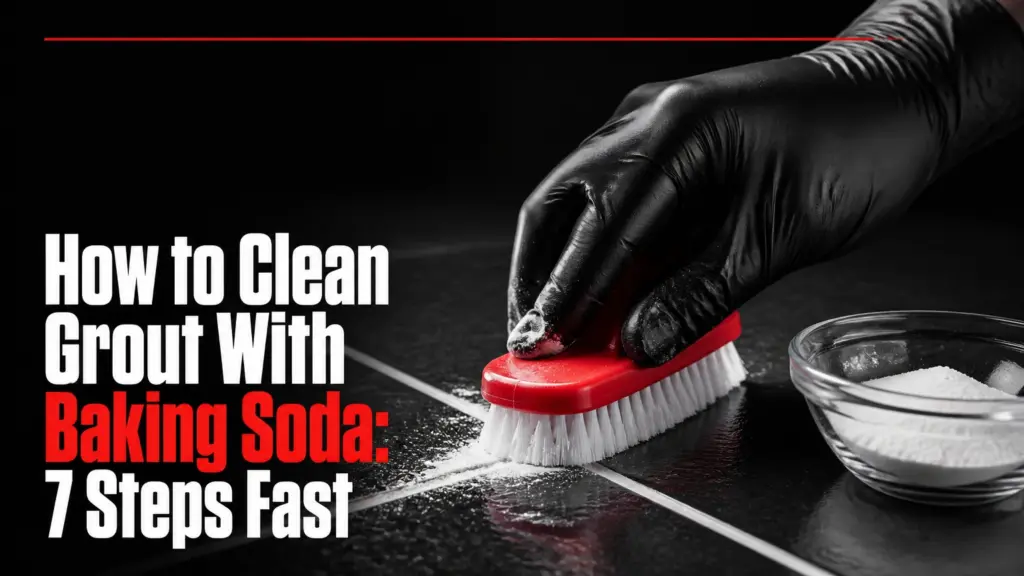
To clean grout with baking soda, make a thick paste from three parts baking soda and one part water, spread it on damp grout, wait 10-15 minutes, scrub with a nylon brush, and rinse thoroughly. Baking soda works best on surface dirt, soap residue, and light grease on ceramic or porcelain tile, but it cannot […]
How to Remove Yellow Stains From a Mattress Without Soaking It
To remove yellow stains from a mattress, identify the likely source, vacuum the surface, blot rather than scrub, apply a small amount of suitable cleaner, extract loosened residue, and dry the mattress completely. Sweat usually responds to diluted 3% hydrogen peroxide, while urine requires an enzyme cleaner for the strongest odor and residue removal. Key […]
How to Clean Concrete Driveway Without Pressure Washer Safely
To clean a concrete driveway without a pressure washer, sweep the surface, pre-wet it, apply a stain-appropriate cleaner, scrub with a stiff nylon brush, and rinse with a garden hose. A typical 500-square-foot driveway takes 2-4 hours and costs $10-$45 in materials, with stain diagnosis and keeping the cleaner wet determining the result. Key Facts […]
How to Remove Water Stains From Couch Safely
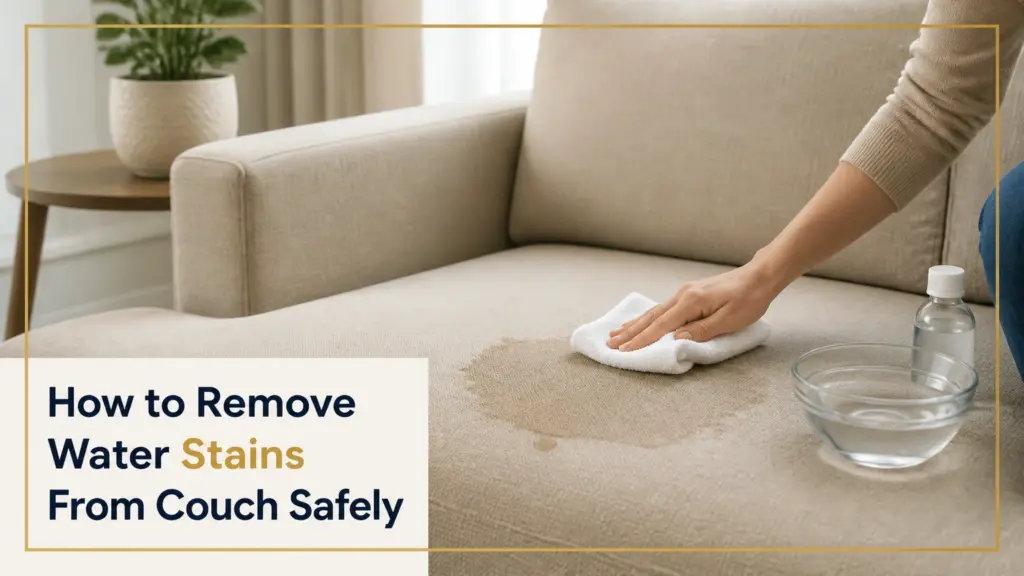
To remove water stains from a couch, first read the upholstery care code, then use the lowest-moisture method approved for that fabric. W and W/S upholstery can often be treated with distilled water and careful extraction, while S fabrics require water-free solvent and X fabrics should be vacuumed or professionally cleaned. Dry the area quickly […]
How to Remove Odors From Mattress: A 2-Hour Fix
To remove odors from a mattress, strip the bed, vacuum both sides, apply the correct treatment for the odor source, and dry the mattress completely before remaking it. Baking soda handles light surface smells, while enzyme cleaner works better for urine, vomit, and pet odors. Moisture control determines whether the smell disappears or returns. Key […]
How to Remove Rust Stains from Driveway Safely
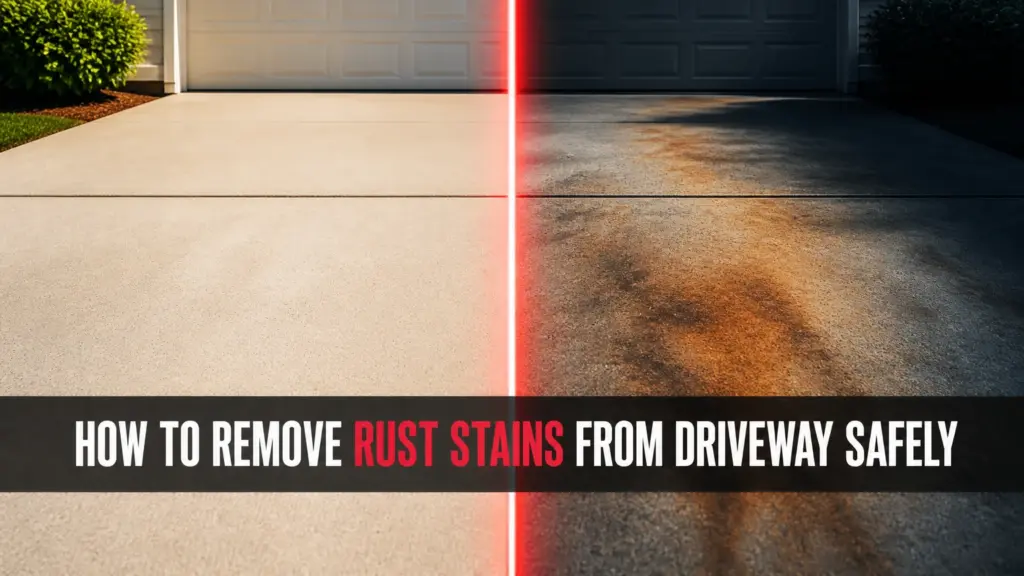
To remove rust stains from a driveway, identify the surface, apply a labeled rust remover containing oxalic, citric, or phosphoric acid, keep it wet for the stated dwell time, scrub with nylon, and rinse thoroughly. Light stains may respond to vinegar, while deep stains usually require a commercial product and source correction. Key Facts at […]
How to Clean Mattress Stains Without Soaking Foam
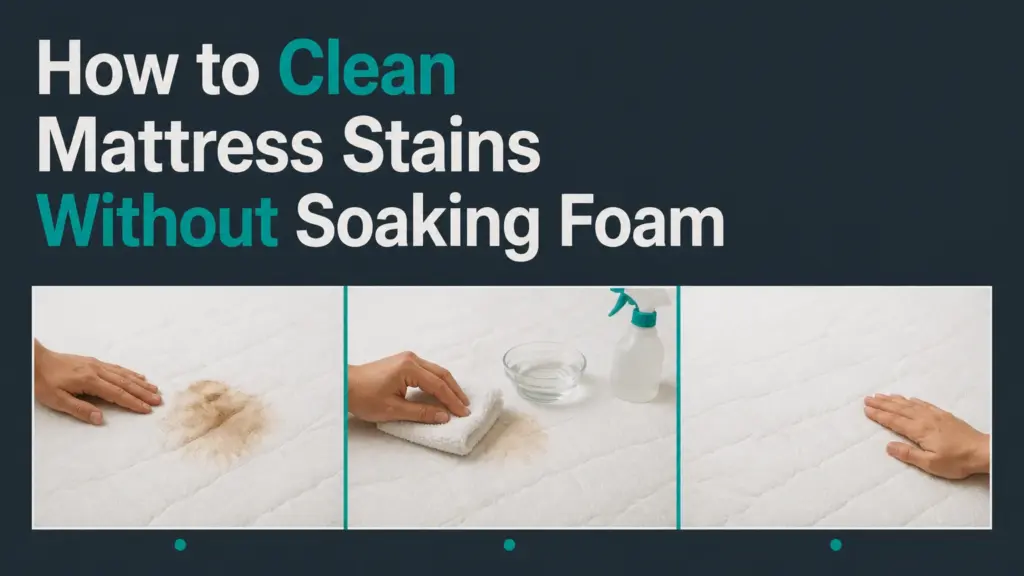
To clean mattress stains, remove the bedding, blot excess liquid, apply a small amount of stain-specific cleaner, blot away residue, deodorize only after the surface is nearly dry, and ventilate until the mattress is completely dry. Cold water suits blood, enzyme cleaner suits urine and vomit, and diluted detergent suits coffee, juice, and body oil. […]
How to Dry a Mattress After Cleaning Safely
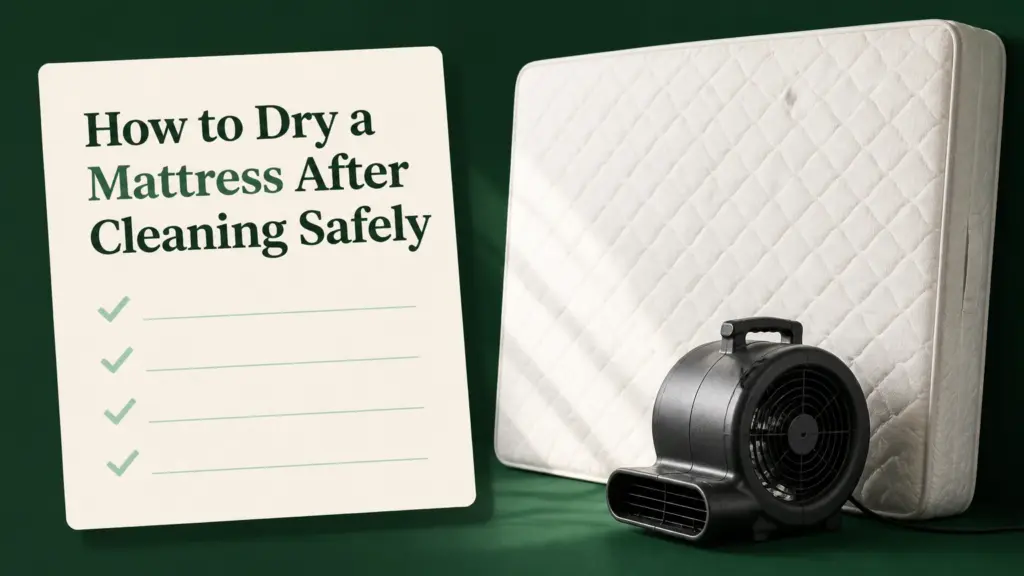
To dry a mattress after cleaning, remove as much water as possible with absorbent towels or a wet/dry vacuum, then expose the mattress to moving air in a low-humidity room. Most lightly damp surfaces dry in 8-24 hours, while saturated foam can require 24-48 hours or professional extraction. Key Facts at a Glance Before You […]
Professional Pet Odor Removal Process: Costs and Steps
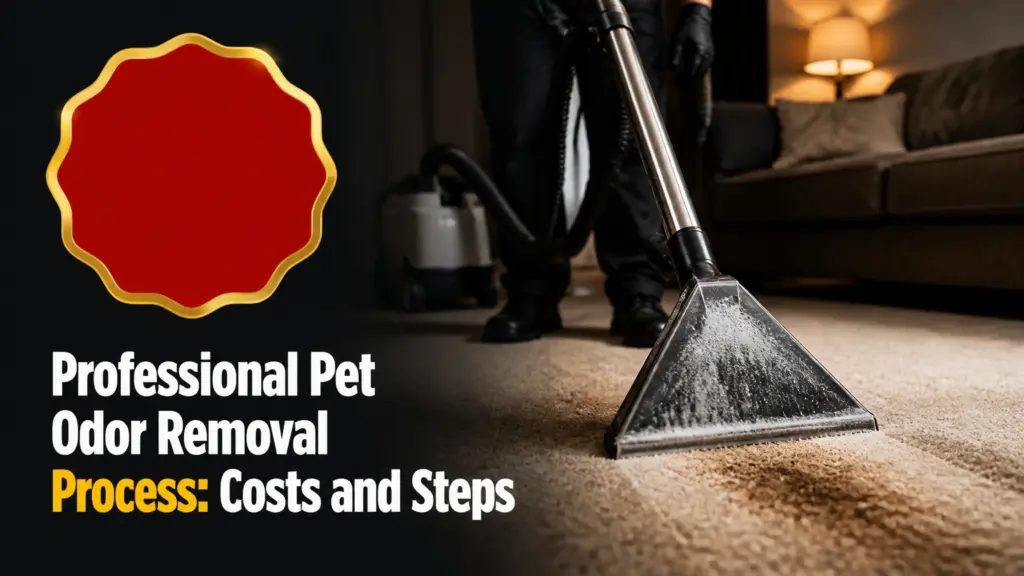
Professional pet odor removal is a source-remediation process that locates contamination, treats the affected material, extracts dissolved residue, and replaces or seals materials that cannot be cleaned. The professional pet odor removal process succeeds when technicians reach the deepest contaminated layer, control moisture, verify drying, and prevent pets from re-marking the area. Key Facts at […]
How Often Should Hardwood Floors Be Cleaned? A Safe Schedule
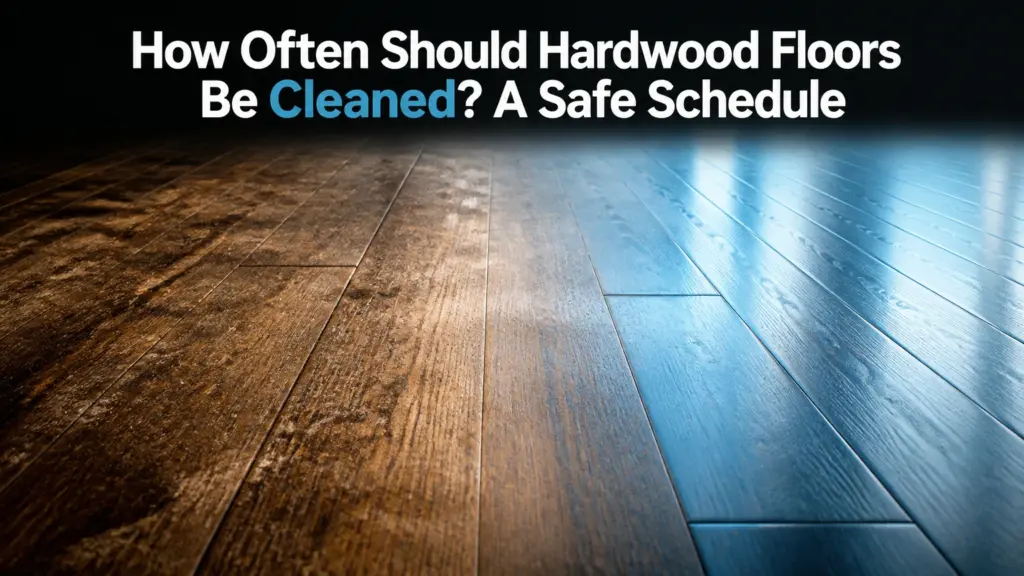
Hardwood floors should usually be dry-cleaned daily or several times weekly in busy zones, vacuumed weekly, and damp-mopped every 1-2 weeks with a finish-compatible cleaner. Low-traffic rooms may need damp mopping monthly. The correct frequency depends on grit, pets, moisture, finish type, and visible soil, not on a universal calendar. Key Facts at a Glance […]