
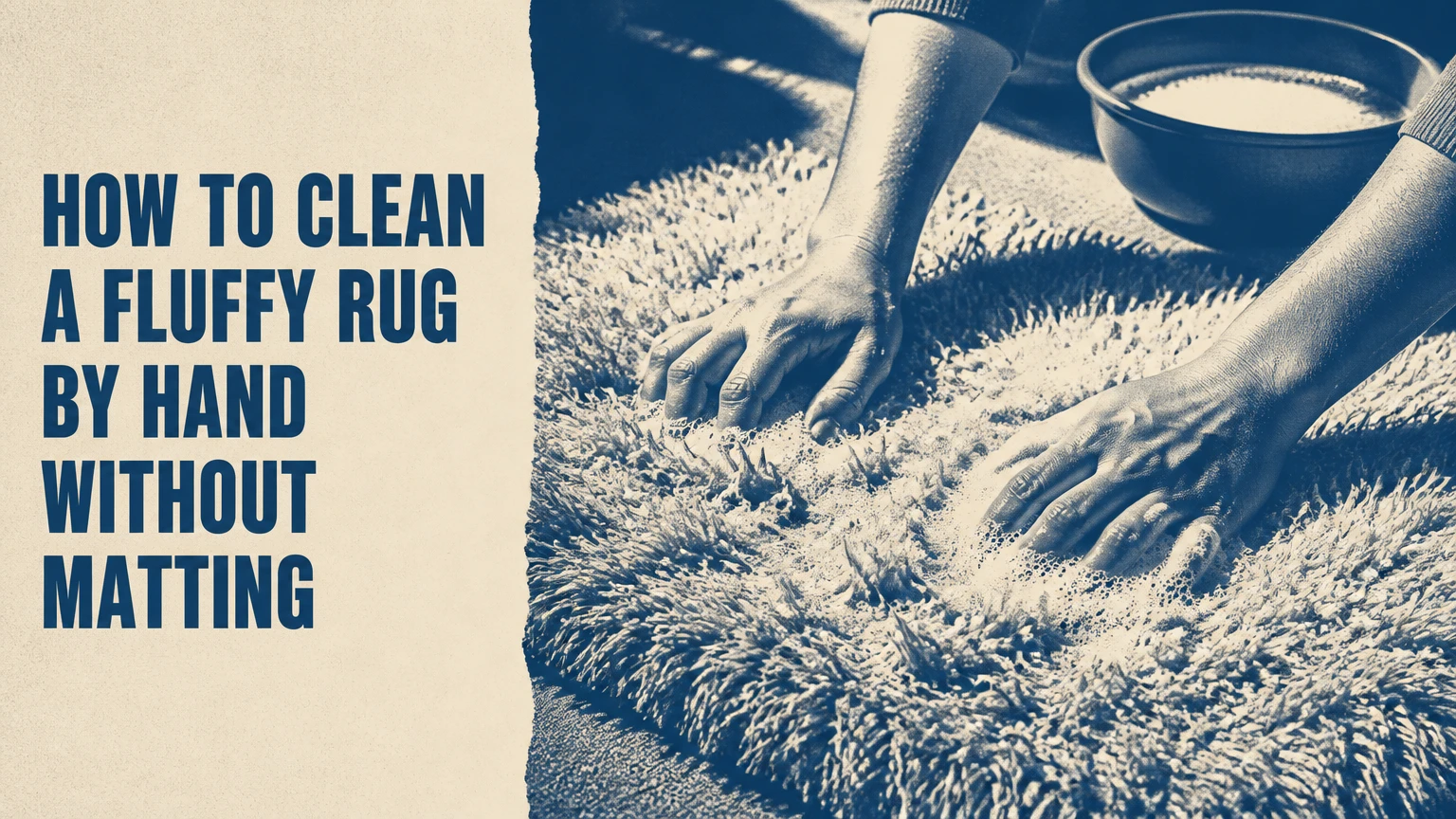
To clean a fluffy rug by hand, remove dry grit, test the dye and backing, treat stains by blotting, wash with a small amount of material-safe detergent, rinse thoroughly, extract water without twisting, and dry the rug flat with strong airflow. The material and backing determine whether full submersion is safe.
Key Facts at a Glance
- Synthetic fluffy rugs usually tolerate controlled washing better than wool, sheepskin, or glued-back rugs.
- Wool, sheepskin, and unknown-fiber rugs require a hidden-area test before any wet cleaning.
- Use cool or lukewarm water, generally no warmer than 30°C (86°F), unless the manufacturer specifies otherwise.
- Never wring, twist, aggressively scrub, or place a wet fluffy rug in direct heat or strong sunlight.
- A small hand-cleaned rug commonly needs 24-48 hours to dry completely, depending on pile density and airflow.
- The safest cleaning method is the one that uses the least moisture needed to remove the soil.
Before You Start: Identify the Rug
The rug label, fiber, backing, and construction determine the safe cleaning method. A polyester shag with a woven backing can tolerate more water than a wool flokati, while a real sheepskin rug has a leather hide that can stiffen, shrink, or crack when saturated.
Find the care label before moving the rug. Record the fiber, backing instructions, washing temperature, and drying direction. If the label says spot-clean only, dry-clean only, or professional cleaning, do not substitute a generic tub-washing recipe.
Material and Moisture Guide
| Rug type | Typical fiber or backing | Safe starting method | Main risk |
|---|---|---|---|
| Synthetic shag | Polyester, polypropylene, acrylic | Low-moisture wash or tub wash for small rugs | Backing separation and color bleeding |
| Wool shag | Wool, flokati, New Zealand wool | Foam clean or specialist wool wash | Felting, shrinkage, and dye transfer |
| Real sheepskin | Wool fleece on leather hide | Damp surface cleaning with sheepskin product | Stiff, shrunken, or cracked leather |
| Faux fur | Polyester or acrylic pile | Surface foam with cool water | Heat damage and tangled fibers |
| Glued-back rug | Synthetic pile with latex or adhesive | Surface clean, minimal saturation | Adhesive breakdown and rippling |
| Unknown vintage rug | Unknown natural or mixed fibers | Dry soil removal, then professional advice | Permanent dye, fiber, or backing damage |
The Woolmark Company advises against rubbing or scrubbing wool because friction can felt the fibers. That rule matters for high-pile wool: hand cleaning should move soil outward with pressure and rinsing, not grind it deeper into the pile.
When Should You Avoid Full Washing?
Avoid full submersion when the rug has a leather backing, a glued or crumbling backing, unstable dyes, severe odor from the underside, fringe that may bleed, or a size that becomes unsafe to lift when wet. A rug that weighs 5 kilograms dry can become several times heavier after saturation.
Send a valuable, antique, hand-knotted, silk, viscose, jute, or heavily stained rug to a cleaner who handles that construction. DIY cleaning is also a poor choice when the backing already cracks, flakes, curls, or releases a rubber smell.
What Tools and Products Do You Need?
A practical hand-cleaning setup costs about $5-$15 for basic supplies when you already have towels, a basin, and a vacuum. Use a white cloth, pH-neutral detergent, clean water, absorbent towels, and a fan; avoid assembling a large collection of chemicals.
Before-You-Start Checklist
| Item | Typical quantity or specification | Purpose |
|---|---|---|
| Vacuum | Suction-only or brush roll switched off | Removes loose grit without pulling pile |
| White microfiber cloths | 4-8 cloths, lint-free | Tests dye and blots stains |
| Detergent | 5-10 milliliters per 4 liters of water | Cleans without leaving a heavy film |
| Basin or bathtub | Large enough to avoid tight folding | Holds wash or rinse water |
| White towels | 4-10, depending on rug size | Extracts water through pressure |
| Wide-tooth comb | 1, plastic or smooth metal | Separates damp pile |
| Fan | 1 floor or box fan | Increases evaporation and air exchange |
| Nitrile gloves | 1 pair | Protects hands from detergent and pet cleaners |
Choose a wool-safe, pH-neutral detergent for wool. Choose a sheepskin-specific wash for real hide rugs. For washable synthetic rugs, a small amount of clear, dye-free dish soap can work, but concentrated laundry detergent, fabric softener, bleach, and oxygen products can leave residue or alter color.
Should You Use Vinegar or Baking Soda?
White vinegar and baking soda have limited maintenance uses, but neither is a universal fluffy-rug cleaner. Vinegar can help reduce alkaline detergent residue when heavily diluted, while baking soda can absorb some surface odors after the rug is completely dry; neither reliably removes oily soil, old urine salts, or embedded grit.
Do not mix vinegar with bleach or ammonia. Avoid sprinkling baking soda into a deep, wet pile because powder can settle near the backing and become difficult to remove. For pet urine, use a fiber-compatible enzymatic product after absorbing the liquid, then follow the product label and test hidden color first.
Step 1: Remove Dry Dirt Outside
Take the rug outdoors, support it over a broad, clean rail, and gently tap the backing with your hand or a soft broom for 2-5 minutes. Then vacuum both sides with suction only, using slow passes that follow the pile direction.
Do not use a rotating beater bar on shag, long faux fur, or loosely looped pile. The roller can wrap strands around its spindle, pull tufts from the foundation, and create bald lines that washing will not repair.
You will know it worked when: little or no dust falls when you tap the backing, and the vacuum collects grit without pulling visible fibers.
Common mistake: shaking a large rug violently by one corner. That stresses the binding and can distort the backing.
Step 2: Test Colorfastness and Backing
Mix the intended cleaning solution at its final dilution. Press a damp white cloth onto a hidden corner for 10 seconds, then check the cloth and the rug for dye transfer, sticky backing, swelling, or color change.
Repeat the test on the pile, binding, and underside because different materials may react differently. Wait until the test area dries before judging the result. Dark dyes sometimes appear stable while wet but bleed as the rug dries.
You will know it worked when: the white cloth remains clean, the pile returns to its original texture, and the backing stays flat and flexible.
Common mistake: testing only the center of the rug. The edge, fringe, and backing often contain different dyes, adhesives, or finishing treatments.
Step 3: Blot Stains Before Washing
Lift solids with a spoon, scrape dried mud gently, and absorb liquid with folded white towels. Work from the outside of a stain toward its center, pressing and lifting rather than scrubbing through the long pile.
For a fresh water-based spill on a colorfast synthetic rug, use a few drops of mild detergent in 250 milliliters of cool water. For wool or sheepskin, use the labeled wool or hide product instead. Do not apply a 1:1 vinegar solution automatically, because acid can affect dyes, finishes, and some natural fibers.
You will know it worked when: the towel absorbs color or soil without spreading the stain, and the treated patch does not develop a hard ring.
Common mistake: pouring cleaner directly onto the rug. Direct application can saturate one area, create tide marks, and drive liquid toward the backing.
Step 4: Choose Surface Cleaning or Tub Washing
Use surface foam when the rug has a glued backing, leather hide, dense faux fur, unstable dye, or a size that will be difficult to dry. Use controlled tub washing only for a small, colorfast rug whose label permits wet cleaning.
A tub wash cleans the foundation more thoroughly, but water makes the rug heavy and increases drying risk. Surface foam reduces saturation but cannot remove soil trapped at the base of a dense pile.
Cleaning Method Comparison
| Method | Water exposure | Typical active time | Best application |
|---|---|---|---|
| Dry vacuum and shake | 0 liters | 10-20 minutes | Weekly grit removal |
| Surface foam | 0.5-2 liters per square meter | 30-60 minutes | Faux fur, glued backing, sheepskin |
| Controlled tub wash | 10-40 liters total | 45-90 minutes | Small synthetic rugs |
| Professional immersion | Cleaner-specific | 1-3 days including drying | Valuable, wool, antique, or large rugs |
The method is not interchangeable across materials. Real sheepskin should not be treated like synthetic shag, even when both look fluffy from above.
Step 5: Wash a Small Synthetic or Washable Rug
Fill a clean bathtub or basin with cool to lukewarm water. Keep the water at or below 30°C unless the care label gives a different instruction, then dissolve approximately 5-10 milliliters of detergent per 4 liters of water.
Place the rug in the water without sharply folding it. Press it down, allow the solution to reach the base, and gently compress sections with open hands for 5-10 minutes. Do not twist, scrub, brush, or knead wool aggressively.
Drain the dirty water and refill the tub with clean water. Press the rug repeatedly to release detergent, changing the rinse water until it remains nearly clear and the surface no longer feels slippery.
You will know it worked when: the rinse water has little foam, the pile feels clean rather than slick, and no detergent smell remains.
Common mistake: using extra detergent for a heavily soiled rug. Excess surfactant increases rinsing time and can leave a sticky film that attracts dirt.
Step 6: Surface-Clean Sheepskin, Faux Fur, or a Glued Rug
Place the rug pile-side up on towels or a waterproof surface. Whisk a small amount of appropriate detergent into cool water, apply the foam with a sponge, and work in sections without soaking through to the backing.
For real sheepskin, use a product made for wool fleece and leather hide, and follow its label exactly. Keep the hide as dry as possible. For faux fur, keep heat away from the pile because acrylic and polyester fibers can deform, flatten, or become permanently tangled.
For a glued-backed rug, clean a 30-by-30-centimeter section first. Stop if the backing becomes tacky, develops bubbles, curls, or transfers black or white adhesive onto the towel.
You will know it worked when: the pile looks evenly damp rather than saturated, the backing stays dry or only slightly moist, and the cleaned section dries without a hard edge.
Common mistake: flooding the pile because surface foam appears insufficient. Repeat a controlled pass instead of adding enough water to reach the floor.
Step 7: Extract Water Without Wringing
Drain the wash water and press the rug against the tub surface with flat hands. For a flexible synthetic rug, roll it loosely from one end and press along the roll to move water outward; never twist the roll like clothing.
Lay the rug flat on clean towels. Cover it with more towels and apply body weight through the towels for several seconds at a time. Replace saturated towels until they stop absorbing large amounts of water.
Typical Time and Cost Ranges
| Rug situation | Active cleaning time | Drying time | Typical DIY supply cost |
|---|---|---|---|
| Small synthetic rug, light soil | 30-45 minutes | 12-24 hours | $5-$10 |
| Medium synthetic shag, heavy soil | 60-90 minutes | 24-48 hours | $8-$15 |
| Faux fur, surface clean | 30-60 minutes | 12-36 hours | $5-$12 |
| Wool or sheepskin, careful damp clean | 45-90 minutes | 24-72 hours | $10-$20 |
| Professional delicate-rug cleaning | 30-60 minutes at home | 1-3 days total | Often $2-$7 per square foot |
The costs above are typical planning ranges, not fixed prices. Local labor, rug size, transport, fiber, and restoration needs can change professional pricing substantially.
You will know it worked when: the rug feels damp but does not release water when pressed through a towel.
Common mistake: lifting the saturated rug by two corners. Use a sling of towels or carry it horizontally with help.
Step 8: Dry Flat With Airflow
Dry the rug flat on a clean, breathable surface, or hang it over a wide support only when the backing is flexible and the rug is light enough to avoid stretching. Position a fan so air moves across the pile, open windows when outdoor humidity is low, and keep the rug away from radiators, hair dryers, and direct midday sun.
Turn the rug after several hours so both sides can release moisture. Comb or brush synthetic pile gently while it is damp, following the original direction, then repeat once the fibers are nearly dry. Do not use a garment steamer on an unknown rug because heat and moisture can shrink wool, soften adhesives, or damage synthetic pile.
A 24-48 hour drying period is typical for a small synthetic rug in a ventilated room. Dense wool, sheepskin, humid weather, and a damp backing can extend drying to 72 hours.
You will know it worked when: the backing feels dry, the rug has no cool damp core, and its odor is neutral rather than musty.
Common mistake: putting the rug back on the floor while the underside is still damp. Trapped moisture can produce mildew odor and stain the flooring underneath.
Which Method Is Safest for Each Material?
Synthetic rugs are usually the most forgiving, but construction matters more than appearance. Wool and leather-backed rugs need less water and less friction, while glued rugs need controlled surface cleaning because adhesive failure is often irreversible.
| Material or construction | Detergent | Agitation | Drying rule |
|---|---|---|---|
| Polyester shag | Mild synthetic-safe detergent | Gentle compression | Flat with fan, 12-48 hours |
| Polypropylene shag | Mild detergent or clear dish soap | Gentle hand pressure | Air-dry, avoid high heat |
| Wool flokati | pH-neutral wool wash | Minimal compression | Flat, shaded, ventilated |
| Real sheepskin | Sheepskin-specific wash | Sponge and press only | Keep hide supported and dry slowly |
| Faux fur | Label-approved mild detergent | Foam and fingertip separation | Air-dry, comb while damp |
| Latex-backed rug | Minimal diluted cleaner | Surface blotting only | Never saturate backing |
The popular assumption that every fluffy rug can be washed in a bathtub is unsafe. A washable synthetic rug may recover well, but a hide, antique, viscose, or glued rug can shrink, bleed, ripple, or delaminate after one soaking.
Common Problems and How to Fix Them
Why Does the Rug Feel Crunchy After Drying?
A crunchy rug usually contains dried detergent residue, mineral deposits, or fibers that dried in a compressed position. Vacuum the dry pile, mist a small test area with plain water, press with a towel, and brush gently after the residue softens.
Do not flood the entire rug to correct a small residue patch. If the crunchiness covers the backing or the rug is wool, use a professional rinse rather than repeated home wetting.
What Causes a Musty or Wet-Dog Smell?
A musty smell usually means the backing or pile dried too slowly. Move the rug onto a raised, ventilated surface, run a fan continuously, and use a dehumidifier if room humidity remains high.
Baking soda may reduce a dry surface odor, but it does not disinfect a damp backing or remove urine salts. Apply it only after the rug is completely dry, leave it for 1-2 hours, and vacuum carefully with the brush roll off.
How Do You Restore Matted Fibers?
Separate matted fibers with your fingers while the pile is slightly damp, then use a wide-tooth comb in small sections. A slicker brush can help on durable synthetic faux fur, but use light strokes and stop when tufts begin pulling from the foundation.
Avoid steam unless the manufacturer specifically permits it. A low-temperature steamer held 15 centimeters away can still soften adhesive, distort acrylic, or create shrinkage in wool.
What If the Rug Bleeds Color?
Stop cleaning immediately if dye transfers strongly to a white cloth or spreads into adjacent colors. Blot excess moisture, keep the rug flat, and separate colored sections with clean towels.
Do not add vinegar, salt, bleach, or more detergent to “set” the dye. Those home remedies cannot reliably reverse dye migration, and additional chemicals may make professional correction harder.
What If the Backing Curls or Feels Sticky?
A curled, tacky, bubbling, or powdery backing indicates adhesive or coating damage. Stop brushing and wetting, allow the rug to dry flat, and obtain an assessment from a rug specialist.
Do not iron, heat, stretch, or glue the backing at home. Those actions can lock distortion into the rug and transfer adhesive to the floor.
Situational Variations
How Do You Clean a Large Fluffy Rug?
Clean a large rug in 30-by-30-centimeter sections with surface foam instead of attempting a bathtub wash. A large saturated rug is difficult to move, may remain wet beyond 48 hours, and can stretch under its own weight.
Vacuum both sides, test a corner, clean one section at a time, and extract each section with towels before starting the next. Use two fans if possible, one across the pile and one toward the underside or surrounding air.
How Do You Handle Pet Urine?
Absorb fresh urine immediately with towels, pressing until the towel lifts very little moisture. Apply a compatible enzymatic cleaner to the affected area only after testing hidden color, then follow the label contact time and prevent the liquid from reaching the backing.
For repeated accidents, a surface treatment may not reach the urine in the foundation. Persistent odor after complete drying is a professional-cleaning issue, particularly with wool, latex, and hide-backed rugs.
How Often Should a Fluffy Rug Be Cleaned?
Shake or vacuum a fluffy rug weekly, spot-treat spills immediately, and deep-clean synthetic rugs approximately every 12-18 months when traffic is moderate. Homes with pets, allergies, children, or outdoor shoes may need quarterly surface cleaning.
Clean only when the rug needs it. Repeated saturation can damage backing faster than ordinary household soil damages synthetic fibers.
Hand Cleaning Versus Other Options
Hand cleaning provides control, but it is not automatically superior for every rug. The correct choice depends on moisture tolerance, soil depth, available drying space, and the cost of replacing or repairing the rug.
| Option | Cleaning reach | Equipment or cost | Main limitation |
|---|---|---|---|
| Hand surface clean | Pile surface and shallow soil | $5-$15 DIY | Limited foundation extraction |
| Hand tub wash | Pile and foundation | $5-$20 DIY | Heavy wet rug and long drying |
| Home carpet machine | Broad surface extraction | $30-$150 rental | Brush and suction may damage pile |
| Steam cleaning | Heat-assisted surface clean | $50-$200 rental or service | Unsafe for many wool, hide, and glued rugs |
| Specialist rug cleaner | Material-specific full process | Often $2-$7 per square foot | Higher cost and transport time |
A carpet extractor is not a universal upgrade. Machine brushes can tangle long pile, and inadequate extraction leaves the backing wetter than a careful towel-pressing process.
Professional cleaning is justified when the rug is valuable, oversized, color-unstable, antique, silk, viscose, hide-backed, or contaminated below the surface. DIY is most suitable for a small, labeled, colorfast synthetic rug with a stable backing.
Expert Rules That Prevent Damage
- Treat the backing as the failure point. Pile often looks washable while latex, leather, cotton, or adhesive underneath is not. Inspect the underside before choosing a water-intensive method.
- Rinse longer than you think. Detergent residue can make a rug feel clean immediately, then create a sticky surface that attracts soil. Clear rinse water and a nonslip feel are better checkpoints than fragrance.
- Drying is part of cleaning. A rug that cleans well but stays damp for two days can develop odor, mildew, dye migration, or backing distortion. Prepare the drying area before adding water.
- Use friction only where the fiber permits it. Synthetic strands may tolerate gentle combing, but wool felts under repeated rubbing and sheepskin leather can harden when wet.
- A hidden test is not optional. It tests both chemistry and construction, and the dry result matters because wet color and wet texture can conceal damage.
FAQ
Can I Put a Fluffy Rug in the Washing Machine?
Only if the care label explicitly identifies the rug as machine washable and gives a load, temperature, and cycle instruction. Many fluffy rugs become unbalanced when wet, while long pile can tangle around an agitator. A labeled synthetic bath mat may be suitable, but an unknown shag rug should be hand or professionally cleaned.
Can I Use a Vacuum Beater Bar on a Shag Rug?
Use suction only on a shag rug whenever possible. A rotating beater bar can catch long strands, pull tufts from the foundation, and damage fringe or loose loops. If the manufacturer permits a brush, set it to the highest height and test a hidden edge before cleaning the full rug.
Is Dish Soap Safe for a Fluffy Rug?
A few drops of clear, dye-free dish soap can be suitable for some washable synthetic rugs, but it is not appropriate for every fiber. Use wool detergent for wool and sheepskin wash for leather-backed fleece. Rinse thoroughly because dish soap residue can leave synthetic pile tacky.
Can I Dry a Fluffy Rug in Direct Sunlight?
Dry a fluffy rug in bright shade or indirect light rather than direct sunlight. Sun can fade dyes, heat synthetic fibers, and harden or distort sheepskin leather. Air movement matters more than heat, so use a fan and rotate the rug while the backing dries.
How Do I Clean a White Fluffy Rug Without Yellowing?
Use a labeled, fiber-safe detergent, cool water, and thorough rinsing on a colorfast white rug. Avoid chlorine bleach, excessive detergent, and strong sunlight, which can cause yellowing or uneven fading. For wool or sheepskin, use the manufacturer’s white-fiber product and avoid home whitening remedies.
When Should I Hire a Professional Rug Cleaner?
Hire a professional for antique, silk, viscose, hand-knotted, hide-backed, valuable, oversized, color-bleeding, or urine-saturated rugs. Professional cleaning is also safer when the backing is cracked, sticky, bubbling, or shedding. The repair cost after a failed DIY wash can exceed the typical $2-$7-per-square-foot cleaning price.
The Bottom Line
The safest way to clean a fluffy rug by hand is to remove dry dirt first, identify the fiber and backing, test a hidden area, use minimal material-safe detergent, rinse completely, extract water without twisting, and dry with airflow for 24-48 hours or longer when necessary. Small washable synthetic rugs are the best DIY candidates. Wool, sheepskin, glued, antique, and unknown rugs deserve a low-moisture method or specialist care.