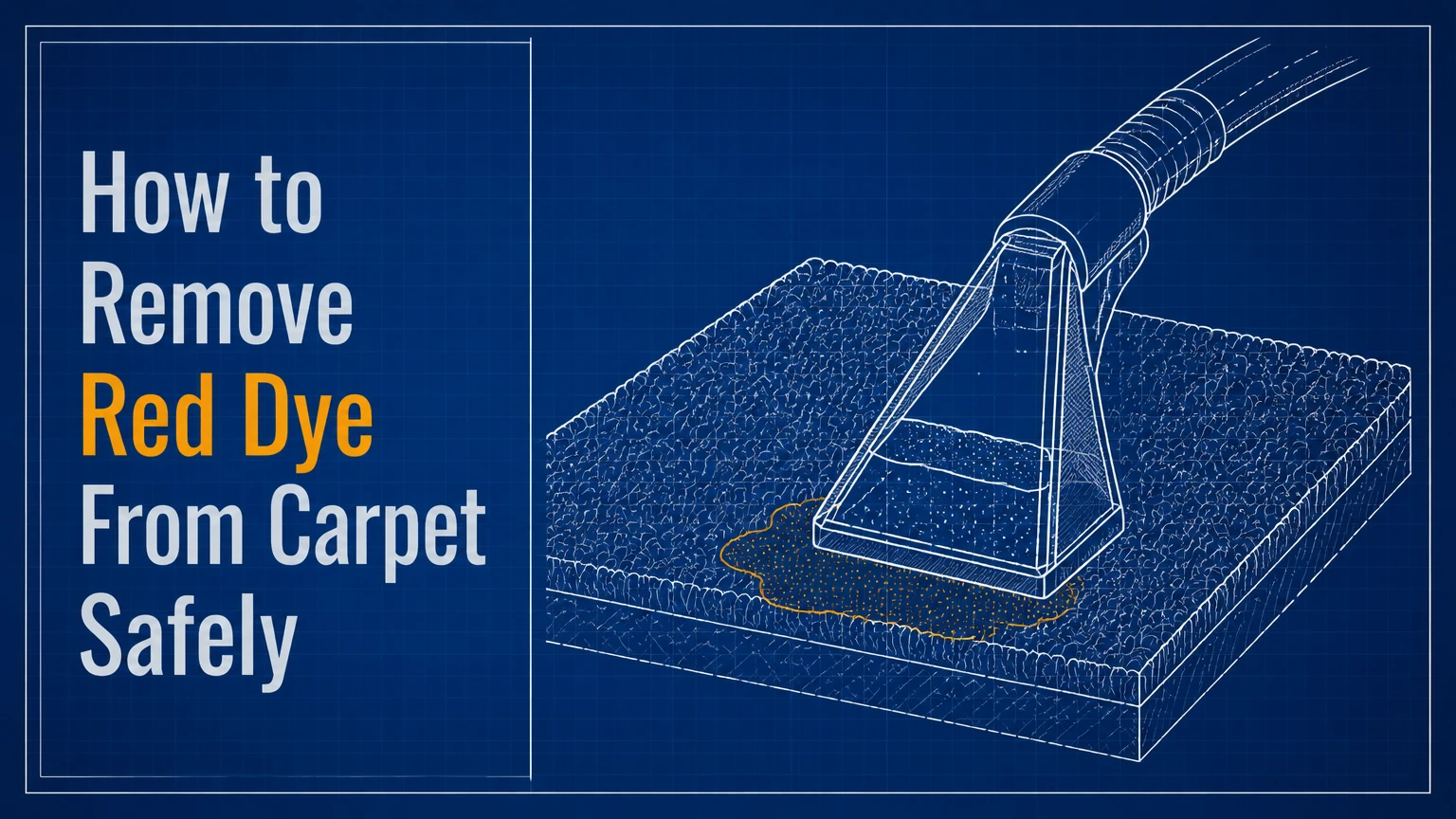
To remove red dye from carpet, first identify the stain source and carpet fiber, then blot, rinse, and use the least aggressive compatible treatment. Synthetic drink dyes may respond to a controlled heat-transfer or commercial reducing-agent process, while wine and food stains often respond to peroxide. Wool, silk, unknown fibers, and large dried stains should be handled professionally.
Key Facts at a Glance
Red drink dyes are usually more difficult to remove than ordinary dirt because synthetic colorants bond strongly to carpet fibers.
White towels, cool-to-lukewarm rinse water, and repeated blotting prevent secondary color transfer.
Hydrogen peroxide can lighten carpet dye as well as the stain, so a hidden-area test is mandatory.
Ammonia must never be mixed with chlorine bleach, acidic cleaners, or products containing unknown ingredients.
An iron can melt polyester or distort carpet backing; professional heat equipment is safer and more controllable.
A red stain that turns orange or yellow may indicate partial color alteration, not complete removal.
Which Method Should You Use?
The best red-dye removal method depends on the colorant, fiber, age, and amount of moisture already in the carpet. Use blotting and water extraction first for a fresh spill, peroxide for many organic stains on colorfast synthetic carpet, and a labeled red-dye reducer for stubborn synthetic drink dye.
| Stain source | Common colorant or residue | First treatment | Typical DIY limit |
|---|---|---|---|
| Kool-Aid or fruit punch | Synthetic food dye, sugar | Blot, rinse, detergent, then targeted dye treatment | 20-40 minutes |
| Sports drink | Synthetic food dye, acids, salts | Blot, water rinse, mild detergent | 15-30 minutes |
| Red wine | Anthocyanins, tannins, alcohol | Blot, water extraction, tested peroxide | 20-90 minutes |
| Tomato sauce | Carotenoid pigment, oil | Remove solids, detergent, tested peroxide | 30-60 minutes |
| Blood | Protein, hemoglobin | Cold water, enzyme-compatible cleaner | 15-45 minutes |
| Hair dye or makeup | Synthetic dye, oils, binders | Blot, detergent, commercial dye remover | 30-90 minutes |
| Rust or metal transfer | Iron oxide | Carpet-safe rust remover only | 10-30 minutes |
Do not treat every red mark as red dye. Rust, candle wax, paint, carpet discoloration, and a red carpet’s own loose dye require different chemistry. A white cloth test helps: press a damp white cloth on the mark for 10 seconds. If red transfers, loose color is present; if nothing transfers, the mark may be pigment, residue, or permanent fiber damage.
How does carpet fiber change the treatment?
Nylon and polyester generally tolerate carefully controlled synthetic-dye treatments better than wool, silk, rayon, or other cellulosic fibers. Carpet fiber determines whether alkaline chemicals, peroxide, reducing agents, or heat can be used without removing the carpet’s original color.
| Fiber | Chemical tolerance | Heat tolerance | Safer home approach | Main risk |
|---|---|---|---|---|
| Nylon | Moderate to high | Moderate | Blot, rinse, patch-test product | Loss of carpet color |
| Polyester | Moderate | Low to moderate | Cool rinse, product-label treatment | Melting or glazing |
| Olefin/polypropylene | Moderate | Low | Minimal moisture and low heat | Texture distortion |
| Wool | Low for alkaline chemistry | Low | Blot and call a specialist | Felting, yellowing, dye loss |
| Silk | Very low | Very low | Professional cleaning | Fiber weakening |
| Rayon/viscose | Low | Low | Avoid saturation and agitation | Shrinkage and browning |
Carpet labels, installation paperwork, or a hidden corner may identify the fiber. If the label is unavailable, treat the carpet as chemically sensitive until a professional identifies it. A high-value area rug also deserves specialist handling even when its face fiber appears synthetic because backing adhesives and multiple dyes may react differently.
What Should You Do Before Applying a Cleaner?
Before treating red dye, remove solids, ventilate the room, protect nearby furniture, and test the exact product on an inconspicuous section. Preparation prevents the most expensive failures: spreading the stain, bleaching the carpet, creating a tide mark, or mixing incompatible chemicals.
Materials and safety checklist
- White paper towels or 2-4 white cotton towels
- A glass or plastic bowl
- Cool water
- Clear, dye-free dish detergent
- A spray bottle labeled with its contents
- A wet-dry vacuum or carpet extractor, if available
- Nitrile gloves and eye protection
- A fan for drying
- The carpet manufacturer’s care instructions
- A commercial red-dye product, only if its label matches the fiber
Open windows and keep children and pets away. Never combine ammonia with chlorine bleach, vinegar, toilet cleaner, rust remover, or any product containing acids. Do not pour multiple spot cleaners into the same area without rinsing and extracting the earlier product first.
Step 1: Blot the Red Spill
Press white towels onto a fresh red spill from the outside edge toward the center, replacing the towel as soon as color transfers. Apply firm vertical pressure for 10-20 seconds at a time, but do not scrub, brush, or twist the carpet.
The success checkpoint is a towel that picks up less liquid after several presses. A common mistake is rubbing outward from the center, which spreads the stain and pushes liquid below the carpet face into the backing and pad.
For a dried stain, do not scrape aggressively. Vacuum loose surface particles, then place a cloth dampened with cool water over the mark for 2-5 minutes to soften soluble residue. Avoid soaking the carpet at this stage.
Step 2: Rinse Soluble Residue
Apply 1-2 tablespoons of cool water to a small stain, or use enough to dampen the fibers without flooding the backing. Blot immediately with a dry white towel, and repeat twice before adding detergent.
Water removes sugar, salts, alcohol, and some beverage residue, but it will not reliably dissolve a strongly bonded synthetic dye. The checkpoint is reduced stickiness and lighter towel transfer. A common mistake is skipping extraction: dissolved dye left in wet carpet can wick upward and recreate the mark during drying.
If you have a wet-dry vacuum, make several slow extraction passes. Keep the nozzle moving, and do not leave the carpet saturated.
Step 3: Clean Surface Binders
Mix 1 teaspoon of clear, dye-free dish detergent with 2 cups of cool water. Apply the solution to a white cloth rather than pouring it directly onto the carpet, then dab from the outside edge inward and extract with clean water.
This step is most useful for wine residue, tomato oil, cosmetics, and hair products because surfactants separate oily binders from fibers. Surfactants suspend loosened material so towels or an extractor can remove it; they do not guarantee that the red molecule itself will disappear.
The checkpoint is a cleaner, less greasy surface with no expanding edge. The common mistake is using too much detergent, which leaves a sticky film that attracts soil and can make the treated patch look darker.
Step 4: Select a Targeted Red-Dye Treatment
Choose a treatment only after the stain source and fiber are known. Synthetic food dye on nylon or polyester may need a commercial red-dye remover or controlled transfer treatment, while wine, berries, and tomato often justify a small peroxide test.
When is hydrogen peroxide appropriate?
A 3% hydrogen peroxide solution can reduce many organic red stains on colorfast nylon or polyester, but it can also lighten the carpet’s original dye. Test a hidden area, use the smallest practical amount, and stop if the carpet color changes.
Apply a few drops to the test area, wait 10 minutes, blot, and compare it with an untreated section under the same light. For the stain, dampen a white cloth with 3% peroxide and press it onto the mark for 30-60 seconds. Blot, inspect, and repeat in short cycles rather than leaving a large puddle for hours.
A tiny amount of clear dish detergent can improve contact, but a strong peroxide-and-soap mixture is unnecessary. Keep the treated area shaded, and rinse with cool water after the color has faded. A common mistake is assuming that a longer dwell always improves results; extended exposure can create a pale halo that is harder to repair than the original stain.
When is ammonia safe?
Ammonia is suitable only when the carpet manufacturer and product label permit it, the fiber is identified as synthetic, and the room is well ventilated. Ammonia is alkaline and may damage wool, remove carpet color, irritate the respiratory system, or react dangerously with leftover bleach.
Do not rely on a generic 1:1 ammonia recipe. Household ammonia concentrations vary, and stronger solutions increase risk without guaranteeing better removal. A labeled commercial red-dye product provides more predictable directions.
If ammonia is specifically permitted, use the weakest label-directed dilution, test it, and rinse thoroughly. Never use ammonia on wool, silk, rayon, unknown fibers, or an expensive area rug.
Step 5: Perform a Controlled Transfer Treatment
A heat-transfer treatment moves loosened dye from synthetic carpet into a damp white towel. Use it only on a tested synthetic carpet, with a commercial product or label-approved solution, because excessive heat can melt polyester and damage carpet backing.
- Dampen the stained fibers according to the product instructions.
- Place a clean, white, absorbent cotton towel over the area.
- Use the lowest manufacturer-approved heat setting, never a dry iron directly on carpet.
- Touch the iron to the towel for 5-10 seconds, then lift and inspect.
- Move to a clean towel section after every pass.
- Stop if the towel, carpet, or backing becomes hot, glossy, distorted, or discolored.
- Rinse and extract the area after the dye transfer slows.
The checkpoint is red color appearing on the towel while the carpet texture remains unchanged. A common mistake is holding the iron in one place for 20-30 seconds. That duration may be excessive for polyester, and a melted fiber cannot be chemically cleaned back into its original shape.
Professional cleaners often use heated transfer tools that provide more even contact and better moisture control. A household iron is a last-resort tool, not a universal carpet appliance.
Step 6: Rinse, Extract, and Dry Completely
Flush treated carpet with a small amount of clean water, then extract repeatedly until the towel no longer feels slippery and shows minimal color transfer. Dry the area with towels, airflow, and a fan rather than sealing it beneath plastic or furniture.
Place a dry white towel over the spot and weigh it with a flat, non-staining object for 30-60 minutes. Replace the towel when damp. Keep air moving for 6-24 hours, depending on pile height, humidity, and padding thickness.
The checkpoint is a dry, evenly colored area with no tacky residue or odor. A common mistake is judging success while the carpet is wet because moisture temporarily darkens fibers and hides wicking.
What Changes for Wine, Food, Blood, and Hair Dye?
Red wine, food, blood, hair dye, and synthetic beverages need different first treatments because their red appearance comes from different molecules and binders. Water-soluble drink dyes often need color reduction, while protein or oil-containing stains require removal of the residue surrounding the pigment.
| Stain | Avoid first | Appropriate first action | Escalation point |
|---|---|---|---|
| Red wine | Salt piles and scrubbing | Blot, cool-water rinse, tested peroxide | Persistent pink or brown shadow after two cycles |
| Tomato sauce | Hot water before solids removal | Lift solids, detergent, rinse | Oily orange residue remains |
| Blood | Hot water and peroxide as first step | Cold water, blotting, enzyme-safe cleaner | Brown discoloration or dried protein |
| Hair dye | Heat before testing | Blot, detergent, labeled dye remover | No improvement after one controlled treatment |
| Kool-Aid | Vinegar or bleach | Water extraction, then red-dye treatment | Dye remains after two transfer cycles |
| Cosmetics | Rubbing alcohol without testing | Remove solids, detergent, cautious solvent product | Binder spreads or carpet color changes |
Blood is a special case. Hot water can set protein, and peroxide can lighten colored carpet, so cold water and careful blotting come first. Hair dye can contain durable oxidative or direct dyes that bond more strongly than beverage colorants; professional treatment is often more reliable.
Which Red-Dye Removal Options Compare Best?
For a small, fresh stain, blotting plus controlled rinsing offers the lowest risk. For a persistent synthetic dye on tested nylon, a labeled commercial red-dye remover usually offers a better balance than an improvised ammonia mixture, while professional treatment is the strongest option for old, large, or high-value stains.
| Option | Typical cost | Active time | Best use | Main limitation |
|---|---|---|---|---|
| Water, towels, extraction | $0-$10 | 10-25 minutes | Fresh soluble spill | May not alter bonded dye |
| Peroxide spot treatment | $3-$8 | 20-90 minutes | Organic stain on tested synthetic | Can bleach carpet color |
| Commercial red-dye kit | $15-$35 | 20-60 minutes | Synthetic drink or cosmetic dye | Label and fiber compatibility matter |
| Household iron transfer | $0-$15 | 15-40 minutes | Small synthetic stain | Melting and backing damage |
| Professional red-dye service | $75-$200 typical | 30-90 minutes | Old, large, delicate, or severe stain | Higher cost and scheduling |
| Carpet patch or bonded insert | $150-$500 typical | 1-4 hours | Permanently damaged or bleached spot | Requires matching spare carpet |
Published professional pricing varies by region, access, stain size, and whether a full cleaning is included. The figures above are typical consumer ranges, not guaranteed quotes. A specialist may charge more for wool, stairs, furniture moving, or repeated color correction.
How Do Professional Red-Dye Treatments Work?
Professional red-dye removal typically combines controlled chemistry, heat, absorbent transfer, and extraction rather than relying on one household ingredient. A technician identifies the fiber, tests the carpet dye, applies a reducing or oxidizing agent, transfers loosened color into a towel, and neutralizes or rinses the area.
Reducing agents such as sodium metabisulfite can alter certain synthetic red colorants and make them less visible. Products marketed for professional red removal may include reducing chemistry, activators, surfactants, or buffering agents, so the label and safety data sheet matter more than the product name.
Commercial cleaners use measured heat and extraction equipment because carpet temperature, moisture, dwell time, and pH all affect the result. The Carpet and Rug Institute emphasizes following carpet manufacturer care instructions and testing cleaning solutions before broad application. That principle matters here because a successful dye removal that also removes the carpet’s factory color is still a failed repair.
Professional treatment is not magic. If the red color has damaged the fiber, altered the carpet dye, reached the backing, or caused a melted patch, cleaning cannot restore the original construction.
What Mistakes Make Red Dye Permanent?
Scrubbing, untested chemicals, excess heat, and incomplete rinsing cause most preventable red-carpet failures. Each mistake changes either the fiber structure, the carpet’s own dye, or the location of the stain.
- Scrubbing: Abrasion frays nylon and polyester tips, creating a fuzzy or shiny patch that catches light differently.
- Colored towels: Towel dye can transfer through moisture, heat, or alkaline chemistry.
- Chlorine bleach: Bleach can remove the carpet’s original color and weaken some fibers; it is not a red-dye solution.
- Excess water: Saturation drives dissolved dye into backing and padding, increasing wicking.
- Uncontrolled heat: Polyester can soften, glaze, or deform before the stain visibly improves.
- Chemical stacking: Peroxide, ammonia, acids, and reducing agents can react unpredictably when residues overlap.
- Repeated failed treatments: Several home attempts may set residues and make professional correction harder.
One practitioner rule is especially useful: if the carpet’s color changes before the stain fades, stop immediately. Rinse, extract, and dry. Continuing usually enlarges the damaged area.
Why Did the Red Stain Turn Orange or Yellow?
A red stain that turns orange or yellow usually contains partially altered dye, while a red halo or dark ring usually indicates wicking from moisture below the surface. Both conditions require stopping, rinsing, and reassessing rather than automatically applying more chemical.
For orange or yellow residue, rinse and extract first, then compare the carpet with a dry untreated area. If the carpet itself has become yellow or pale, further peroxide, ammonia, or heat may worsen the damage. If only the remaining stain changed hue, a professional may be able to complete the color correction.
Wicking occurs when dissolved stain travels from backing or padding toward the tips as water evaporates. Re-wet the entire visible patch lightly with clean water, extract from the outside toward the center, then dry rapidly with a fan and white towels. Do not treat only the center, because that can create a second ring.
What Should You Do With Wool or Silk Carpet?
Wool and silk carpet should not receive ammonia, household ironing, strong peroxide, or professional reducing agents without fiber-specific testing. Blot with white towels, use minimal cool water, and contact a rug or textile-cleaning specialist when the red mark remains.
Wool can felt under friction, yellow under unsuitable chemistry, and lose natural or added dyes. Silk fibers are more sensitive to moisture, alkalinity, heat, and abrasion, while viscose can shrink, brown, or develop permanent texture changes.
For a valuable rug, photograph the stain, identify the maker and fiber if possible, and avoid experimental products. A specialist may remove the rug for immersion or controlled plant cleaning, which is materially different from treating wall-to-wall synthetic carpet in place.
How Do You Prevent a Ring While Drying?
Prevent carpet wicking by using limited moisture, extracting from the outer edge inward, and drying the complete affected area quickly. A fan aimed across the carpet for 6-24 hours works better than covering the damp patch with plastic or leaving furniture on it.
Use an absorbent white towel under light, even pressure, changing it whenever it becomes damp. Keep the pile upright with a soft grooming tool only after the carpet is nearly dry. Do not place a dark book, printed paper, or a metal object directly on wet carpet.
If a ring appears, clean the entire visible perimeter with a lightly damp cloth, extract thoroughly, and dry with airflow. Persistent rings can indicate contaminated padding, which may require lifting the carpet and treating or replacing the pad.
When Should You Call a Professional?
Call a professional when the stain covers more than 1 square foot, has dried for several days, reaches the carpet backing, involves wool or silk, or remains after two carefully controlled treatment cycles. Professional help is also appropriate when the carpet has changed color, developed a glossy heat mark, or sits over valuable hardwood or sensitive subflooring.
Stop DIY treatment immediately if:
- The carpet becomes pale, yellow, orange, sticky, or glossy.
- The stain spreads beyond the original wet boundary.
- You smell strong fumes or experience eye, throat, or breathing irritation.
- The backing becomes wet enough to separate, buckle, or wrinkle.
- A product label does not identify the compatible fiber or required rinse.
A bonded insert may be more economical than continued chemical work when the carpet is physically melted or permanently bleached. The best repair depends on whether the problem is removable color, altered carpet dye, or damaged fiber.
FAQ
Can baking soda remove red dye from carpet?
Baking soda can absorb limited moisture and odor, but it does not reliably break the chemical bonds of synthetic red dye. Applying a paste may leave alkaline residue and require extra rinsing. Use blotting, water extraction, and a fiber-compatible targeted treatment instead.
Does vinegar remove Kool-Aid from carpet?
Vinegar is not a dependable red-dye remover for Kool-Aid or sports drinks. Its acidity may affect some carpet dyes, and mixing vinegar with a previous cleaner can create an unsafe chemical combination. Rinse unknown products out first, then use a labeled treatment appropriate for the fiber.
Can rubbing alcohol remove hair dye from carpet?
Rubbing alcohol may dissolve some cosmetic binders, but it can spread hair dye and affect carpet backing or factory color. Test a tiny hidden area, apply it to a cloth rather than pouring it onto carpet, and stop if color transfers from the carpet itself. A commercial hair-dye remover or professional service is safer for large marks.
How long should peroxide stay on carpet?
For a tested synthetic carpet, use short 30-60-second peroxide applications followed by blotting and inspection. A longer 20-60-minute dwell may be allowed by a specific product label, but leaving household 3% peroxide on colored carpet for hours increases bleaching risk.
Will steam cleaning remove red dye?
Steam cleaning can extract dissolved residue, but heat and water alone may not remove strongly bonded synthetic red dye. Professional hot-water extraction works best after the colorant has been chemically loosened and the technician has confirmed that the carpet dye is stable.
Can a red-dye stain be permanently removed?
A fresh stain on colorfast synthetic carpet may be removed completely, but no method guarantees success. Dye age, concentration, fiber type, backing contamination, prior cleaners, and carpet color determine the outcome. A pale shadow or altered fiber may remain even after the removable residue is gone.
The safest way to how to remove red dye from carpet is to identify the source and fiber, begin with blotting and extraction, and escalate only through tested, compatible chemistry. Protect the carpet’s original color first, because a remaining stain may be correctable, while bleach damage, melted fibers, and severe wicking may require replacement.