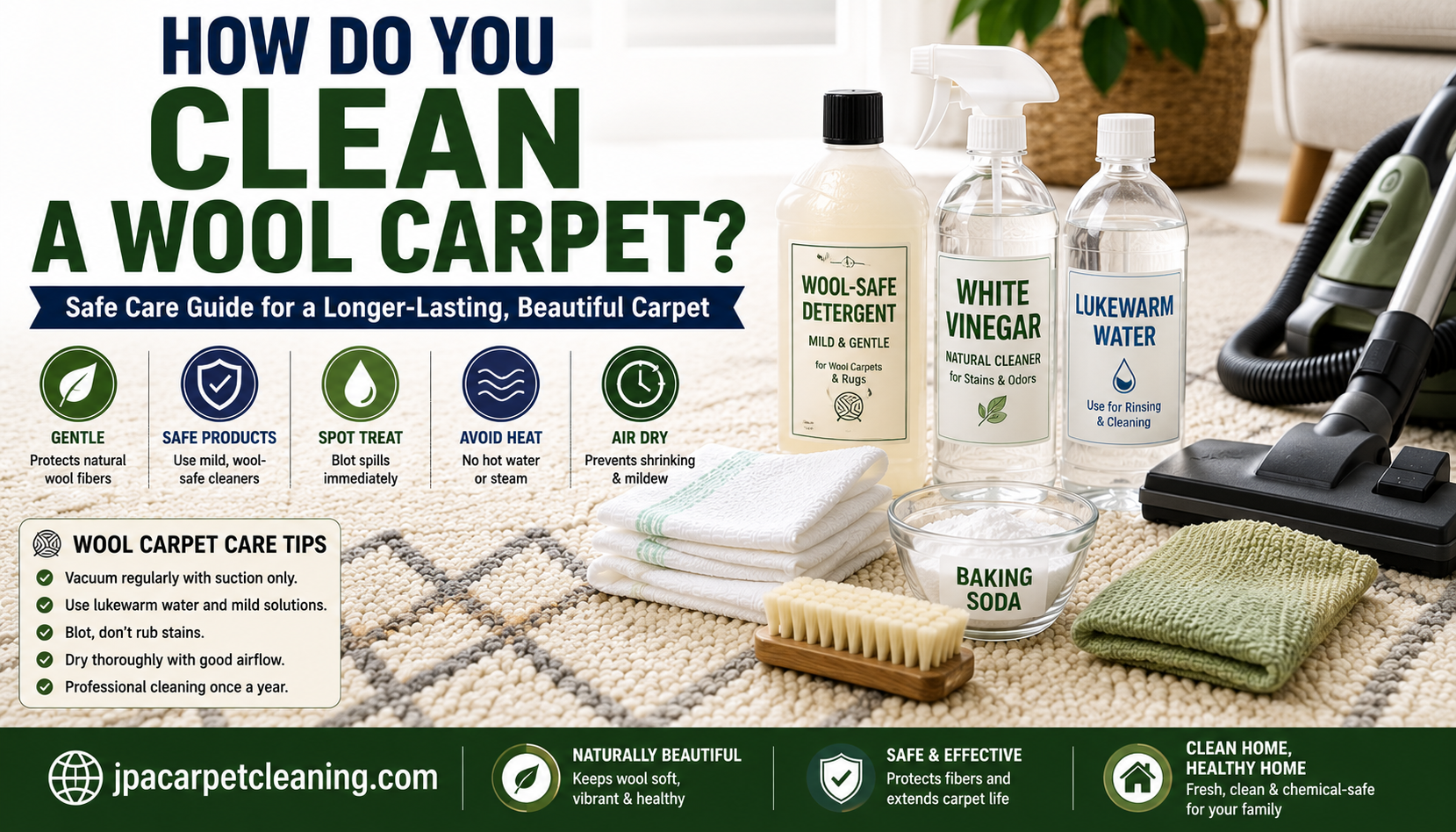
Wool behaves differently than synthetic carpet, and treating it the same way risks real damage. Learning how do you clean a wool carpet safely starts with gentle vacuuming and blotting spills the moment they happen.
A wool-safe detergent and a little white vinegar handle most cleaning needs, while air drying protects fibers that heat and excess moisture can weaken.
This guide covers routine care, stain removal, wool-safe products, drying, and the mistakes that shorten a wool carpet’s lifespan.
Why Wool Carpet Requires Special Cleaning
Wool is a natural fiber, and it behaves nothing like the synthetic carpet most cleaning advice is written for. It absorbs moisture more readily than nylon or polyester, so it takes longer to dry and reacts more strongly to over-wetting.
Harsh chemicals strip the natural oils that keep wool soft and somewhat stain-resistant, while high heat from steam or hot water can shrink or weaken the fibers permanently. Cleaning it correctly from the start protects both its appearance and how long it lasts.
Supplies You’ll Need
- Vacuum cleaner with a suction-only setting
- Wool-safe carpet cleaner
- Mild wool-safe detergent
- White microfiber cloths
- White paper towels
- White vinegar
- Lukewarm water
- Spray bottle
- Bucket
- Soft sponge
- Soft-bristle brush (optional)
- Dry towels
- Fans
Spot-test every cleaning product on a hidden section of carpet before treating a visible area, and use only cleaners labeled safe for wool whenever possible.
How Do You Clean a Wool Carpet?
The process centers on gentle handling at every stage, from vacuuming through drying.
Step-by-Step Cleaning Guide
1. Vacuum Regularly. Vacuum at least every other week, more often in high-traffic areas, using a suction-only setting whenever available. Turn off any beater bar or rotating brush, and vacuum in the direction of the pile rather than against it.
Rotating brushes can snag and pull wool fibers loose over time, which is why suction alone is the safer choice.
2. Treat Spills Immediately. Blot liquid right away with dry white paper towels or a clean white cloth, working from the outside of the spill toward the center. Never rub the area.
Rubbing distorts wool fibers in a way that’s difficult to reverse, since the structure doesn’t spring back the way synthetic carpet does.
3. Use a Mild, Wool-Safe Solution. Mix 1 teaspoon mild wool-safe detergent, 1 teaspoon distilled white vinegar, and 1 quart lukewarm water. Apply with a clean cloth, dabbing gently rather than soaking the carpet.
Rinse with a cloth dampened in clean, cool water, then blot dry with towels. Wool takes noticeably longer to dry than synthetic carpet because the fiber absorbs moisture rather than just holding it on the surface, so extra blotting up front shortens overall drying time.
What to Avoid
Certain cleaning habits that work fine on synthetic carpet can genuinely damage wool.
Steam Cleaning / Hot Water. High temperatures can shrink wool fibers and weaken their natural structure. Stick to lukewarm water for any wool cleaning task.
Over-Wetting. Wool absorbs moisture easily, and slow drying encourages mold and mildew in both the carpet and the padding underneath. Excess water can also damage the carpet backing over time.
Harsh Chemicals. Avoid bleach, ammonia, high-alkaline cleaners, and strong solvents, all of which strip away wool’s natural protective oils and leave it more vulnerable to staining and wear. Never mix vinegar with bleach or ammonia-based cleaners, since the combination can release harmful fumes.
How to Remove Common Stains from Wool Carpet
Coffee
Blot immediately, then treat with the wool-safe vinegar solution. Avoid hydrogen peroxide on colored wool without a patch test first.
Wine
Blot without pressing hard, then apply the mild detergent solution. Avoid hot water, which can set the stain into the fibers.
Pet Accidents
Blot up liquid immediately, then treat with a wool-safe enzyme cleaner. Avoid ammonia-based products, since the smell can encourage repeat accidents.
Mud
Let it dry completely, vacuum the loose residue, then treat any remaining mark with the vinegar solution. Avoid scrubbing while wet.
Food Spills
Remove solids gently, then treat with the mild detergent solution. Avoid degreasing dish soaps not labeled wool-safe, since some contain alkaline additives.
Wool-Safe Cleaners vs Homemade Solutions
DIY solutions rely on a mild wool detergent, white vinegar, and cool water — inexpensive and effective for routine spots. Commercial options include WoolSafe-approved cleaners, wool-safe spot removers, and pH-neutral carpet cleaners formulated specifically to avoid damaging natural fibers.
WoolSafe certification means a product has been independently tested and approved as safe for wool carpets and rugs, which makes it a reliable label to look for when buying a commercial cleaner rather than guessing from marketing claims alone.
| Factor | Routine/DIY Cleaning | Commercial (WoolSafe-Approved) | Professional Cleaning |
|---|---|---|---|
| Cleaning strength | Mild | Moderate to strong | Strongest |
| Safety for wool | Safe when diluted correctly | Formulated specifically for wool | Handled by a wool specialist |
| Cost | Low | Moderate | Highest |
| Best uses | Light, routine spots | Set-in stains, larger areas | Deep soil, antique or damaged carpet |
| Risk level | Low if diluted properly | Low when WoolSafe-certified | Lowest, expert-handled |
Carpet-Specific Guidance
Woven wool carpet is generally durable but should still avoid excess moisture at the seams. Tufted wool can be more sensitive to over-wetting, since backing adhesives may loosen if soaked. Loop pile wool resists everyday dirt well but snags easily with aggressive brushing. Cut pile shows footprints and vacuum marks more visibly, so brush gently in one direction after cleaning. Wool blend carpets should be cleaned according to whichever fiber in the blend is more sensitive, usually the wool portion.
Routine Wool Carpet Maintenance
| Frequency | Task |
|---|---|
| Weekly | Vacuum high-traffic areas |
| Monthly | Rotate furniture to even out wear |
| Seasonal | Deep vacuum under furniture and along edges |
| Annually | Schedule a professional cleaning every 12–18 months |
Use entrance mats to cut down on dirt tracked in from outside, and remove shoes indoors to reduce grit working into the fibers. Clean spills immediately, and keep wool carpet out of prolonged direct sunlight, which can fade its natural color over time.
Common Mistakes to Avoid
- Using a steam cleaner, which risks shrinking wool fibers
- Scrubbing aggressively, which distorts and damages the pile
- Using hot water, which can weaken and shrink fibers
- Over-saturating the carpet, which invites mold and mildew
- Using bleach, which strips protective natural oils
- Using strong alkaline cleaners, which damage wool’s fiber structure
- Drying too slowly, which extends the window for odor and mildew
- Ignoring manufacturer care instructions, which often include fiber-specific guidance
In homes with kids or pets, keep all cleaning solutions sealed and out of reach, and let the carpet dry fully before anyone is back on it.
Troubleshooting Common Issues
- Fiber fuzzing: usually from a beater bar or aggressive scrubbing — switch to suction-only and gentler dabbing.
- Shrinking: almost always caused by heat or hot water — always use lukewarm water going forward.
- Color bleeding: more common with unproven cleaners — patch test everything and avoid harsh chemicals.
- Lingering odors: often trapped moisture — improve airflow and confirm the carpet dried fully.
- Slow drying: add fans, open windows, and blot more thoroughly before letting the area air dry.
When Should You Hire a Professional?
Consider a professional for large stains, antique wool carpets, water damage, persistent odors, or any sign of color bleeding, since these situations can be difficult to correct without the right equipment. Even well-maintained wool carpet benefits from an annual professional cleaning to keep it looking its best.
Choose a cleaner experienced specifically with wool, since techniques safe for synthetic carpet can genuinely damage natural fibers.
Frequently Asked Questions
Can I use vinegar on wool carpet?
Yes, diluted white vinegar is generally safe and works well in a mild cleaning solution.
Is steam cleaning safe for wool carpet?
No, high heat can shrink or weaken wool fibers, so lukewarm water methods are safer.
How often should wool carpet be vacuumed?
At least every other week, more often in high-traffic areas, using suction-only.
What’s the best cleaner for wool carpet?
A mild wool-safe detergent or a WoolSafe-approved commercial cleaner both work well.
Can wool carpet shrink?
Yes, mainly from high heat or hot water, which is why lukewarm water is recommended throughout.
How long does wool carpet take to dry?
Longer than synthetic carpet, often 6 to 12 hours or more depending on humidity and airflow.
When should I hire a professional cleaner?
Consider one for large stains, water damage, persistent odor, or an annual deep clean every 12 to 18 months.
Conclusion
Cleaning wool carpet safely comes down to gentle handling: vacuum with suction only, blot spills immediately, and clean with a mild, wool-safe solution rather than anything harsh or hot.
Avoid excess moisture and heat at every stage, since both are what typically cause shrinking, mildew, or fiber damage. A regular maintenance routine, paired with occasional professional cleaning, is what keeps wool carpet looking and feeling its best for years.