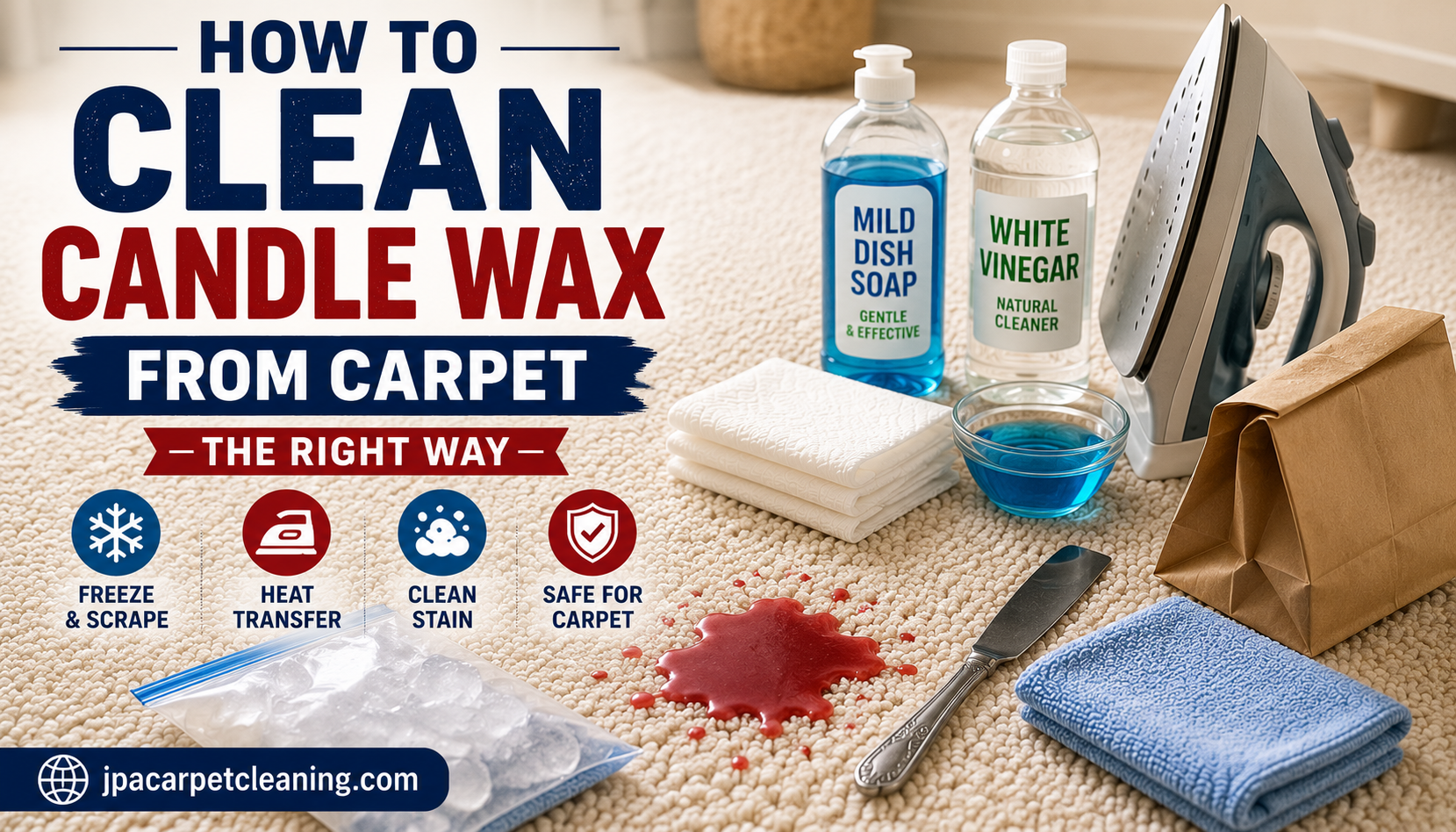
A dripped candle looks like a disaster in the moment, but knowing how to clean candle wax from carpet turns it into a fairly manageable fix. Ice packs, paper towels, a warm iron, brown paper bags, and dish soap are really all it takes to handle most spills.
The trick is working with the wax instead of against it, letting it cool and harden rather than trying to lift it while it’s still soft. Rushing that step is usually what makes a wax spill worse instead of better.
This guide covers fresh and hardened wax, colored candle stains, alternative removal methods, and when a spill is bad enough to call in a professional.
Why Candle Wax Is Difficult to Remove
Melted wax doesn’t sit on top of carpet the way most spills do. It flows down into the fibers before it has a chance to cool, which means by the time you notice it, it’s often already gripping the base of the pile rather than just the surface.
Colored candles complicate things further, since the dye can separate from the wax and leave a stain behind even after every trace of wax is gone. Wax also hardens fast as it cools, so there’s a narrow window where it’s soft enough to smear but not yet firm enough to lift cleanly.
Pulling at soft wax spreads it wider into the carpet instead of removing it. Carpet material matters too, since different fibers tolerate different amounts of heat during the removal process.
Supplies You’ll Need
- Ice pack or ice cubes
- Spoon or butter knife
- Vacuum cleaner
- Brown paper bag
- Plain white paper towels
- Clean white cotton cloth
- Clothing iron
- Hair dryer (optional alternative)
- Mild dish soap
- Warm water
- Spray bottle
- White microfiber cloths
Spot-test any cleaner on a hidden section of carpet before treating a visible area, and use only low-to-medium heat throughout the process — high heat risks scorching the fibers.
How to Clean Candle Wax from Carpet
Letting the wax harden completely before you start usually makes the whole cleanup easier and lowers the risk of pushing it deeper into the carpet.
Freeze and Scrape (Optional but Helpful)
Place an ice pack, or ice cubes sealed in a plastic bag, directly over the wax and leave it until the wax turns brittle. Once it’s hardened, use a spoon or butter knife to gently chip pieces away.
Vacuum up the loose flakes before moving on to the next step. Freezing helps because brittle wax breaks cleanly into pieces, rather than smearing the way partially soft wax does when you try to scrape it.
Apply Heat
Cover whatever wax remains with a brown paper bag, a plain paper towel, or a thin cotton cloth. Set a clothing iron to low or medium heat.
Never use high heat, and skip the steam setting entirely. Steam adds moisture that can push wax and dye further into the fibers instead of lifting them out, and high heat risks scorching the carpet itself.
Iron the Paper
Press the warm iron gently over the paper covering the wax, using light, steady pressure. Lift the iron frequently to check progress rather than leaving it resting in one spot.
Gradual heating gives the wax time to melt slowly and transfer into the paper without exposing the carpet fibers to prolonged heat, which is what protects them from scorching.
Repeat
Move to a clean section of paper after each pass, since a saturated section stops absorbing more wax. Continue the process until no additional wax transfers onto a fresh piece of paper.
Swap out paper towels or the paper bag as needed throughout, rather than trying to stretch one piece across the entire treatment.
Clean the Color Stain
Once the wax itself is gone, check for any dye left behind, especially with colored candles. Mix mild dish soap with warm water, then blot the area gently with a white cloth rather than scrubbing.
If color remains after that, a carpet-safe stain remover can finish the job. Blot the area dry once you’re done, and keep in mind that colored candles frequently leave pigment behind even after all the wax has been fully lifted.
Heat Transfer vs. Freezing vs. Hair Dryer Method
| Method | Best For | Speed | Risk to Carpet |
|---|---|---|---|
| Heat Transfer (Iron) | Hardened wax, larger spills | Moderate | Low, if heat is kept low-to-medium |
| Freezing and Scraping | Fresh or contained drips | Fast | Very low |
| Hair Dryer | Small spots, delicate carpet | Slower | Very low |
Which Method Fits Your Situation?
Fresh wax: freeze first to harden it, then scrape away what you can before deciding whether the iron method is needed for what’s left.
Hardened wax: go straight to scraping, then move to the heat-transfer method for anything still embedded in the fibers.
Colored wax: follow the same removal steps, then always finish with the dish soap treatment to address dye that wax alone won’t lift.
Soy wax: respond well to both freezing and heat transfer, often needing a slightly lower iron setting than paraffin.
Alternative Wax Removal Methods
Hair Dryer Method
A hair dryer on a low or medium heat setting is a gentler alternative to an iron, particularly for smaller wax spots or more delicate carpet. Hold it a few inches above the wax, warming it gently while blotting the softened wax with paper towels as it melts.
Freezing Method Only
For small, contained wax drips, freezing and scraping alone is sometimes enough without needing to bring heat into the process at all. This works best when the wax hasn’t spread far or worked its way deep into the pile.
Commercial Wax Removers
Specialty wax-removal products can help with larger spills or wax that’s resistant to the iron method, particularly on carpet types where repeated heat exposure isn’t ideal.
Removing Different Types of Candle Wax
White Candle Wax
The most straightforward type to remove, since there’s no dye to address once the wax itself has been lifted.
Colored Candle Wax
Requires the same wax-removal steps, plus the dish soap treatment afterward to address any leftover pigment.
Soy Wax
Softer and lower-melting than paraffin, so it often transfers to paper at a slightly lower iron setting and responds well to the freezing method too.
Beeswax
Denser and more resistant to melting than soy or paraffin, so it may take a few more passes with the iron to fully lift.
Paraffin Wax
The most common candle wax and generally the easiest to work with using the standard heat-transfer method described above.
Common Mistakes to Avoid
- Using high heat — risks scorching carpet fibers.
- Leaving the iron in one place — concentrates heat and increases scorch risk.
- Pulling soft wax — smears it deeper into the fibers instead of lifting it.
- Scrubbing aggressively — frays fibers and spreads dye stains wider.
- Skipping the freezing step — makes the wax harder to remove cleanly.
- Using colored towels — dye can transfer onto the carpet, creating a new stain.
- Ignoring remaining dye stains — pigment left untreated can set permanently over time.
- Applying excessive water — soaks the padding and adds a moisture problem to the mix.
Carpet Types and Wax Removal
Nylon Carpet
Tolerates the iron method well and generally handles repeated low-heat passes without issue.
Polyester Carpet
Responds well to heat transfer but can be more sensitive to prolonged exposure, so keep passes brief and check progress often.
Wool Carpet
Needs the gentlest approach of the group. Use the lowest iron setting possible, or lean on the hair dryer method instead to reduce heat exposure.
Berber Carpet
The looped weave can trap small wax fragments at the base of each loop, so plan on more thorough vacuuming and possibly a repeat treatment.
Area Rugs
Rugs can often be treated on a flat, heat-safe surface, which makes it easier to apply steady, even pressure with the iron.
When Should You Hire a Professional?
Large wax spills covering a significant area, wax on antique rugs, and any visible burn or scorch damage all call for a professional rather than continued DIY attempts. The same goes for melted wax that’s spread across multiple rooms, dye stains that persist after repeated treatment, and delicate natural-fiber carpets where heat exposure carries more risk.
Troubleshooting Wax Removal Problems
Leftover wax residue: usually means the iron wasn’t warm enough or a section of paper became saturated before all the wax transferred. Switch to a clean section of paper and repeat with slightly firmer, even pressure.
Dye stains: if pigment remains after the wax is gone, repeat the dish soap treatment, and move to a carpet-safe stain remover if it doesn’t fully lift.
Scorched fibers: point to heat that was too high or an iron left in one spot too long. Unfortunately, scorched fibers often can’t be fully reversed at home, and a professional may be able to trim or repair the affected area.
Flattened carpet pile: can happen from the pressure of the iron. Brushing the area gently once it’s cooled helps restore some texture.
Safe Tools Checklist for Heat-Based Wax Removal
- Clothing iron with adjustable low and medium settings
- Plain white paper towels or a brown paper bag
- Clean white cotton cloth
- Hair dryer with a low-heat setting
- A flat, stable surface if treating a rug rather than wall-to-wall carpet
Avoid anything with a built-in steam function during this process, and never substitute a higher-heat appliance for the iron or hair dryer listed here.
When Heat Should Not Be Used
Skip heat-based methods entirely on carpet with visible damage, exposed padding, or any fibers that already show signs of wear in the affected area. Antique or unusually delicate natural-fiber rugs are often better handled by a professional from the start, since even careful heat use carries some risk on materials that weren’t built to tolerate it.
Household Methods vs. Commercial Wax Removers
DIY heat transfer and freezing handle the vast majority of wax spills without any added cost, and work well across most common carpet types. Commercial wax removers are worth considering for larger spills, wax that resists the standard iron method, or situations where repeated heat exposure isn’t ideal for the carpet in question.
Safety Notes for Homes With Children and Pets
Keep the iron and any hot tools completely out of reach while working, and never leave a heated iron unattended on or near the carpet. Keep kids and pets out of the room during treatment, and let the area cool completely before allowing them back.
Frequently Asked Questions
What’s the easiest way to remove candle wax from carpet?
The heat-transfer method, using a warm iron over paper to lift softened wax, works well for most spills and carpet types.
Can I use an iron safely?
Yes, as long as it’s set to low or medium heat, kept moving rather than left in one spot, and never used with the steam setting.
Does freezing work better than heating?
Freezing works well for small, hardened wax drips, but larger or more deeply embedded wax usually needs the heat-transfer method to fully lift it.
How do I remove colored candle stains?
Mix mild dish soap with warm water, blot gently with a white cloth, and follow up with a carpet-safe stain remover if any pigment remains.
Can I use a hair dryer instead of an iron?
Yes, particularly for smaller spots or more delicate carpet, since it offers a gentler, more controlled heat source.
Will wax permanently damage carpet?
Not usually, if it’s removed carefully. Scorching from excessive heat or unresolved dye stains are the more common causes of lasting damage.
When should I hire a professional cleaner?
Consider one for large spills, antique or delicate rugs, burn damage, or dye stains that remain after repeated home treatment.
Hope, Its Enough!
Cleaning candle wax from carpet works best in order: freeze and scrape what you can first, then use low heat with paper to lift whatever wax remains. Treat any leftover dye stain once the wax itself is fully gone, rather than assuming the job is finished too soon.
Avoiding high heat and aggressive scrubbing protects the fibers throughout the process. A little patience, working in small passes rather than rushing, is what keeps a wax spill from turning into permanent damage on the carpet.