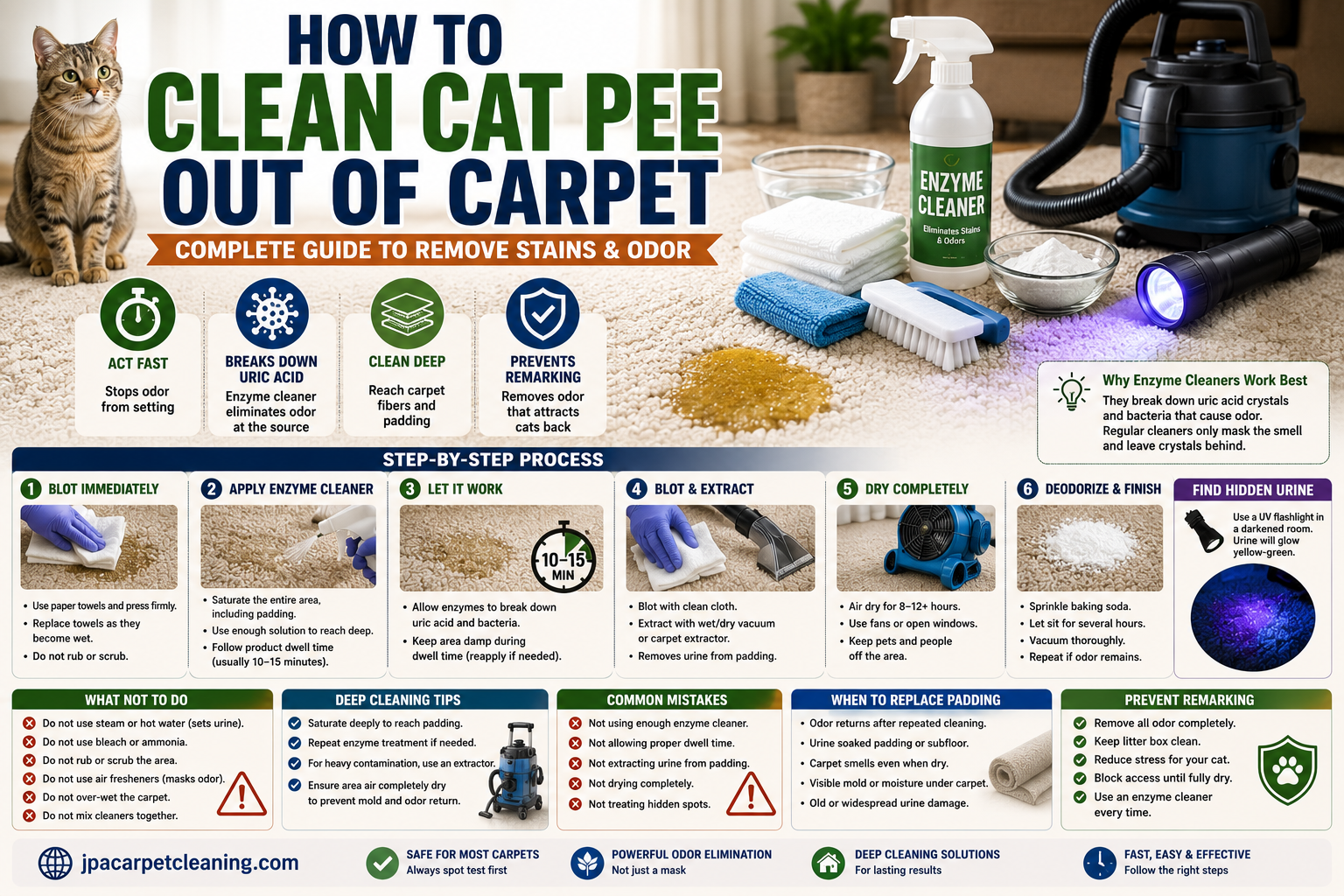
Cat urine is one of the toughest carpet problems to deal with, mostly because it moves fast and doesn’t stay on the surface. If you’re figuring out how to clean cat pee out of carpet, the process starts the moment you notice it, with paper towels doing the first round of work.
From there, an enzyme cleaner breaks the stain down instead of just covering the smell, and it needs to reach the carpet padding underneath to work completely. A UV flashlight helps track down hidden spots, and baking soda handles the last bit of odor once everything is dry.
This guide covers fresh accidents, dried stains, deep extraction, and when the padding needs replacing instead of cleaning again.
Why Cat Urine Is So Difficult to Remove
Cat urine contains uric acid crystals that bind tightly to carpet fibers as it dries, which is part of why the smell doesn’t fade the way other stains do. Ordinary cleaning solutions can rinse away the surface residue while leaving those crystals fully intact underneath.
Urine also moves fast. It soaks through the carpet fibers into the backing and padding within minutes, which means a stain that looks contained on top may already be spread out below. As it sits, bacteria break the urine down further, which is what produces the sharper, stronger smell in older accidents.
Humidity makes the problem worse over time, since moisture in the air can reactivate dried urine crystals and bring the odor back even after the carpet looked and smelled clean. Surface cleaning alone rarely reaches deep enough to prevent that from happening.
Supplies You’ll Need
- White paper towels
- White microfiber cloths
- Enzyme cleaner
- Cold water
- Spray bottle
- Wet/dry vacuum (optional)
- Baking soda
- White vinegar (for deodorizing after cleaning, if appropriate)
- UV flashlight
- Rubber gloves
- Fans
Always read the enzyme cleaner’s label before use, since dwell time and application amounts vary between products. Spot-test any cleaner on a hidden section of carpet first.
How to Clean Cat Pee Out of Carpet
Fast cleanup makes a real difference in whether a urine stain and its odor can be fully removed or end up as a recurring problem.
Blot Fresh Urine Immediately
Grab paper towels right away and press down with firm, steady pressure rather than wiping. Replace the towels as they become saturated, and keep going until you’re no longer pulling up liquid. Never rub the spot.
Rubbing spreads urine outward and pushes it deeper into the padding below, turning a contained accident into a wider problem. Getting as much liquid out as possible before applying any cleaner gives that cleaner a much better shot at reaching what’s left.
Saturate with an Enzymatic Cleaner
Once the area is blotted, saturate the stain completely with an enzyme cleaner, using enough solution to match how deep the original urine likely reached. This usually means applying more liquid than feels intuitive, since the goal is for the cleaner to reach the padding, not just sit on the surface.
Follow the product’s recommended dwell time rather than wiping it up early. Enzyme cleaners work by breaking down the uric acid crystals themselves, which is a fundamentally different process than air fresheners or general cleaners that only mask the smell temporarily.
Air-Dry Completely
Let the treated area air-dry for 8–12 hours, keeping people and pets away from the spot during that window. The enzymes continue working as the carpet dries, so disturbing the area too soon interrupts that process.
Once it’s fully dry, blot or vacuum away any remaining residue. If the smell is still noticeable at that point, it’s usually a sign the treatment needs to be repeated rather than a sign the method failed.
Deep-Cleaning Steps for the Best Results
Skip the Heat and Harsh Chemicals
Avoid steam cleaners, bleach, and ammonia when treating cat urine. Heat permanently sets urine proteins into the fibers, making the stain and odor far harder to remove afterward.
Ammonia is a particular problem because its smell resembles urine closely enough that it can actually encourage a cat to remark the same spot. Bleach risks damaging carpet fibers outright, and mixing it with other cleaners can produce hazardous fumes.
Soak Deeply
Cat urine frequently reaches all the way to the carpet backing and the padding underneath, not just the visible fibers on top. Saturating only the surface with enzyme cleaner leaves that deeper contamination untouched.
Give the solution enough dwell time to work all the way through, and repeat the treatment if the odor persists after the first round. Surface spraying alone rarely resolves odor completely, since it never reaches the source sitting below the fiber layer.
For Dried Stains
Old stains aren’t always visible in regular light, so a UV flashlight is the most reliable way to locate them, since dried urine tends to glow under UV light. Once you’ve found a spot, lightly rehydrate it with cold water to reactivate the residue before treating it.
Blot the excess moisture, then apply enzyme cleaner as you would with a fresh stain. Older, more established stains often need more than one round of treatment to fully break down.
Deep Extraction
For heavier contamination, a wet/dry shop vacuum or a carpet extraction machine pulls contaminated liquid directly out of the padding rather than leaving it to dry in place. This step matters most for larger accidents or spots that have been sitting for a while before treatment.
Deep extraction outperforms blotting alone whenever urine has clearly reached the padding, since blotting can only address what’s sitting in the top layer of fibers. Repeating extraction after an enzyme treatment often produces noticeably better results on stubborn spots.
How to Remove Cat Pee Smell from Carpet
Odor removal depends on the same fundamentals as stain removal: an enzyme cleaner that reaches the padding, thorough drying, and good air circulation while everything dries out. Baking soda sprinkled over the area after cleaning helps absorb any residual smell once the carpet is dry.
Stubborn odors sometimes need more than one treatment cycle, particularly if the original accident went untreated for a while before cleanup started. Air fresheners and scented sprays don’t address any of this — they only cover the smell temporarily, and it tends to return once the scent fades or humidity rises.
Fresh Cat Urine vs Old Cat Urine
Fresh Accidents
Caught within the first few minutes, fresh urine responds well to blotting and a single enzyme treatment, since it hasn’t had time to bond with the padding yet.
Dried Urine
Once urine has dried, it requires rehydration before treatment and often needs repeat applications, since the uric acid crystals have already set into the fibers.
Repeated Marking
Spots that get marked more than once carry layered contamination that’s harder to fully clear, and lingering odor from earlier accidents can actually draw a cat back to the same spot.
| Type | Best Treatment | Cleaning Difficulty | Odor Removal Expectations |
|---|---|---|---|
| Fresh Accidents | Blot, then enzyme cleaner | Low | Full removal likely with one treatment |
| Dried Urine | Rehydrate, then enzyme cleaner | Moderate | May need repeat treatments |
| Repeated Marking | Deep extraction plus enzyme cleaner | High | Multiple treatments often required |
Common Mistakes to Avoid
- Using hot water — heat sets urine proteins permanently into the fibers.
- Steam cleaning — combines the same heat problem with added moisture, worsening the outcome.
- Using ammonia — its smell resembles urine and can encourage repeat marking.
- Using bleach — damages fibers and risks hazardous fumes if mixed with other products.
- Rubbing the stain — pushes urine deeper and spreads it wider.
- Not treating the padding — surface cleaning leaves the source of the odor untouched.
- Stopping after one cleaning — established stains often need repeat treatment to fully clear.
- Walking on wet carpet — spreads contamination and delays drying.
When Should Carpet Padding Be Replaced?
Large urine accidents that soak through completely, or multiple repeat accidents in the same general area, often contaminate the padding beyond what cleaning can reach. If odor persists after several thorough enzyme treatments, that’s usually a sign the source is in the padding rather than the visible carpet.
Mold or bacterial growth, along with visibly damaged or deteriorating carpet backing, are also clear signs that replacement is the better path. At a certain point, repeated professional cleanings cost more than simply replacing the affected padding, which also guarantees the contamination is fully gone rather than just masked.
Preventing Future Cat Accidents
- Clean every accident immediately rather than waiting.
- Make sure odor is fully eliminated, not just masked, since lingering smell can draw repeat marking.
- Keep litter boxes clean and scooped daily.
- Reduce stress in the household, since anxiety is a common cause of inappropriate urination.
- Schedule a veterinary evaluation if a cat suddenly starts urinating outside the litter box, since this can signal a medical issue.
- Use enzymatic cleaners instead of scented or masking products for any cleanup.
Safety Notes for Homes With Pets and Children
Keep enzyme cleaners, vinegar, and any other cleaning products out of reach while treating a spot, and ventilate the room well during application. Keep pets and children off the area until it’s fully dry, since both cleaning residue and reactivated urine can transfer to skin or paws.
Products That Should Never Be Mixed
- Bleach and ammonia — produces dangerous fumes.
- Bleach and vinegar — also releases hazardous gas.
- Multiple enzyme cleaners layered together — can reduce effectiveness rather than improve it.
- Enzyme cleaner followed immediately by a strong chemical cleaner — the chemicals can kill the enzymes before they finish working.
Enzyme Cleaners vs Oxidizing Cleaners vs Deodorizing Sprays
Enzyme cleaners break down the uric acid crystals at the source, making them the most effective option for both stains and odor over the long term. Oxidizing cleaners work through a chemical reaction that can help with tougher stains but generally don’t address odor as thoroughly as enzymes do. Deodorizing sprays only mask smell temporarily and don’t touch the underlying contamination at all.
Cleanup Timeline
Within 5 minutes: blot as much liquid as possible with paper towels, using firm pressure and no rubbing.
Within 30 minutes: apply the enzyme cleaner, making sure it saturates deeply enough to reach the padding.
After 12 hours: check that the area has dried completely, then blot or vacuum any leftover residue.
After the stain dries: if odor remains, use a UV flashlight to confirm the full extent of the stain and repeat treatment as needed.
Troubleshooting Lingering Odors
If a smell persists after multiple cleanings, it usually means the padding is still contaminated even though the visible carpet looks clean. Deep extraction, followed by another full enzyme treatment, is typically the next step before considering padding replacement.
Humid weather can also bring back a smell that seemed resolved, since moisture reactivates any uric acid crystals that weren’t fully broken down. This isn’t a sign the original cleaning failed outright, just that another round of treatment is likely needed.
Carpet-Specific Notes
Nylon and polyester carpets generally tolerate enzyme treatments and deep extraction well. Wool carpet needs a gentler approach and a spot test first, since some enzyme formulas can affect natural fibers differently. Berber loops can trap contamination at the base, so plan on more thorough extraction. Area rugs can often be treated outside, which makes both saturation and drying easier to manage.
Frequently Asked Questions
What’s the best cleaner for cat urine?
An enzyme cleaner, since it breaks down the uric acid crystals responsible for both the stain and the odor rather than just masking the smell.
Can vinegar remove cat urine smell?
Vinegar can help with light odor after the area has already been treated with an enzyme cleaner, but it doesn’t break down uric acid crystals the way enzymes do.
Why does cat urine smell return after cleaning?
Usually because contamination reached the padding and wasn’t fully treated, or because humidity reactivated crystals that weren’t completely broken down.
Is baking soda enough to remove cat urine?
No. It helps absorb residual odor after proper cleaning but doesn’t address the uric acid crystals causing the smell in the first place.
Can I use a steam cleaner?
No. Heat sets urine proteins permanently into the fibers, making both the stain and the odor harder to remove.
How do I find old cat urine stains?
A UV flashlight is the most reliable method, since dried urine typically glows under UV light even when it’s not visible otherwise.
When should I replace carpet padding?
When odor persists after multiple thorough enzyme treatments, when accidents have been large or repeated, or when the padding shows signs of mold or bacterial contamination.
Lets End!
Cleaning cat pee out of carpet comes down to speed and depth: blot immediately, then use an enzyme cleaner strong enough to reach the padding underneath, not just the surface. Skip heat and ammonia-based products entirely, since both work against you rather than helping.
Let the area dry fully before walking on it, and don’t be surprised if a stubborn spot needs more than one treatment or a round of deep extraction. If odor keeps coming back despite repeated cleaning, replacing the padding is usually the more reliable fix.