
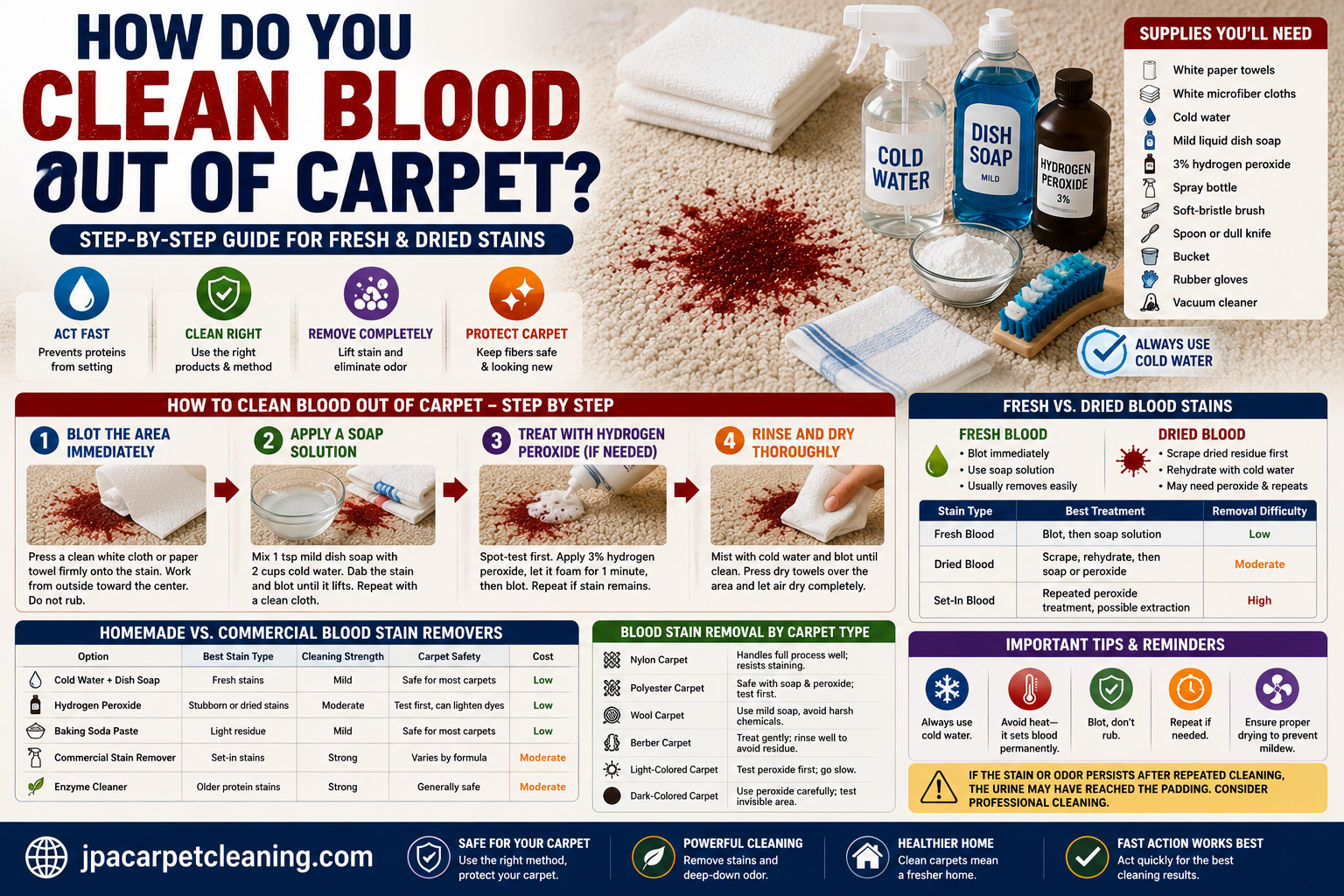
Blood is one of those stains that punishes hesitation, since every extra minute it sits makes removal harder. If you’re asking how do you clean blood out of carpet, cold water and a clean white cloth are where the process starts, before anything else touches the spot.
From there, mild dish soap handles most of the work, with hydrogen peroxide and paper towels stepping in for anything that doesn’t lift on the first pass. The order of operations matters just as much as the products themselves.
This guide covers fresh and dried blood stains, carpet-specific precautions, and the point where a stain needs professional attention instead of another round of home treatment.
Why Blood Stains Are Difficult to Remove
Blood contains proteins that bind to carpet fibers as it dries, which is why a stain that looked manageable an hour ago can feel stubborn by the next day. Once those proteins set, ordinary cleaning has a much harder time breaking them loose.
Heat makes this worse. Warm or hot water causes blood proteins to cook and bond permanently to the fibers, turning a removable stain into one that may never fully come out. Fresh blood, by contrast, hasn’t had time to set and generally lifts with far less effort.
Dried stains need more than a single cleaning pass. They typically require rehydration and repeated treatment, which is why fast cleanup makes such a measurable difference in whether a stain disappears completely or leaves a lasting mark.
Supplies You’ll Need
- White paper towels
- White microfiber cloths
- Cold water
- Mild liquid dish soap
- 3% hydrogen peroxide
- Spray bottle
- Soft-bristle brush
- Bucket
- Rubber gloves
- Spoon or dull knife (for dried blood)
- Vacuum cleaner (for dried residue)
Always use cold water, never warm or hot, and spot-test hydrogen peroxide on a hidden section of carpet before applying it to a visible stain.
How Do You Clean Blood Out of Carpet?
Step-by-Step Stain Removal
1. Blot the Area Immediately
Act as quickly as you can. Press a clean white cloth or paper towels firmly onto the stain, working from the outside edge toward the center rather than starting in the middle. Never rub.
Rubbing forces blood further into the carpet fibers and spreads it across a wider area, which is exactly what you’re trying to avoid in the first few minutes.
2. Apply a Soap Solution
Mix 1 teaspoon mild liquid dish soap with 2 cups cold water. Dip a clean cloth into the solution and dab the stain gently, continuing to blot until blood starts transferring onto the cloth instead of staying in the carpet. Repeat as needed, switching to a clean section of cloth each time.
Warm or hot water should never touch a blood stain at any point in this process, since heat is what sets the stain permanently.
3. Treat with Hydrogen Peroxide (For Stubborn Stains)
For anything that doesn’t fully lift with soap and water, spot-test first, then apply a small amount of 3% hydrogen peroxide directly onto the stain. Let it foam for about a minute before blotting it up with a clean cloth. Repeat only if the stain is still visible.
Peroxide should be used carefully on darker carpets, since it can cause slight lightening in some dyes even at this low concentration.
4. Rinse and Dry
Mist the area lightly with cold water and blot until no more soap residue transfers to the cloth. Press dry towels over the spot to absorb remaining moisture, then let the carpet air dry completely.
Leftover detergent left in the fibers attracts dirt over time, so a thorough rinse matters just as much as the stain treatment itself.
Fresh Blood vs. Dried Blood Stains
Fresh Blood Stains
Immediate blotting with cold water, followed by the soap solution, usually removes fresh blood without much difficulty, since the proteins haven’t had time to bind to the fibers yet.
Dried Blood Stains
Dried residue needs to be gently scraped away first, then rehydrated with cold water before treatment. Hydrogen peroxide often becomes necessary at this stage, and repeat cleaning is common for stains that have been sitting for a day or longer.
| Stain Type | Best Treatment | Removal Difficulty |
|---|---|---|
| Fresh Blood | Blot, then soap solution | Low |
| Dried Blood | Scrape, rehydrate, then soap or peroxide | Moderate |
| Set-In Blood | Repeated peroxide treatment, possible extraction | High |
Homemade vs Commercial Blood Stain Removers
DIY options like cold water, dish soap, and hydrogen peroxide handle most blood stains effectively at low cost, with a baking soda paste useful for absorbing any light residue left behind after the main treatment. Commercial carpet stain removers and oxygen-based cleaners offer more concentrated strength for stains that resist the basic approach.
Enzyme cleaners designed specifically for protein-based stains are worth considering for older, more established blood stains, since they target the same protein bonds that make blood so difficult to remove once it sets.
| Option | Best Stain Type | Cleaning Strength | Carpet Safety | Cost |
|---|---|---|---|---|
| Cold Water + Dish Soap | Fresh stains | Mild | Safe for most carpets | Low |
| Hydrogen Peroxide | Stubborn or dried stains | Moderate | Test first, can lighten dyes | Low |
| Baking Soda Paste | Light residue | Mild | Safe for most carpets | Low |
| Commercial Stain Remover | Set-in stains | Strong | Varies by formula | Moderate |
| Enzyme Cleaner | Older protein stains | Strong | Generally safe | Moderate |
Blood Stain Removal by Carpet Type
Nylon Carpet
Handles the full soap and peroxide process well and generally tolerates a bit more scrubbing pressure than other fiber types.
Polyester Carpet
Responds well to standard treatment, though it can hold moisture a little longer, so extra drying time helps prevent the stain from resettling.
Wool Carpet
Needs a gentler approach. Spot-test hydrogen peroxide carefully, since it can affect certain wool dyes, and lean on the soap solution first before reaching for peroxide.
Berber Carpet
The looped construction can trap blood at the base of each loop, so plan on more thorough blotting and possibly a repeat treatment to fully clear it.
Area Rugs
Rugs can often be treated outside or over a sink, which makes rinsing easier and reduces the risk of moisture reaching the padding or floor underneath.
Common Mistakes to Avoid
- Using hot water — sets blood proteins permanently into the fibers.
- Scrubbing aggressively — spreads the stain and frays the carpet.
- Using bleach — can damage fibers and reacts dangerously with hydrogen peroxide.
- Applying too much hydrogen peroxide — increases the risk of discoloration, especially on darker or dyed carpet.
- Skipping a spot test — risks damage you can’t reverse once it’s visible on the main stain.
- Leaving soap residue — attracts dirt and leaves the area feeling stiff.
- Waiting too long before cleaning — gives blood proteins time to bond fully with the fibers.
When Should You Call a Professional?
Large blood spills, antique or otherwise delicate carpets, and stains that have soaked through to the padding are all situations where DIY treatment has real limits. Repeated failed cleaning attempts, or any discoloration that shows up after trying the steps above, are also good reasons to bring in a professional rather than continuing to treat the spot yourself.
Products That Should Never Be Mixed
- Bleach and hydrogen peroxide — can produce a dangerous chemical reaction.
- Bleach and ammonia-based cleaners — releases hazardous fumes.
- Multiple stain removers layered on the same spot — combining unknown formulas increases the risk of carpet damage.
Safety Notes for Homes With Children and Pets
Keep hydrogen peroxide, dish soap, and any other cleaning supplies out of reach while treating a stain, and ventilate the room during application. Keep kids and pets off the area until it’s fully dry, since cleaning residue can transfer to skin or paws before that point.
Cleanup Timeline
Within 5 minutes: blot the stain with a dry cloth, applying firm pressure and working from the outside in.
Within 30 minutes: apply the cold water and dish soap solution, repeating as needed until blood stops transferring to the cloth.
After 1 hour: if the stain persists, move to the hydrogen peroxide treatment, spot-testing first.
After the stain dries: check for any remaining discoloration and repeat treatment, or consider a professional if it hasn’t lifted after a couple of attempts.
Troubleshooting Blood Stain Problems
Lingering discoloration: often means the protein bond wasn’t fully broken. A repeat hydrogen peroxide treatment, applied carefully, usually helps.
Brown residue: typically indicates oxidized blood that has partially set. Continued gentle treatment with peroxide tends to lighten it further over several attempts.
Stains that reappear after drying: usually mean some blood remained in the padding and wicked back to the surface. Deeper extraction or professional treatment is often the more reliable fix at that point.
Frequently Asked Questions
Does cold water remove blood from carpet?
Yes, especially on fresh stains. Cold water prevents the proteins in blood from setting, which is why it should always be the first thing used.
Can hydrogen peroxide damage carpet?
It can lighten certain dyes, particularly on darker carpet, which is why a spot test on a hidden area is worth doing before treating a visible stain.
How do I remove dried blood stains?
Gently scrape away dried residue, rehydrate the area with cold water, then treat with soap or hydrogen peroxide, repeating as necessary for older stains.
Can baking soda remove blood stains?
It’s better suited to absorbing light residue after the main stain has been treated rather than removing the stain on its own.
Should I use hot or cold water?
Always cold. Hot or warm water sets blood proteins into the fibers, making the stain far harder to remove.
What’s the best carpet cleaner for blood stains?
A cold water and mild dish soap solution handles most stains, with 3% hydrogen peroxide as a backup for anything that doesn’t fully lift.
When should I hire a professional cleaner?
Consider a professional for large spills, delicate or antique carpet, stains that have reached the padding, or discoloration that persists after DIY treatment.
Conclusion
Cleaning blood out of carpet comes down to speed and the right order of steps: act quickly, use cold water only, and blot instead of rubbing at every stage. Hydrogen peroxide handles anything the soap solution doesn’t fully lift, but it’s worth using carefully and always after a spot test.
Rinse thoroughly once the stain is gone, since leftover soap attracts dirt just as easily as the original stain did. Drying the area completely closes out the process and keeps the spot from becoming a repeat problem.