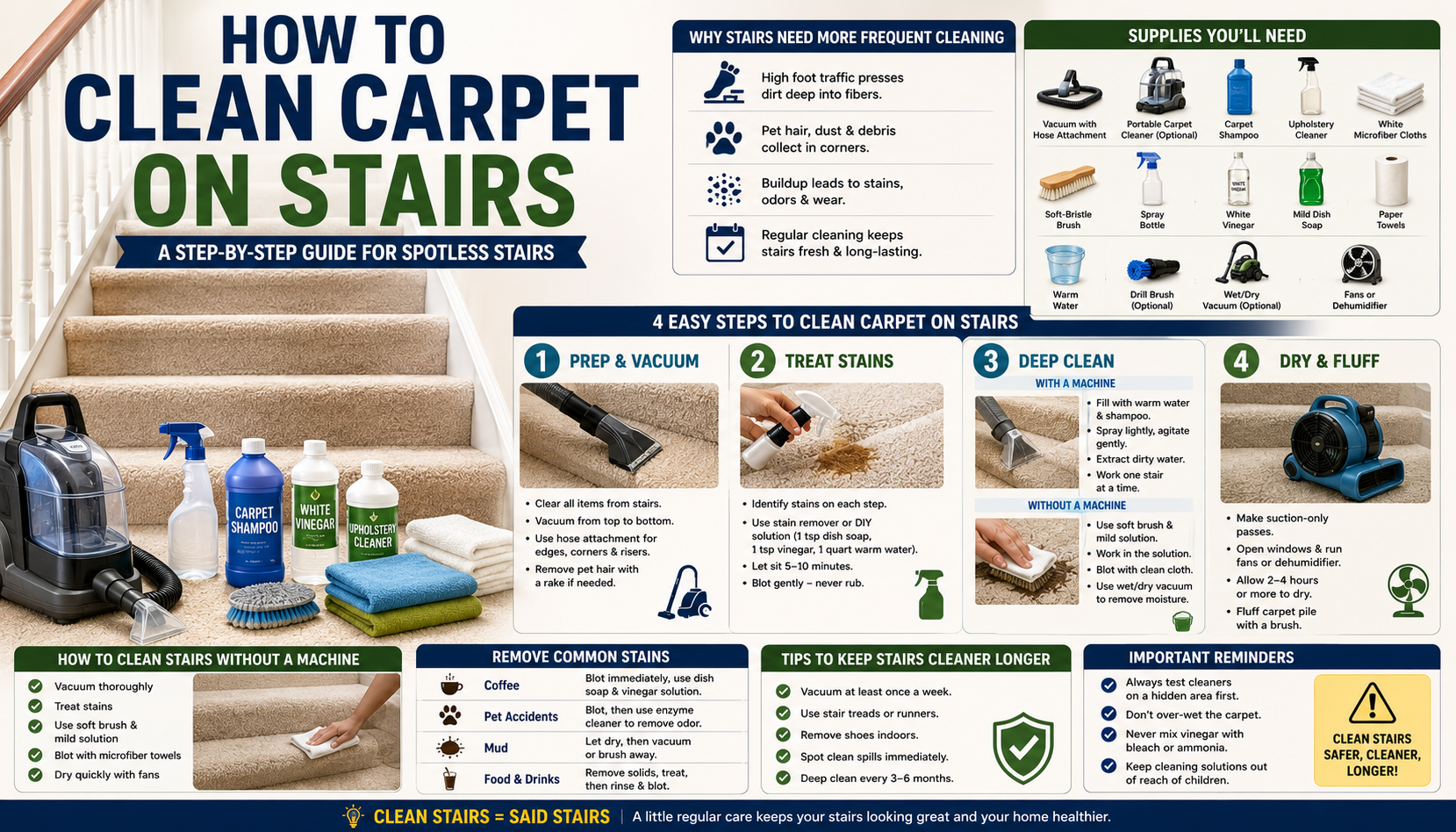
Stairs take a harder beating than almost any other carpeted surface in the house, which is why learning how to clean carpet on stairs properly makes such a noticeable difference. The routine looks similar to flat carpet at first glance, but the details change once you’re working step by step.
Vacuuming with a hose attachment comes first, followed by an upholstery cleaner or targeted spot treatment on any visible marks. From there, a portable carpet cleaner and a soft brush handle the deeper cleaning, with fans finishing the job by drying everything completely.
This guide walks through the full process, along with stain removal, hand-cleaning alternatives, and how often stairs actually need attention.
Why Carpeted Stairs Need More Frequent Cleaning
Every trip up and down the stairs presses dirt further into a small, concentrated area, which is very different from how foot traffic spreads out across an open room. That concentration means dirt gets embedded faster on stairs than almost anywhere else in the house.
Pet hair, dust, and debris also tend to collect in the corners and edges of each step, spots that are easy to miss during a quick vacuum pass. Left alone, this buildup works its way deeper into the fibers over time.
Cleaning stairs on a more frequent schedule than the rest of the carpet isn’t excessive — it’s what keeps dirt from turning into deep staining, odor, and premature wear.
Supplies You’ll Need
- Vacuum with hose attachment
- Upholstery or stair attachment
- Portable carpet cleaner (optional)
- Carpet shampoo
- Upholstery cleaner
- White microfiber cloths
- Paper towels
- Soft-bristle brush
- Drill brush (optional)
- Spray bottle
- Warm water
- Mild dish soap
- White vinegar
- Wet/dry vacuum (optional)
- Fans or dehumidifier
Test any cleaning solution on a hidden section of stair carpet, such as the edge near the wall, before treating a visible spot.
Stair Cleaning Checklist Before You Start
- Clear shoes, toys, and any loose items off every step
- Check the handrail and walls for anything that might get splashed
- Have all your cleaning supplies staged at the top of the stairs
- Set up fans or open a window near the stairwell in advance
- Note visible stains so you can pre-treat before the deep clean
How to Clean Carpet on Stairs
1. Prep and Vacuum
Clear shoes, toys, and any loose objects off every step before you begin. Vacuum from the top of the staircase down to the bottom, using a hose attachment to reach corners, edges, risers, and the crease where each step meets the riser above it. If pet hair is heavy, a carpet rake can help lift it before vacuuming.
Starting at the top matters more than it might seem. Working downward keeps dirt from falling onto stairs you’ve already cleaned, so you’re not redoing work as you go.
2. Treat Stains
Walk the staircase and identify individual stains before you start any deep cleaning. A carpet stain remover or upholstery cleaner works well for most spots, or you can mix a DIY solution of 1 teaspoon liquid dish soap, 1 teaspoon white vinegar, and 1 quart warm water.
Apply the solution and let it sit for 5–10 minutes before blotting with a microfiber cloth. Never rub the stain. Rubbing pushes the stain deeper into the fibers and spreads it across a wider area instead of lifting it out.
3. Deep Clean
Using a portable carpet cleaner: fill it with warm water and carpet shampoo, then start at the top stair and work your way down. Spray each step lightly, agitate gently, and extract the dirty water slowly before moving to the next step. Cleaning one stair at a time keeps the process controlled and prevents over-wetting.
Without a machine: a soft-bristle brush, microfiber cloths, and a mild carpet cleaning solution can handle the same job manually. Work the solution in with the brush, then blot it back out with a clean cloth. A wet/dry vacuum, if you have one, helps pull out extra moisture at this stage.
4. Dry and Fluff
Once cleaning is done, make several suction-only passes to remove as much moisture as possible. Open windows and run fans or a dehumidifier to keep air moving through the stairwell. Depending on humidity, plan on 2–4 hours or longer before the carpet is fully dry.
Avoid walking on the stairs while they’re still damp, both for your safety and to keep dirt from being pressed back into wet fibers. Once everything is dry, brush the carpet pile gently to restore its texture and appearance.
How to Clean Carpeted Stairs Without a Machine
Skipping the portable carpet cleaner doesn’t mean skipping a proper clean. Thorough vacuuming, spot treatment on stains, and a soft brush worked into the fibers by hand cover most of what a machine would do, just with more manual effort.
Blot moisture out with microfiber towels rather than letting it sit, and dry the stairs quickly with fans afterward. The main tradeoff is depth of clean — hand cleaning doesn’t extract as much embedded dirt and moisture as hot water extraction does, so stairs cleaned this way may need attention more often to stay looking fresh.
Removing Common Stair Carpet Stains
Coffee
Blot immediately with a dry cloth, then apply the dish soap and vinegar solution in light dabs, repeating as needed rather than soaking the spot in one pass.
Pet Accidents
Blot up liquid right away, then treat with an upholstery cleaner or enzyme cleaner, which addresses the source of the odor rather than just the surface stain.
Mud
Let it dry fully before touching it, then vacuum or brush it away. Working on wet mud smears it deeper into the carpet instead of lifting it out.
Grease
Sprinkle baking soda over the spot to absorb the oil, let it sit for 15–20 minutes, then vacuum before applying any liquid solution. Avoid hot water, which can spread grease further.
Food Spills
Scrape away any solid residue first, then blot before applying your cleaning solution, so you’re not pressing food particles further into the fibers.
Best Cleaning Solutions for Carpeted Stairs
Carpet Shampoo
Best for use with a portable carpet cleaner during deep cleaning. It rinses out well when used correctly, though overuse leaves a sticky residue behind.
Upholstery Cleaner
Formulated for close-contact fabric surfaces, which makes it a strong match for stair carpet’s tighter weave and heavier wear. It’s generally gentler than full carpet shampoo.
Vinegar Solution
A low-cost, mild option for light stains and general freshening between deeper cleanings. It’s not strong enough for heavily set-in stains on its own.
Enzyme Cleaner
The best choice for pet stains and other organic messes, since it breaks down the source of the smell rather than covering it up. Less useful on stains like grease or ink.
Baking Soda
Good for absorbing odor and light surface oils between cleanings. It works best as a supporting step rather than a standalone deep-cleaning method.
| Solution | Best Uses | Limitations |
|---|---|---|
| Carpet Shampoo | Deep cleaning with a machine | Residue if overused |
| Upholstery Cleaner | Close-contact fabric, general stains | Not built for heavy embedded dirt |
| Vinegar Solution | Light stains, freshening | Weak on set-in stains |
| Enzyme Cleaner | Pet stains, organic odors | Less effective on grease or ink |
| Baking Soda | Odor and light oil absorption | Not a standalone deep cleaner |
Common Mistakes to Avoid
- Starting from the bottom — dirt from upper steps falls onto stairs you’ve already cleaned.
- Skipping vacuuming — dry dirt turns to mud once cleaning solution is added.
- Soaking the carpet — excess moisture seeps into the padding and risks mold or mildew.
- Scrubbing stains aggressively — this frays fibers and spreads the stain wider.
- Using too much detergent — leftover soap attracts dirt and leaves a stiff, sticky feel.
- Walking on damp stairs — this is a slip risk and presses dirt back into wet fibers.
- Ignoring drying time — trapped moisture in a small, enclosed stairwell is a common cause of lingering odor.
- Using the wrong cleaner for wool stair carpet — products made for synthetic fibers can damage or discolor wool.
How Often Should You Clean Carpeted Stairs?
Vacuum weekly at minimum, and more often in busy households with kids or pets tracking dirt through daily. Spot clean any spill as soon as it happens rather than waiting.
For deep cleaning, high-traffic homes generally need it every 3–6 months to keep stairs from developing embedded dirt and wear. Lower-traffic homes can typically stretch that to once a year without issue.
Safety Tips for Carrying Cleaning Machines on Stairs
Carry a portable carpet cleaner with both hands and keep your center of gravity low, especially when it’s full of water. Set it down on a flat landing rather than balancing it on a step whenever possible, and unplug it before moving it between levels to avoid tripping over the cord.
Maintenance Schedule for Busy Households
Homes with pets, children, or heavy daily traffic hold up better with weekly vacuuming, spot cleaning within minutes of any spill, and a deep clean closer to the 3-month mark rather than the 6-month mark. Rotating stair runners, where applicable, also helps spread out wear instead of concentrating it on the same few steps.
Troubleshooting Stair Carpet Problems
Recurring stains: usually mean the stain wasn’t fully lifted from the padding beneath the carpet, so it wicks back to the surface as it dries. Repeat the treatment with a focus on full extraction.
Lingering odors: typically point to trapped moisture, which is common in enclosed stairwells with limited airflow. An enzyme cleaner and extra fan time usually resolve it.
Flattened carpet pile: heavy foot traffic naturally compresses fibers over time. Brushing the pile after cleaning helps restore some texture, though carpet that’s flattened extensively may be nearing the end of its lifespan.
Slow drying: points to insufficient airflow or too much moisture used during cleaning. Add fans or a dehumidifier and avoid soaking the carpet on future cleanings.
Frequently Asked Questions
What’s the best way to clean carpet on stairs?
Vacuum from top to bottom, treat visible stains individually, deep clean with a portable carpet cleaner or by hand, then dry thoroughly with fans before using the stairs again.
Can I clean carpeted stairs without a machine?
Yes. Vacuuming, spot treatment, and hand scrubbing with a soft brush handle most routine cleaning, though a machine reaches embedded dirt more thoroughly.
How often should I deep clean carpeted stairs?
Every 3–6 months in high-traffic homes, and at least once a year in lower-traffic households.
Can I use a steam cleaner on carpeted stairs?
It depends on the carpet material. Steam can work on synthetic fibers but isn’t recommended for wool or other delicate stair carpet, since heat and moisture can cause shrinking or discoloration.
How long do carpeted stairs take to dry?
Typically 2–4 hours with good airflow, though high humidity or thick carpet can extend that further.
What’s the best cleaner for pet stains on stairs?
An enzyme cleaner, since it breaks down the compounds causing the odor rather than just masking it.
Should I hire a professional for stair carpet cleaning?
It’s worth considering for large or recurring stains, delicate carpet types like wool, or if DIY cleaning hasn’t fully resolved odor or staining after a couple of attempts.
Lets Clean The Carpet Today!
Cleaning carpet on stairs comes down to working in the right order and the right direction: vacuum from the top down, treat stains before deep cleaning, and clean one stair at a time rather than rushing the whole staircase at once. Removing as much moisture as possible during the process makes the drying stage faster and far less likely to cause problems.
Let the stairs dry completely before walking on them, and stick to a regular cleaning schedule between deep cleans. That consistency is what keeps stair carpet looking good and lasting longer, given how much more wear it takes on compared to the rest of the house.