Slime has a way of ending up ground into carpet fibers before anyone notices it’s missing from the toy bin. Knowing how to clean slime out of carpet comes down to acting fast and picking the right method for how long it’s been sitting there.
A spoon, some white vinegar, warm water, and a bit of baking soda handle most slime situations without needing anything specialized. Ice cubes come in handy too, especially once slime has had time to harden into the fibers.
This guide covers fresh and dried slime, different slime varieties, carpet-specific precautions, and what to avoid so you don’t make the stain worse.
Why Slime Sticks to Carpet
Most slime recipes rely on glue and polymer chains that are naturally sticky and designed to cling to whatever surface they touch, which includes carpet fibers. Add-ins like glitter, dye, or foam beads only complicate removal further, since they wedge into the weave alongside the sticky base.
Once slime dries, it bonds tightly to the carpet as the moisture evaporates and the polymer hardens in place. At that point it’s no longer just sitting on top of the fibers, it’s gripping onto them.
Rubbing at slime, especially while it’s still fresh, pushes it deeper into the carpet rather than lifting it out. Acting quickly, before it has a chance to dry and set, is what keeps a slime spill from turning into a permanent stain.
Supplies You’ll Need
- Spoon or butter knife
- White vinegar
- Warm water
- Ice cubes
- Baking soda
- Spray bottle
- White microfiber cloths
- Paper towels
- Soft-bristle brush
- Vacuum cleaner
- Mild dish soap
- Bucket
Test any cleaning solution on an inconspicuous section of carpet before treating a visible spot, since dye or fiber type can react differently than expected.
How to Clean Slime Out of Carpet
Fresh slime is significantly easier to remove than dried slime, simply because it hasn’t had time to fully bond with the carpet fibers yet. The method that works best depends on how long the slime has been sitting and how deeply it has set in.
Different Approaches for Slime Removal
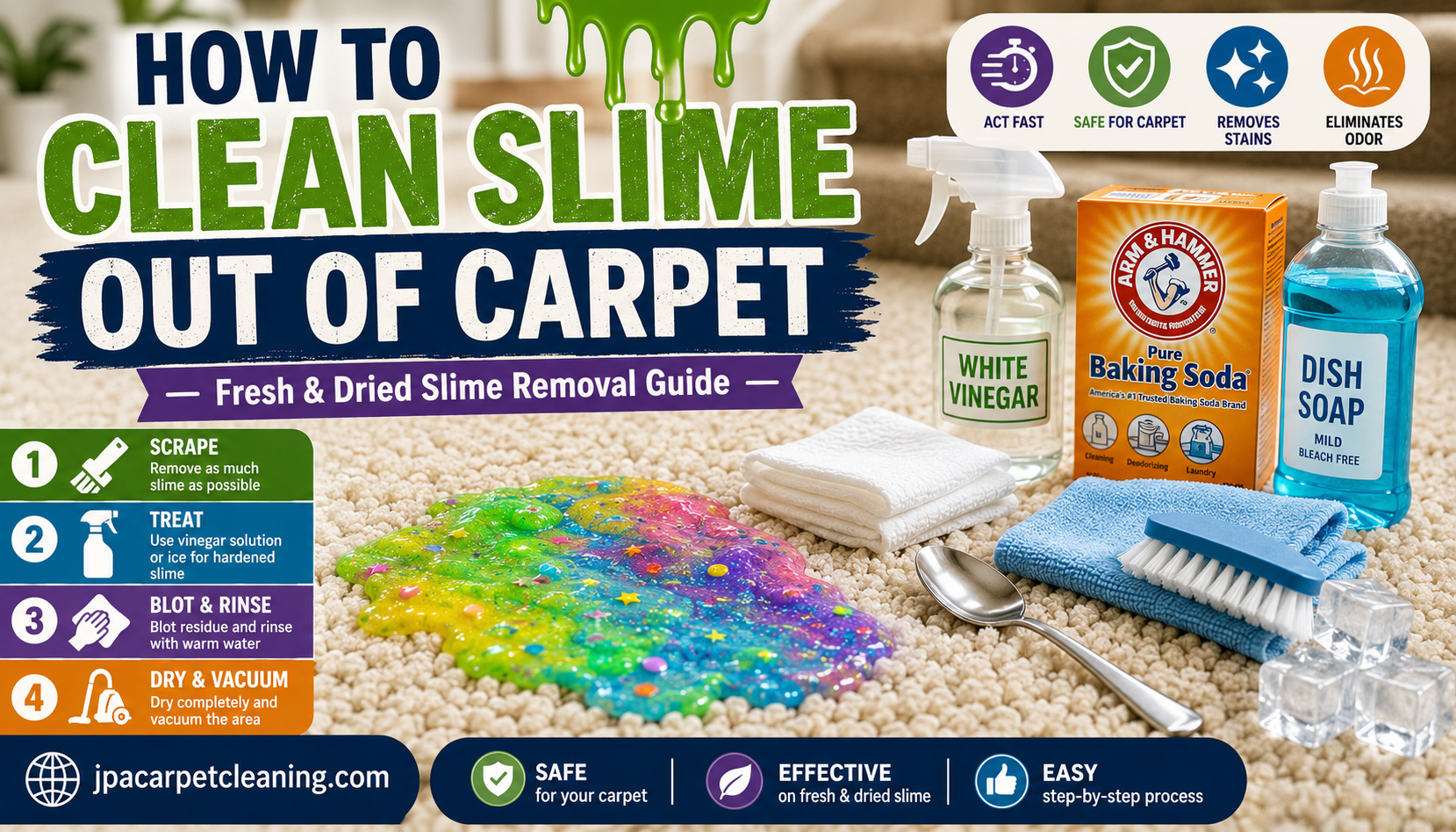
The vinegar technique works well for most fresh-to-moderately-set slime and is usually the first method to try. The ice method is better suited to slime that has already hardened, since freezing makes it brittle enough to break apart cleanly. The baking soda and vinegar method is the strongest option, reserved for tough, deep-seated stains that the other two methods haven’t fully resolved.
Method 1: The Vinegar Technique (Best for most slime)
Scrape: use a spoon or butter knife to remove as much slime as possible before applying anything. Work from the outside of the spot toward the center, which keeps you from spreading it wider as you go.
Apply Vinegar: saturate whatever slime remains with plain distilled white vinegar and let it sit for 5–10 minutes. Vinegar’s acidity helps break down the glue base that makes slime sticky, loosening its grip on the fibers.
Wait & Scrape: once the slime has softened, gently scrape away what’s been loosened.
Blot: lift the remaining residue with paper towels or a microfiber cloth instead of rubbing it.
Rinse: wipe the area with warm water, then blot it dry thoroughly.
Method 2: The Ice Method (Best for old, hardened slime)
Freeze: hold ice cubes directly against the hardened slime for 10–15 minutes to make it brittle.
Break It Up: chip away the hardened pieces carefully, taking care not to pull at the carpet fibers while you work.
Vacuum: remove all the loosened pieces completely before moving on.
Treat & Blot: mix equal parts warm water and white vinegar, then blot any remaining residue and dry the area thoroughly.
Method 3: The Baking Soda & Vinegar Method (For tough, deep-seated stains)
Sprinkle Baking Soda: cover the stain completely with a generous layer.
Spray Vinegar: spray white vinegar directly over the baking soda.
Let It Sit: allow the reaction to work for about 30 minutes.
Scrub Gently: use a soft brush, working carefully to avoid damaging the fibers.
Vacuum: once the carpet dries completely, vacuum up the residue.
What to Avoid
What to Avoid
Skip hot water entirely, since heat can actually melt slime further into the fibers instead of loosening it. Scrubbing aggressively causes the same problem rubbing does, spreading the stain and fraying the carpet in the process.
Never try to pull hardened slime free by force, as this risks pulling carpet fibers out along with it. Harsh chemicals and over-soaking the carpet both introduce new problems, from fiber damage to mildew forming underneath if too much moisture gets trapped. Skipping a spot test before using any cleaner, especially a stronger one, risks discoloration you can’t undo.
Removing Different Types of Slime
Glitter Slime
Vacuum loose glitter thoroughly before applying any liquid, since wetting it first can smear glitter particles deeper into the fibers.
Butter Slime
This type often contains clay or lotion additives that leave an oily residue. A light dusting of baking soda before the vinegar treatment helps absorb that oiliness.
Fluffy Slime
Shaving cream is a common ingredient here, which usually lifts fairly easily with the vinegar method since it doesn’t bond as tightly as glue-heavy recipes.
Clear Slime
Clear slime is typically glue-heavy and can be more stubborn, so plan on the baking soda and vinegar method if the vinegar technique alone doesn’t fully clear it.
Homemade Slime
Recipes vary widely, and borax-based versions in particular can leave a slightly gritty residue. Vacuum thoroughly after any treatment to catch what’s left behind.
Homemade vs Commercial Slime Removers
DIY options like white vinegar, baking soda, and mild dish soap handle the vast majority of slime situations at a low cost and with minimal risk to most carpet types. Commercial products, including dedicated carpet spot removers and adhesive removers made for carpet, offer more concentrated cleaning strength for stains that resist the basic methods.
Enzyme cleaners are worth considering if any organic residue, like from food coloring or dyes mixed into homemade batches, is contributing to lingering staining alongside the slime itself.
| Option | Best Uses | Cost | Cleaning Strength | Carpet Compatibility |
|---|---|---|---|---|
| White Vinegar | Fresh to moderate slime | Low | Moderate | Safe for most carpets |
| Baking Soda | Oily residue, odor | Low | Mild | Safe for most carpets |
| Dish Soap | General residue | Low | Mild | Safe for most carpets |
| Commercial Spot Remover | Set-in stains | Moderate | Strong | Test first, varies by formula |
| Adhesive Remover | Heavy glue residue | Moderate–High | Strong | Best for synthetic fibers |
Carpet Types and Slime Removal
Nylon Carpet
Handles both vinegar and baking soda treatments well and generally tolerates a bit more scrubbing pressure than other fiber types.
Polyester Carpet
Responds well to the standard methods, though it can hold onto moisture a little longer, so extra drying time helps prevent residue from resettling.
Wool Carpet
Requires a gentler touch. Test vinegar on a hidden spot first, since it can affect certain wool dyes, and skip the baking soda and vinegar method’s longer dwell time in favor of shorter treatment intervals.
Berber Carpet
The looped construction can trap slime residue at the base of each loop, so plan on more thorough vacuuming and possibly a repeat treatment.
Area Rugs
Rugs can often be taken outside for treatment, which makes drying faster and reduces the risk of moisture reaching a rug pad or the floor underneath.
How to Prevent Slime Damage
- Keep slime play confined to non-carpeted rooms whenever possible.
- Use washable play mats as a barrier between slime and carpet.
- Clean spills immediately rather than waiting until playtime is over.
- Store slime in sealed containers between uses to reduce accidental spills.
- Supervise younger children during slime play, since they’re less likely to notice or report a spill right away.
Cleanup Timeline
Immediately: scrape away as much slime as possible before it has any chance to set into the fibers.
After 10 minutes: if vinegar is soaking in, this is when it’s ready for the wait-and-scrape step.
After drying: vacuum thoroughly to catch any leftover residue from baking soda or dried vinegar treatment.
Week-old slime: treat this as hardened slime and start with the ice method rather than vinegar alone, since it’s likely bonded too tightly for a single vinegar treatment to fully lift.
Products That Should Never Be Mixed
- Vinegar and bleach — this combination produces hazardous fumes.
- Baking soda and vinegar in a sealed container — the reaction needs room to release, or pressure can build up.
- Ammonia-based cleaners and vinegar — mixing acids and bases like this offers no cleaning benefit and can irritate airways.
- Multiple commercial spot removers layered on the same stain — combining unknown chemical formulas increases the risk of a reaction or carpet damage.
Safety Notes for Homes With Kids and Pets
Keep vinegar, baking soda, and any commercial cleaners out of reach while treating a spot, and ventilate the room during and after cleaning. Keep children and pets off the treated area until it’s fully dry, since residual cleaning solution can transfer to skin, paws, or fur.
Troubleshooting Slime Stains
Sticky residue: usually means some slime base is still present. Repeat the vinegar treatment rather than reaching for a stronger chemical right away.
Lingering stains: often point to dye that has set into the fibers independent of the slime itself. The baking soda and vinegar method tends to work better here than vinegar alone.
Discoloration: can result from skipping a spot test, particularly with brightly colored or glitter slime. Unfortunately, this may require professional attention if it doesn’t fade with continued gentle cleaning.
Flattened carpet fibers: can happen after repeated scrubbing in the same spot. Brushing the area gently once it’s dry helps restore some texture.
When to Call a Professional
Severe slime damage, especially cases involving deep dye staining, large glitter deposits worked into the padding, or carpet that shows discoloration after repeated home treatment, is often better handled by a professional. The same goes for delicate carpet types like wool where a wrong cleaning choice risks permanent damage.
Frequently Asked Questions
Does vinegar remove slime from carpet?
Yes, distilled white vinegar breaks down the glue base in most slime recipes and is usually the first method worth trying.
Can baking soda remove slime?
It works well combined with vinegar for tougher, deep-seated stains, though baking soda alone is better suited to oily residue and odor than to the slime itself.
How do I remove dried slime?
Freeze it with ice cubes for 10–15 minutes to make it brittle, then chip away the pieces carefully before vacuuming and treating any remaining residue.
Will hot water help?
No. Hot water can melt slime further into the carpet fibers instead of loosening it, making the stain harder to remove.
Can slime permanently stain carpet?
It’s possible, particularly with brightly dyed or glitter slime left untreated for an extended period. Acting quickly significantly lowers that risk.
What’s the safest cleaner for wool carpet?
A diluted vinegar solution, tested on a hidden spot first, is generally the safest starting point for wool.
When should I hire a professional carpet cleaner?
Consider a professional for deep dye staining, slime that has reached the carpet padding, or any discoloration that persists after repeated home treatment.
Now, Go For Clean!
Cleaning slime out of carpet starts with removing as much of it as possible before it has a chance to set, then choosing the method that matches how long it’s been there — vinegar for fresh slime, ice for hardened spots, and baking soda with vinegar for the toughest residue. Blotting instead of scrubbing protects the fibers at every stage.
Drying the area completely afterward keeps the spot from attracting more dirt or developing odor. Cleaning spills quickly, every time, is what keeps slime from turning into a stain that outlasts the toy that caused it.