You don’t always need a rented machine to refresh a carpet. Household ingredients handle a surprising amount: sprinkle baking soda over the carpet before vacuuming to lift odors, mix white vinegar with warm water for general dirt, and use a little dish soap on grease spots.
Learning how to clean a carpet without a carpet cleaner just takes the right solution for each job, a soft brush, and patience with drying. This guide covers DIY solutions, stain removal, scrubbing technique, drying, and maintenance.
Can You Clean a Carpet Without a Carpet Cleaner?
Yes — hand cleaning works well for routine maintenance, light stains, and moderate dirt. It takes more effort than a machine, but the right approach gets carpets genuinely clean.
Deep-set stains or heavily soiled carpet may still need machine extraction or a professional. Success comes down to the right solution for the situation and avoiding excess moisture, the biggest risk with any hand-cleaning method.
Supplies You’ll Need
- Vacuum cleaner
- Baking soda
- White vinegar
- Mild dish soap
- Warm water
- Spray bottle
- Bucket
- Microfiber towels
- White cleaning cloths
- Soft- to medium-bristle brush
- Rubber gloves
- Fan (optional)
Stick to these basics rather than harsh chemicals, unless the carpet manufacturer recommends something else.
How to Clean a Carpet Without a Carpet Cleaner
Lets start the cleaning process.
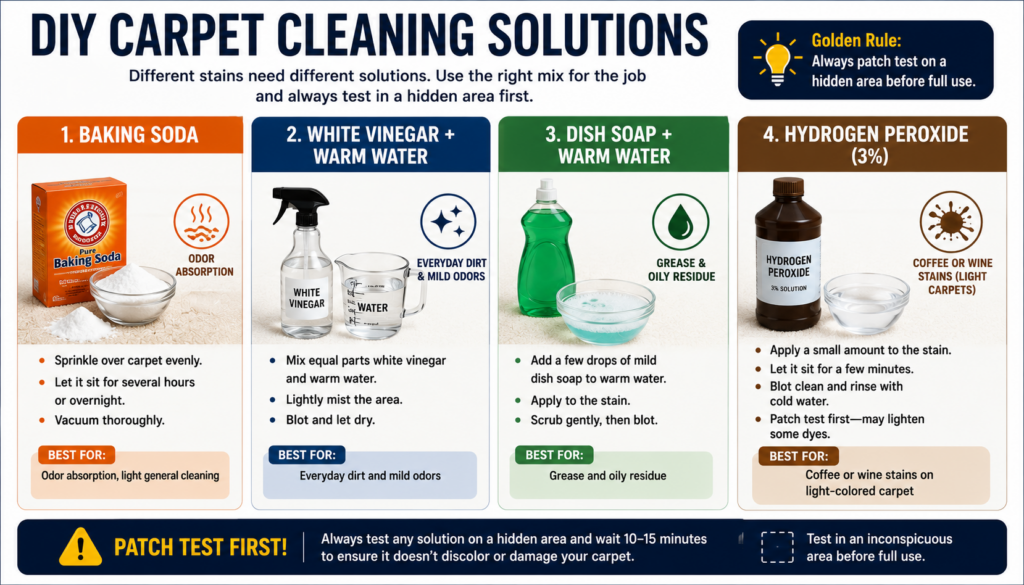
DIY Cleaning Solutions
Different stains respond to different mixtures, so match the solution to the problem. Always test any solution on a hidden patch first.
| Solution | Best For |
|---|---|
| Baking soda | Odor absorption, light general cleaning |
| White vinegar + water | Everyday dirt and mild odors |
| Dish soap + water | Grease and oily residue |
| Hydrogen peroxide | Coffee or wine on light-colored carpet, after a patch test |
Everyday Stains & Odors
A simple mix of white vinegar and warm water handles most everyday dirt. Spray it lightly over the area in a light mist rather than soaking the fibers.
Grease Stains
Mix mild dish soap with warm water. Dish soap breaks down oils, which plain water and vinegar struggle with, lifting residue other solutions leave behind.
Coffee & Wine Stains
Blot the spill immediately rather than letting it set. Follow with a vinegar-based solution, and consider hydrogen peroxide on white or light-colored carpet if the stain persists — always patch test first, since it can lighten some dyes.
Scrubbing and Extracting Moisture
1. Apply the Cleaner
Vacuum the area thoroughly before applying anything. Spray your DIY solution lightly, never oversaturating the fibers, and work in manageable sections.
2. Scrub Gently
Use a soft- to medium-bristle brush in gentle circular motions to work the cleaner into the fibers. Aggressive scrubbing frays fibers and can spread a stain instead of lifting it.
3. Blot, Do Not Scrub
Press microfiber towels or clean white cloths into the wet area to absorb moisture, swapping in a dry towel once one becomes damp. Rubbing pushes a stain deeper instead of pulling it out.
4. Dry Thoroughly
Open windows, turn on fans, and improve airflow around the treated area. Let the carpet dry completely before walking on it — most spots dry within a few hours depending on humidity, though thicker carpet takes longer. Carpet left damp traps moisture against the padding, which is exactly what allows mold and mildew to develop.
Removing Stuck-On Debris
Dried food, mud, craft materials, and sticky residue need a gentler touch than fresh spills. Avoid scraping aggressively, since that tears or flattens fibers. Lightly soften the debris first — a damp cloth held against it for a minute usually works — then carefully lift it away.
A plastic scraper or rubber squeegee helps pull up stubborn buildup without cutting the fibers.
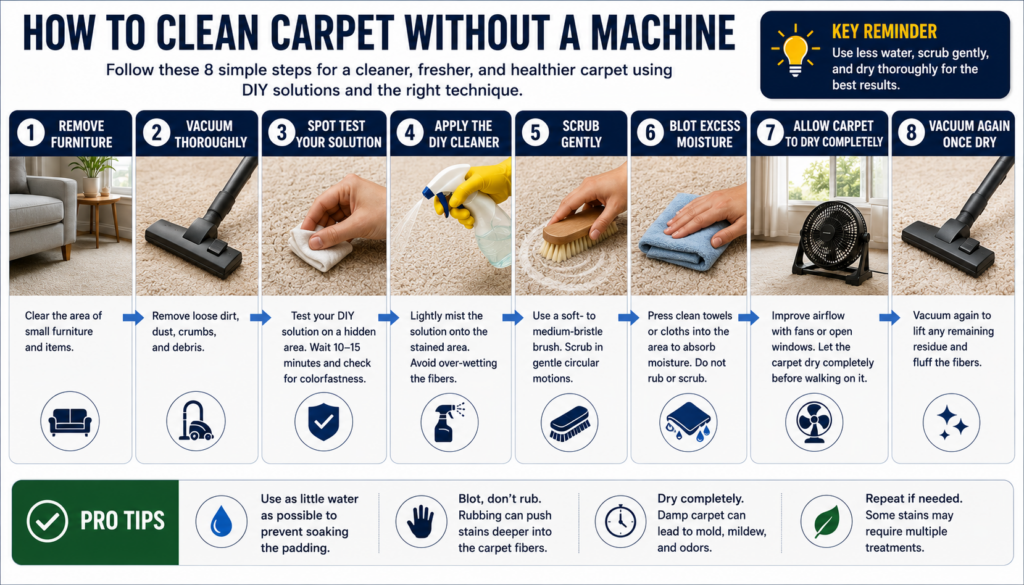
Step-by-Step Cleaning Process
Clear the room of small furniture and confirm your solution passes a patch test before starting. Then work through:
- Remove furniture from the area.
- Vacuum thoroughly.
- Spot-test your cleaning solution.
- Apply the DIY cleaner.
- Scrub gently.
- Blot excess moisture.
- Allow the carpet to dry completely.
- Vacuum again once dry to restore the fibers.
How to Remove Common Carpet Stains
| Stain | Immediate Action | DIY Solution | Avoid |
|---|---|---|---|
| Coffee | Blot right away | Vinegar and water, or hydrogen peroxide on light carpet | Rubbing the stain |
| Pet accidents | Blot up liquid | Vinegar-water solution, baking soda after drying | Ammonia-based cleaners |
| Grease | Scrape off excess | Dish soap and warm water | Soaking the area |
| Mud | Let it dry fully | Vacuum, then vinegar solution on residue | Scrubbing while wet |
| Ink | Blot only | Small amount of rubbing alcohol on a cloth, then rinse | Spreading it by rubbing |
| Food spills | Remove solids | Dish soap and water | Letting it sit too long |
| Blood | Blot with cold water | Cold water and mild soap | Hot water, which sets protein stains |
See at a glance here again with images –
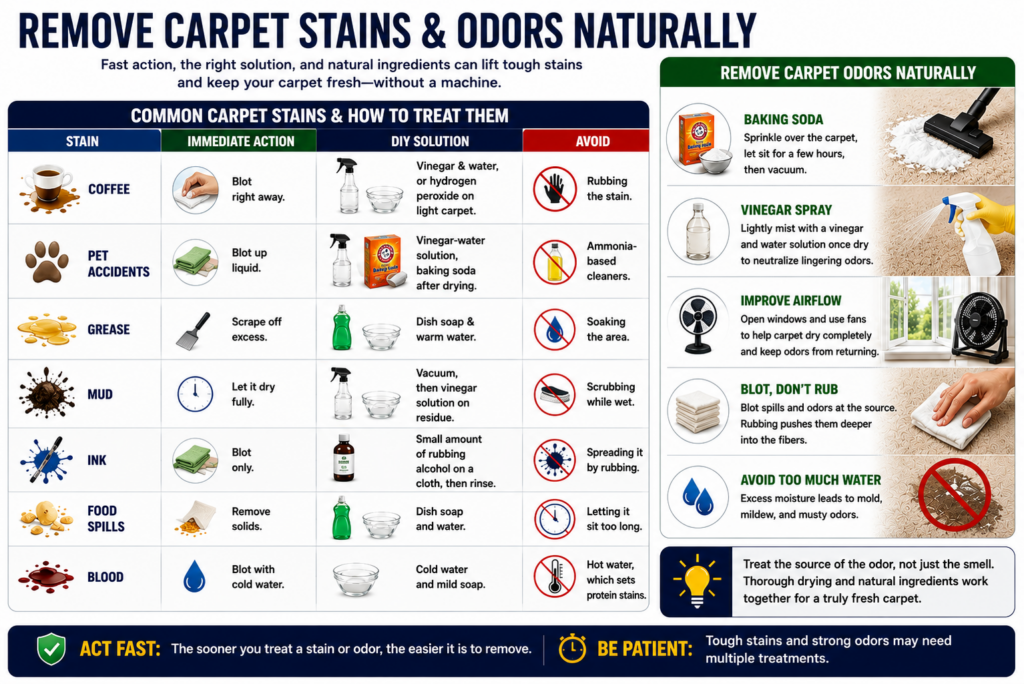
How to Remove Carpet Odors Naturally
Sprinkle baking soda over the carpet, let it sit for a few hours, then vacuum to absorb general odors. A light vinegar spray helps lingering smells once dry, since vinegar neutralizes odor rather than covering it up. Good ventilation keeps smells from settling back into damp fibers.
Pet odors usually need repeated baking soda treatments and thorough drying, since soaked-in urine keeps smelling until fully broken down. Smoke smell responds to the same approach, though heavy odor may need several rounds.
Treating the source of an odor works far better than spraying something over it.
Common Mistakes to Avoid
- Skipping vacuuming before cleaning
- Using too much water
- Soaking the carpet padding underneath
- Scrubbing aggressively
- Mixing incompatible cleaners
- Skipping the patch test
- Walking on damp carpet
- Not drying the carpet thoroughly
Each of these either damages fibers, sets a stain permanently, or leaves lingering odors from trapped moisture.
When DIY Cleaning Isn’t Enough
Hand cleaning has limits. Large stains, heavy traffic discoloration, mold, water damage, and pet urine that has reached the padding usually need machine extraction or a professional.
Delicate natural fiber carpets — wool, silk, jute, sisal, and antique rugs — often shouldn’t be wet-cleaned at all; check the care label first, since these materials can react poorly to moisture and DIY solutions.
| DIY Hand Cleaning | Machine or Professional | |
|---|---|---|
| Best for | Light stains, routine upkeep, small areas | Deep-set stains, large areas, heavy soiling |
| Moisture control | Limited, easy to over-wet | Better extraction, less trapped moisture |
| Cost | Low, household ingredients | Higher, rental or service fees |
| When to choose | Regular maintenance | Mold, water damage, delicate fibers, deep grime |
How Often Should You Clean Carpet Without a Machine?
- Vacuum once or twice a week.
- Spot clean spills immediately.
- Apply baking soda for odor control monthly.
- Hand clean high-traffic areas every few months.
- Schedule a professional deep clean annually if possible.
Frequently Asked Questions
Can vinegar damage carpet?
Diluted white vinegar is safe for most carpets, but patch test first, since some dyes are sensitive to it.
Is baking soda safe for all carpets?
Yes, it’s safe for nearly all carpet types when vacuumed up thoroughly afterward.
Can I use dish soap?
Mild dish soap works well for grease, but rinse it out well — leftover residue attracts more dirt.
How long does carpet take to dry?
Usually a few hours with good airflow, though thick carpet or high humidity can extend that to a full day.
Can I clean carpet without a vacuum?
Vacuuming first is strongly recommended, since it removes loose dirt that would otherwise turn into mud once wet.
How do I remove old stains?
Older stains often need several treatments and more patience — repeat the process rather than increasing the amount of solution used.
What’s the best homemade carpet cleaner?
It depends on the stain — vinegar and water for general dirt, dish soap for grease, baking soda for odors.
How often should I deep clean my carpet?
Hand clean high-traffic areas every few months, and aim for a full professional deep clean annually.
Lets Do The Job Today!
Cleaning a carpet without a carpet cleaner comes down to a simple order: vacuum first, pick the right DIY solution for the stain, scrub gently, blot out the moisture, and let the carpet dry completely before walking on it. Regular maintenance between deep cleans keeps carpets looking and smelling fresh.
Treat spills as soon as they happen, and deep clean high-traffic areas every few months for carpets that last longer and stay healthier.