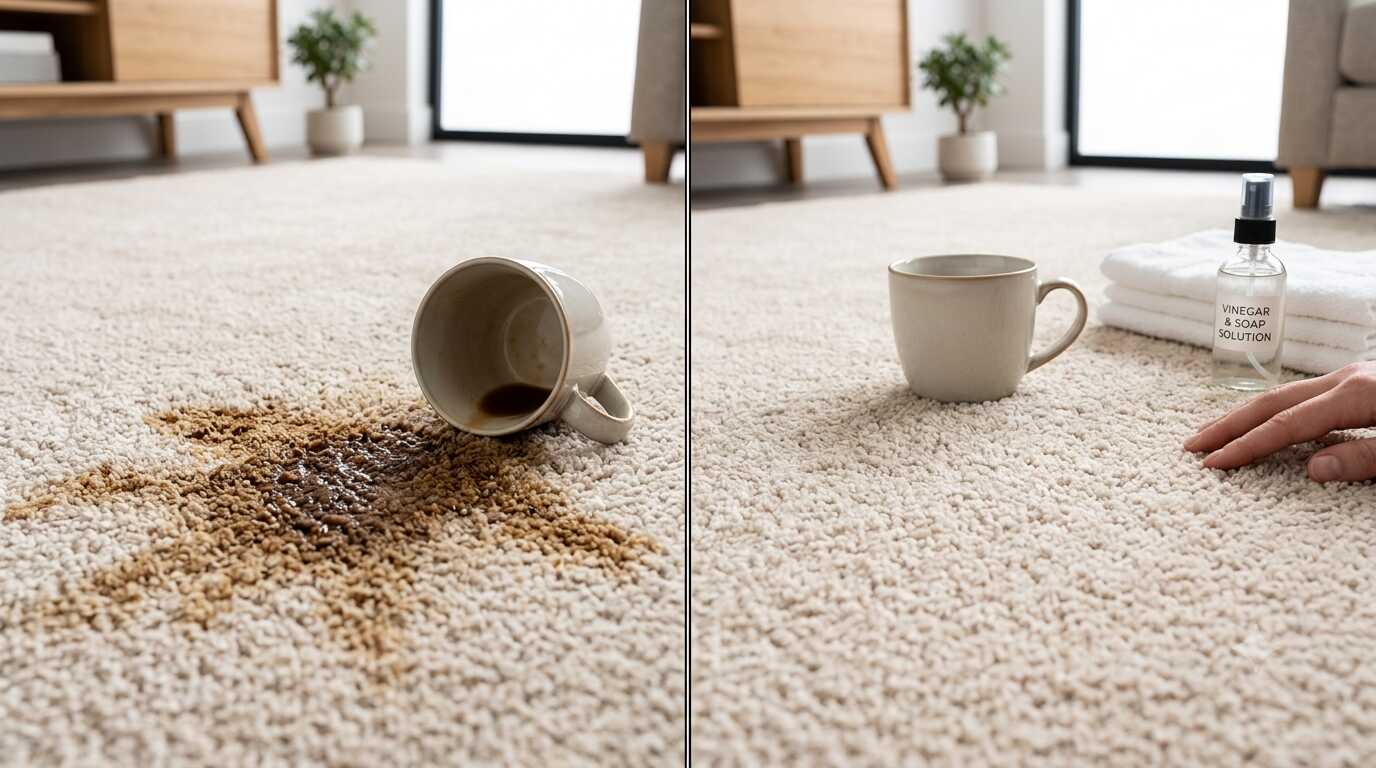
It happens in a split second. A slip of the hand, a tipped mug, and suddenly your pristine carpet is wearing a dark, ugly splat. Beyond the immediate shock, left-untreated coffee spills lead to sticky, dirt-attracting fibers, fiber breakdown, and stale, lingering smells that can ruin your home’s entire vibe.
If you are staring down a fresh spill or a frustrating, set-in mark, take a deep breath. You don’t have to throw a rug over it or immediately shell out hundreds of dollars.
As experts in professional carpet restoration, we are going to show you exactly how to clean coffee stain out of carpet using safe, highly effective techniques. Let’s get that stain lifted before it becomes a permanent part of your floor.
Why Coffee Stains Are a Nightmare (and How to Beat Them)
Coffee isn’t just dirty water; it contains natural organic compounds called tannins. Tannins are vegetable dyes also found in tea and red wine. When hot liquid hits your carpet, those tannins quickly bind with the synthetic or natural fibers, making them highly stubborn to remove once dry.
To beat a tannin-based stain, you need a method that breaks its chemical bond without destroying your carpet’s delicate pile. The absolute best way to clean carpet at home is to act quickly, use balanced cleaning solutions, and master the art of the “blot.”
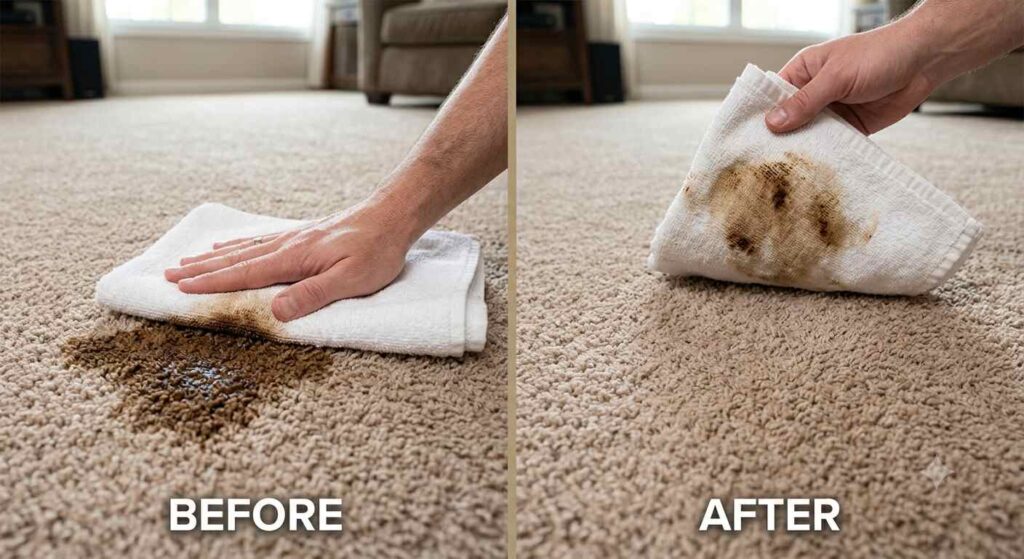
Look closely at the technique above: The hand is flat, applying direct downward pressure using a plain, white cotton towel. This creates a capillary action, drawing the coffee pigment straight up out of the carpet backing and into the towel. Scrubbing or rubbing side-to-side will fray the carpet fibers and spread the stain horizontally.
Step-by-Step Coffee Stain Removal Methods
Below are the three most effective professional-grade DIY methods. Always start with Method 1, as it is the safest and most reliable for almost all carpet types (including nylon, polyester, and wool blends).
Method 1: The Dish Soap & Vinegar Solution (The Safe All-Rounder)
The acidity of white vinegar breaks down the stubborn coffee tannins, while the mild surfactants in dish soap lift any oils or creamers out of the fibers.
What You Need:
- 1 tablespoon clear, mild liquid dish soap (avoid dyes like blue or green)
- 1 tablespoon distilled white vinegar
- 2 cups warm (not hot!) water
- Several clean, dry white towels or plain paper towels
The Step-by-Step Process:
- Blot Immediately: Press a clean, dry white towel firmly over the spill to absorb as much liquid as humanly possible. Never use printed paper towels or dyed rags, as the ink can transfer and cause a secondary stain.
- Mix Your Solution: Combine your 1 tbsp of dish soap, 1 tbsp of white vinegar, and 2 cups of warm water in a small bowl or spray bottle.
- Apply and Work from the Outside In: Sponge or lightly spray the solution directly onto the stain. Always work from the outer edges of the stain toward the center. This prevents the coffee from spreading and creating a larger dark ring.
- Blot and Repeat: Use a dry section of your white towel to press down firmly. You should see the brown pigment transferring onto the towel. Keep rotating to clean sections of your towel and blotting until the stain stops transferring.
- Rinse Thoroughly: Dampen a fresh towel with cold water and blot the area to rinse out the soapy residue. Leaving soap in your carpet will act like a magnet for dirt later on.
- Dry Time: Lay a dry white towel over the spot and let it dry naturally. This process typically takes 4 to 6 hours.
Method 2: The Hydrogen Peroxide & Steam Iron Trick (For Stubborn or Set-In Stains)
If the stain has been sitting for days and refuses to budge, you can use 3% hydrogen peroxide as a mild, safe bleaching agent. Warning: Always test this on a hidden spot of your carpet (like inside a closet) first to ensure your carpet’s dye is colorfast.
What You Need:
- 3% hydrogen peroxide (standard drugstore strength)
- A clean, damp white cotton towel
- A household steam iron
The Step-by-Step Process:
- Spot Test: Apply a tiny drop of peroxide to a hidden fiber. Wait 10 minutes. Blot with a white paper towel to ensure no carpet color transfers.
- Mist the Stain: Gently dab or lightly mist the 3% hydrogen peroxide directly onto the stubborn coffee stain.
- The Towel & Iron Transfer: Place your clean, damp white cotton towel directly over the treated stain.
- Apply Steam Heat: Set your household iron to its medium steam setting. Press the iron flat onto the damp towel for 20 to 30 seconds. The combination of steam, heat, and peroxide causes the coffee pigment to vaporize and cling to the damp towel.
- Check and Repeat: Lift the iron and check the towel. You will see a brown outline of the stain transferred onto the fabric. Move to a clean, damp section of the towel and repeat the process if needed.
Method 3: The Baking Soda Paste (For Set-In Stains & Carpet Odor Removal)
If you use cream or sugar in your coffee, a set-in stain can quickly turn sour, creating a breeding ground for bacteria. Baking soda is excellent for absorbing residual oils, pulling up pigments, and acting as a natural agent for [INTERNAL LINK OPPORTUNITY: Link this anchor text to your related service page, e.g., Professional Carpet Odor Removal].
What You Need:
- 1 tablespoon baking soda
- 1 teaspoon lukewarm water
The Step-by-Step Process:
- Create a Thick Paste: Mix the baking soda and water in a small bowl until it forms a consistency similar to toothpaste.
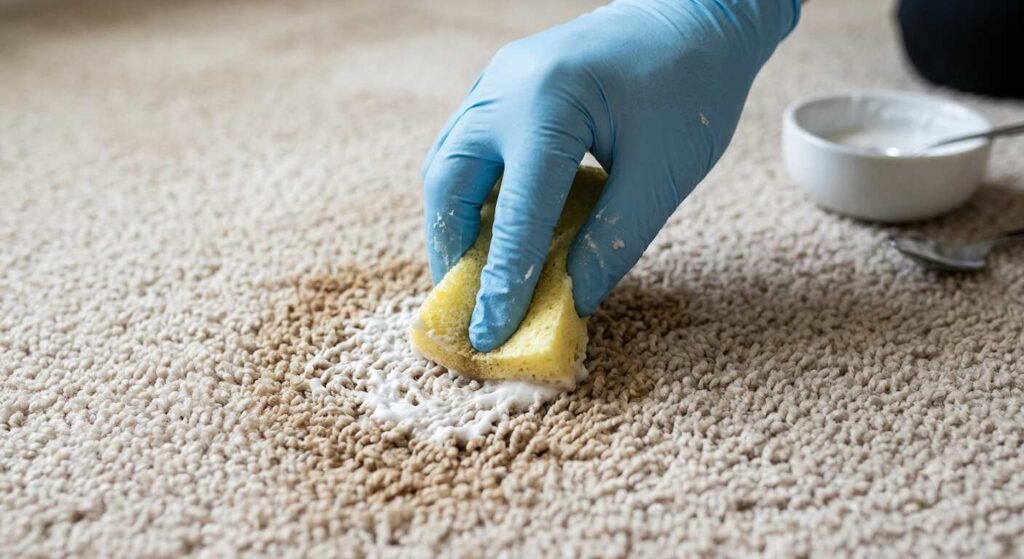
- Work into the Fibers: Gently press the paste into the stained carpet fibers using your fingers or a soft-bristled brush. Do not scrub hard; simply massage it in so it wraps around the stained yarns.
- Dwell Time: Let the paste sit and work its magic for 5 to 10 minutes.
- Rinse and Extract: Gently scrape away the excess dried paste with a spoon. Mist the area with lukewarm water and blot with a clean towel to rinse the remaining residue.
Common Mistakes That Ruin Carpets
Even with the best intentions, a few simple mistakes can turn a temporary spill into a permanent blemish. Avoid these critical errors:
- Using Boiling Hot Water: Hot water “cooks” tannin-based proteins and sets them permanently into synthetic carpet fibers. Always use cold or lukewarm water.
- Scrubbing and Friction: Scrubbing with a brush or rough rag unravels the twisted yarn tips (called “blooming”), leaving your carpet with a permanently fuzzy, worn texture that reflects light differently.
- Ignoring Residual Soap: If you don’t rinse your carpet thoroughly after using dish soap, the leftover surfactant remains sticky. Over the next few weeks, it will trap dust and foot traffic dirt, making a dark “phantom stain” reappear.
How to Prevent “Wicking” (When the Stain Reappears Later)
Have you ever cleaned a carpet stain perfectly, only to watch it mysteriously creep back to life a couple of days later? This frustrating phenomenon is called wicking.
Wicking occurs when the coffee liquid penetrates deep past the carpet fibers and pools in the backing or the under-carpet padding. As the surface dries, capillary action draws the liquid back up to the top of the pile, causing the stain to reappear.
The Heavy Book Trick to Prevent Wicking:
Once you have finished cleaning and rinsing the area, place a clean, dry white towel over the wet spot. Stack several heavy books (like textbooks or encyclopedias) directly on top of the towel and leave them overnight. The weight forces the deep moisture to migrate upward into your towel rather than settling at the surface of your carpet fibers.
When to Call Professional Carpet Cleaners
DIY methods are fantastic for quick, localized accidents. However, home treatments have limits. If you are dealing with wool, silk, or expensive Persian rugs, attempting DIY chemicals can easily bleach or strip natural fibers.
Furthermore, if a massive travel mug of coffee has saturated several square feet of your floor, home solutions cannot reach the subfloor padding where bacteria and sour odors thrive.
| Indicator | DIY Treatment | Professional Extraction |
|---|---|---|
| Spill Size | Small drips, minor splashes | Massive mugs, full carafes, or high-traffic paths |
| Fiber Type | Synthetic (nylon, polyester) | Natural fibers (wool, silk, sisal, hand-knotted) |
| Stain Age | Fresh (under 24-48 hours) | Set-in (weeks or months old, previously heat-treated) |
| Lingering Odor | Minimal | Persistent sour, moldy, or acidic smell |
Professional technicians utilize high-powered, truck-mounted hot water extraction units. These industrial systems inject specialized rinsing agents deep into the padding and instantly vacuum them back out with massive lift pressure, ensuring that the spill is completely eradicated without any risk of wicking.
Get Your Carpets Looking Brand New Again
Accidents happen, but a spilled cup of morning coffee doesn’t have to mean the end of your beautiful flooring. By acting quickly, blotting carefully, and using the simple dish soap and vinegar formula, you can successfully tackle the vast majority of spills right at home.
However, if you’ve tried these steps and that stubborn shadow just won’t budge—or if you want to ensure your carpet is completely sanitized and odor-free—it’s time to bring in the pros.
Don’t live with unsightly stains or lingering odors. Today to book a deep, restorative extraction service. Give us a call or schedule your appointment online, and let our certified team restore your carpets to pristine, factory-fresh perfection!
1. The Ultimate Carpet Fiber Cheat Sheet (Your Upgraded Table)
Not all carpets are created equal. Treating wool the same way you treat nylon can permanently ruin the fibers. This table helps readers identify their carpet type and choose the exact right approach.
| Carpet Fiber Type | Stain Sensitivity | Coffee Absorption Risk | Best DIY Treatment | When to Call a Pro |
| Nylon (Most common, highly durable) | Moderate Very resilient but absorbs liquid over time. | Medium Has factory stain-protectant coatings, but they wear off. | Method 1: Dish Soap & Vinegar. Highly responsive to gentle acids. | If the stain is older than 48 hours and has deeply wicked into the backing. |
| Polyester (PET) (Naturally stain-resistant) | Low Hydrophobic (repels water-based liquids). | Low Coffee sits on the surface longer before sinking in. | Method 1: Blot aggressively, then apply a diluted dish soap mist. | If the coffee contained heavy cream/sugar that created a sticky, grey dirt-magnet spot. |
| Wool (Premium natural fiber) | Extreme Highly absorbent; organic dyes can bleed. | High Natural protein fibers drink up tannins instantly. | Method 1 (Modified): Use cold water and neutral dish soap only. Never use vinegar or ammonia. | Immediately. Wool is easily damaged by heat and aggressive DIY chemistry. [INTERNAL LINK OPPORTUNITY: Book Wool Carpet Specialty Cleaning] |
| Olefin (Polypropylene) (Used in basements & commercial) | Low Virtually moisture-proof. | Very Low Stains usually sit on the very tip of the fibers. | Method 2: Hydrogen Peroxide. Olefin can withstand stronger treatments. | If the spill covers a massive surface area or has begun to smell musty. |
2. Frequently Asked Questions (FAQ)
An FAQ section is an SEO goldmine for capturing “People Also Ask” (PAA) boxes on Google. These questions use conversational, long-tail search phrases.
Q: What if my coffee had milk, creamer, or sugar in it?
A: This completely changes the game. Black coffee is just a pigment stain, but coffee with milk or sugar introduces organic proteins and lipids (fats). If you don’t fully extract the proteins, they will rot, creating a sour odor and a sticky residue that attracts dirt.
If your coffee had cream, always use Method 3 (Baking Soda Paste) or a specialized enzyme-based carpet cleaner after your initial blot. The enzymes will eat away the organic proteins, preventing odors and keeping the spot clean.
Q: Can I use table salt to absorb a fresh coffee spill?
A: As professional restorers, we strongly advise against this. While salt does absorb liquid, it also acts as a natural mordant—a chemical that permanently binds dyes to fabrics. If you pour salt onto a hot coffee stain, you might accidentally lock the brown tannin pigment into the carpet fibers forever. Stick to blotting with a clean, dry white towel instead.
Q: Will a coffee stain ever truly come out of a white carpet?
A: Yes, absolutely! White carpets actually have one major advantage: you don’t have to worry about color fading. If the standard vinegar and dish soap mix doesn’t work, white carpets can safely handle Method 2 (Hydrogen Peroxide) or a diluted mixture of household oxygen bleach. Just ensure you rinse the area thoroughly afterward so no chemical residue remains to catch sunlight and cause yellowing.
Q: Why does the coffee stain keep coming back after I clean it?
A: This is a classic case of “wicking.” When you spilled the coffee, it traveled down the carpet fibers and soaked into the backing or pad underneath. When you cleaned the surface, it looked great. But as the carpet dried over the next 24 to 48 hours, the deep-down liquid traveled back up the carpet fibers like a candle wick, reappearing on the surface.
To fix this, re-clean the surface, lay a thick white towel over the spot, and stack heavy books on top overnight. This draws the moisture upward into the towel rather than letting it dry on the carpet tips.
Q: How do professional carpet cleaners remove set-in stains that DIY can’t?
A: While household products can only treat the surface, use heavy-duty truck-mounted systems. These machines use high-temperature steam (up to 230°F) to melt the bond between the tannin and the fiber, combined with massive suction power that extracts the liquid from deep within the padding. We also apply specialized “reducing agents” that chemically alter the coffee molecule, rendering it completely invisible.