
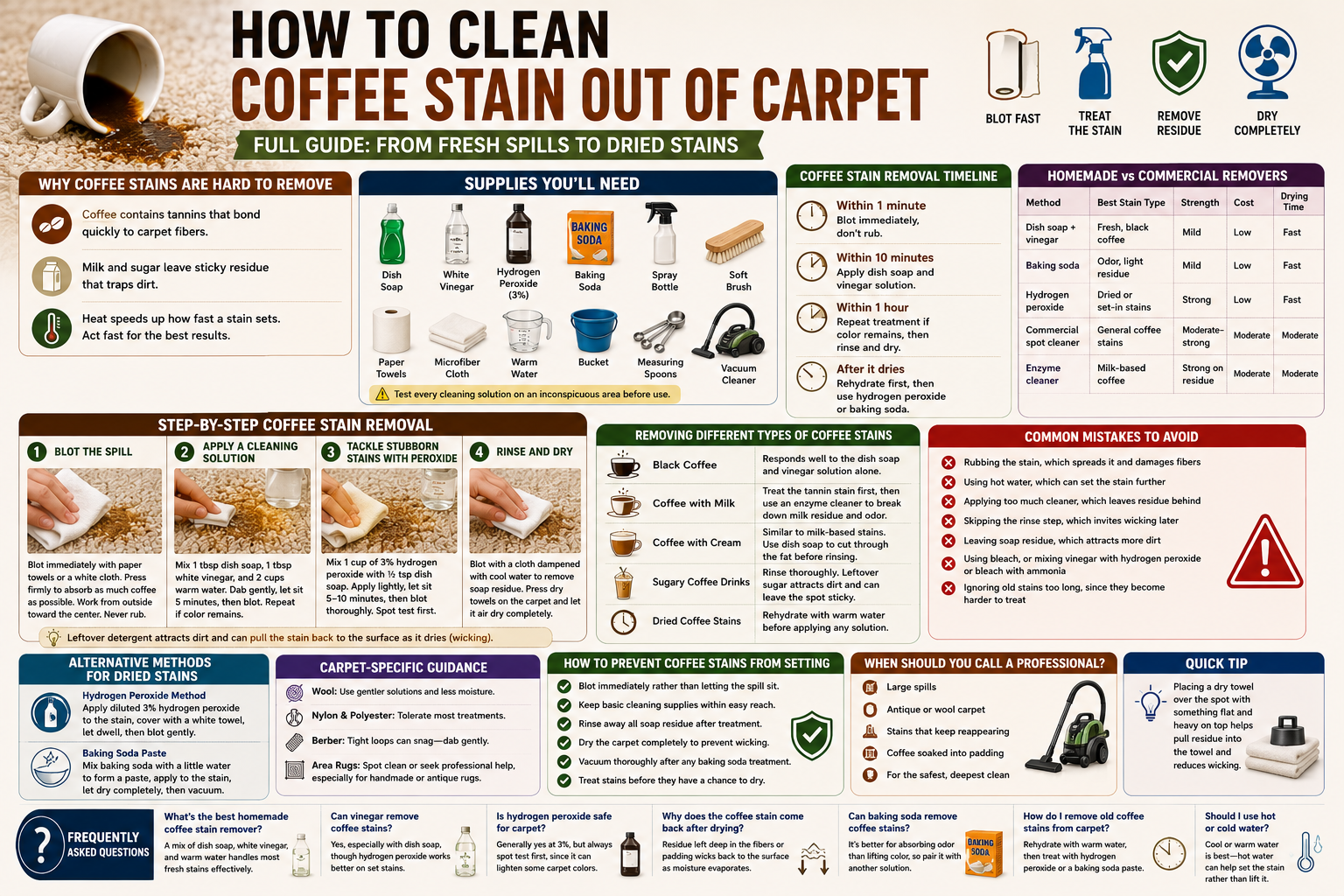
A coffee spill looks worse than it usually is if you move fast. Learning how to clean coffee stain out of carpet starts with paper towels and a simple mix of dish soap and white vinegar.
Hydrogen peroxide steps in for stains that won’t budge, and baking soda finishes the job by pulling out whatever odor remains.
This guide covers fresh spills, dried stains, milk-based coffee, and why some stains come back after the carpet dries.
Why Coffee Stains Are Hard to Remove
Coffee contains tannins, the same compounds that stain teeth and fabric, and they bond to carpet fibers quickly. Milk and sugar add a sticky residue that traps dirt on top of the tannin stain.
Heat speeds up how fast a stain sets, since warm liquid penetrates fibers faster than a cool one. Fast cleanup makes a real difference — a stain treated within minutes lifts far more easily than one left to dry, which usually needs a stronger treatment.
Supplies You’ll Need
- White paper towels
- White microfiber cloths
- Mild dish soap
- White vinegar
- Warm water
- Hydrogen peroxide (3%)
- Baking soda
- Spray bottle
- Measuring spoons
- Bucket
- Soft brush
- Vacuum cleaner
Test every cleaning solution on an inconspicuous area before treating visible carpet.
How to Clean Coffee Stain Out of Carpet
Work through the same sequence whether the spill happened seconds or hours ago.
Step-by-Step Coffee Stain Removal
1. Blot the Spill. Blot immediately with paper towels or a white cotton cloth, pressing firmly to absorb as much coffee as possible. Work from the outside toward the center, and never rub — rubbing pushes coffee deeper into the fibers.
2. Apply a Cleaning Solution. Mix 1 tablespoon dish soap, 1 tablespoon white vinegar, and 2 cups warm water. Dip a clean cloth and dab the stain gently, let it sit about 5 minutes, then blot with a dry towel. Repeat if color remains.
3. Tackle Stubborn Stains with Peroxide. If the stain persists, mix 1 cup of 3% hydrogen peroxide with ½ teaspoon dish soap. Apply lightly, let it sit 5 to 10 minutes, then blot thoroughly. Peroxide can lighten some carpets, so always spot test first.
4. Rinse and Dry. Blot with a clean cloth dampened with cool water to remove soap residue, then press dry towels onto the carpet and let it air dry completely. Leftover detergent attracts dirt and can pull the stain back to the surface as it dries — a process known as wicking.
Alternative Methods for Dried Stains
Dried coffee stains take more effort, since the tannins have already set into the fibers.
Hydrogen Peroxide Method. Apply diluted 3% hydrogen peroxide directly to the stain, cover with a white towel, and allow adequate dwell time before blotting gently. The towel helps keep the solution in contact with the stain instead of evaporating too quickly.
Baking Soda Paste. Mix baking soda with a small amount of water to form a paste, apply it to the stain, and let it dry completely before vacuuming it away. This method works best on stains with lingering odor rather than heavy discoloration.
Homemade vs Commercial Coffee Stain Removers
| Method | Best Stain Type | Strength | Cost | Drying Time |
|---|---|---|---|---|
| Dish soap + vinegar | Fresh, black coffee | Mild | Low | Fast |
| Baking soda | Odor, light residue | Mild | Low | Fast |
| Hydrogen peroxide | Dried or set-in stains | Strong | Low | Fast |
| Commercial spot cleaner | General coffee stains | Moderate–strong | Moderate | Moderate |
| Enzyme cleaner | Milk-based coffee | Strong on residue | Moderate | Moderate |
DIY solutions handle most fresh spills well. Reach for a commercial or enzyme cleaner when milk or cream is involved, or when a stain keeps coming back after repeated home treatment.
Removing Different Types of Coffee Stains
Fresh coffee lifts easily with blotting and a mild solution; dried coffee needs rehydration and a stronger treatment; milk-based coffee needs an enzyme step to fully clear the residue.
Black Coffee
Responds well to the dish soap and vinegar solution alone, since there’s no milk fat or sugar to break down separately.
Coffee with Milk
Treat the tannin stain first, then follow with an enzyme cleaner to break down the milk residue and prevent lingering odor.
Coffee with Cream
Similar to milk-based stains but often greasier — a small amount of dish soap helps cut through the fat before rinsing.
Sugary Coffee Drinks
Rinse thoroughly after treatment, since leftover sugar residue attracts dirt and can leave the spot feeling sticky.
Dried Coffee Stains
Rehydrate with warm water before applying any solution, then follow the alternative methods above rather than the fresh-spill steps.
Why Coffee Stains Return After Drying
A stain that looks gone but reappears as the carpet dries is usually wicking — residue deep in the fibers or padding rising back to the surface as moisture evaporates. It happens most often when a stain wasn’t fully rinsed the first time.
Placing a dry towel over the spot with something flat and heavy on top helps pull residual moisture into the towel instead of the carpet surface, reducing the odds of the stain resurfacing.
Coffee Stain Removal Timeline
| Time Since Spill | Action |
|---|---|
| Within 1 minute | Blot immediately, don’t rub |
| Within 10 minutes | Apply dish soap and vinegar solution |
| Within 1 hour | Repeat treatment if color remains, then rinse and dry |
| After it dries | Rehydrate first, then use hydrogen peroxide or baking soda |
Carpet-Specific Guidance
Wool needs a gentler, diluted solution and less moisture, since it’s sensitive to over-wetting and harsh chemicals. Nylon and polyester tolerate the full range of treatments well, including hydrogen peroxide after a patch test. Berber’s tight loops can snag with aggressive scrubbing, so keep dabbing gentle. Area rugs, especially handmade or antique ones, often do better with professional treatment than a full home solution.
Common Mistakes to Avoid
- Rubbing the stain, which spreads it and damages fibers
- Using hot water, which can set the stain further
- Applying too much cleaner, which leaves residue behind
- Skipping the rinse step, which invites wicking later
- Leaving soap residue, which attracts more dirt over time
- Using bleach, or mixing vinegar with hydrogen peroxide or bleach with ammonia — the combinations can damage carpet or release harmful fumes
- Ignoring old stains too long, since they become harder to treat the longer they set
In homes with kids or pets, keep all cleaning solutions sealed and out of reach until the carpet is fully dry.
How to Prevent Coffee Stains From Setting
- Blot immediately rather than letting the spill sit.
- Keep basic cleaning supplies within easy reach.
- Rinse away all soap residue after treatment.
- Dry the carpet completely to prevent wicking.
- Vacuum thoroughly after any baking soda treatment.
- Treat stains before they have a chance to dry.
When Should You Call a Professional?
Consider a professional for large spills, antique or wool carpet, or stains that keep reappearing despite repeated cleaning. If coffee has soaked down to the carpet padding, home treatment usually can’t fully reach it, and professional extraction is the safer option.
Frequently Asked Questions
What’s the best homemade coffee stain remover?
A mix of dish soap, white vinegar, and warm water handles most fresh stains effectively.
Can vinegar remove coffee stains?
Yes, especially with dish soap, though hydrogen peroxide works better on stains that have already set.
Is hydrogen peroxide safe for carpet?
Generally yes at 3%, but always spot test first, since it can lighten some carpet colors.
Why does the coffee stain come back after drying?
Residue left deep in the fibers or padding wicks back to the surface as moisture evaporates.
Can baking soda remove coffee stains?
It’s better for absorbing odor than lifting color, so pair it with another solution for staining.
How do I remove old coffee stains from carpet?
Rehydrate with warm water, then treat with hydrogen peroxide or a baking soda paste.
Should I use hot or cold water?
Cool or warm water is best — hot water can help set the stain rather than lift it.
Conclusion
Removing a coffee stain from carpet comes down to speed and sequence: blot immediately, treat with a dish soap and vinegar solution, and bring in hydrogen peroxide for anything that doesn’t fully lift.
Rinse thoroughly and dry the carpet completely afterward, since leftover residue is what causes stains to reappear later. Acting fast on a fresh spill will always be easier than treating one that’s had time to set.