
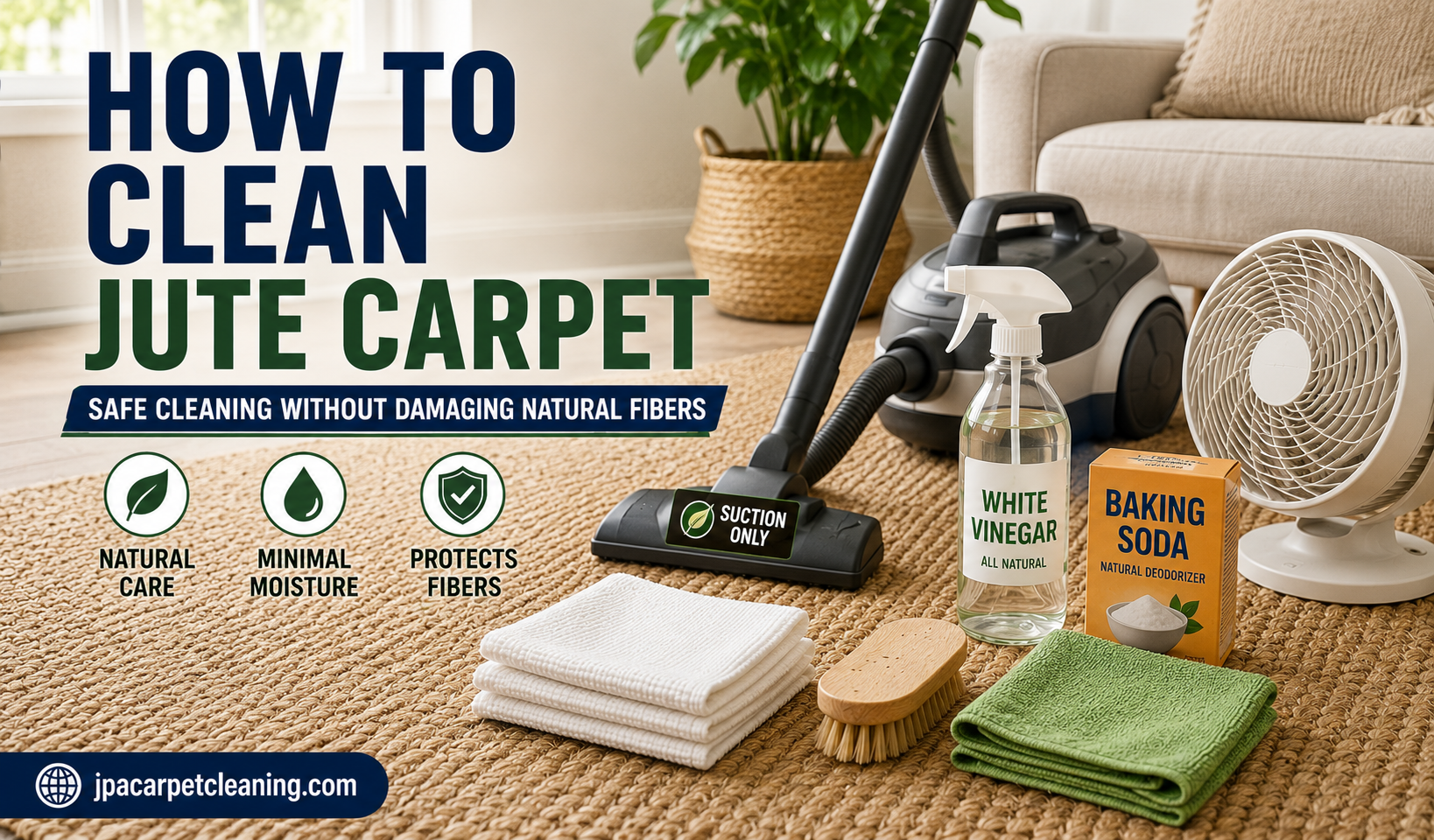
Jute soaks up moisture the moment it touches the fibers, which makes ordinary carpet cleaning habits risky on this material. Knowing how to clean jute carpet starts with understanding what the fiber can and can’t handle before you reach for any product.
The short version is, vacuum regularly, treat spots with white vinegar or baking soda, blot everything with dry cloths, and get the rug dry again fast. Skip any of those steps and you risk shrinkage, staining, or mildew that never fully goes away.
This guide covers routine care, stain-specific treatment, drying, and the point where a jute rug needs professional help instead of a DIY fix.
Why Jute Carpets Need Special Care
Jute is a natural plant fiber, which means it behaves nothing like synthetic carpet when it comes into contact with water. It absorbs moisture quickly, and once it’s saturated, that moisture is slow to leave.
Too much water leads to shrinking, discoloration, and mildew growth inside the weave, sometimes without any visible warning until the damage is done. Rough scrubbing causes a separate problem, breaking down the woven strands and leaving the surface looking frayed or fuzzy.
Gentle handling isn’t just a suggestion with jute — it’s what keeps the rug looking and holding together for years instead of months.
Supplies You’ll Need
- Vacuum cleaner with suction-only setting
- White microfiber cloths
- Paper towels
- Soft brush
- Baking soda
- White vinegar
- Cold water
- Spray bottle
- Fan
- Hair dryer (cool setting only)
Test any cleaning solution on an inconspicuous corner of the rug before treating a visible spot, since jute can react differently depending on how it was dyed or treated.
How to Clean Jute Carpet
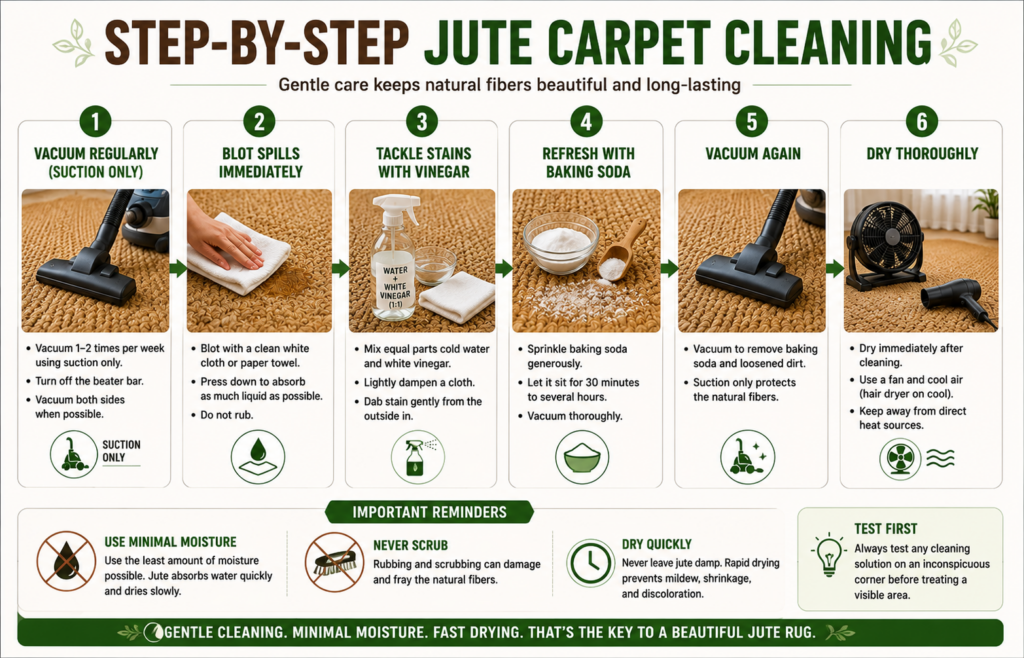
1. Vacuum Regularly
Vacuum 1–2 times per week using suction only, and turn off the rotating brush or beater bar before you start. If your vacuum doesn’t let you disable it, switch to the highest pile setting instead. Vacuuming both sides of the rug when possible pulls out grit that settles into the base of the weave.
Suction protects the fibers in a way that brushing can’t. A beater bar tugs at the strands and loosens the weave over time, while suction alone lifts dirt without stressing the material.
2. Blot Spills Immediately
Never rub a fresh spill. Blot it with a clean white cloth or paper towel instead, pressing down firmly to pull moisture up and out of the fibers. Swap towels as they get saturated so you’re always blotting with a dry surface.
Rubbing pushes whatever spilled deeper into the weave and spreads it wider at the same time, turning a small spot into a bigger stain.
3. Tackle Stains with Vinegar
Mix equal parts cold water and white vinegar in a spray bottle, then lightly dampen a clean cloth rather than spraying the rug directly. Dab the stain gently with the cloth, working from the outer edge inward, and avoid saturating the fibers at any point.
Jute should always be cleaned with the least moisture that gets the job done, since even a solution this mild can cause problems if it’s allowed to soak in.
4. Refresh with Baking Soda
Sprinkle baking soda generously over the rug and leave it for 30 minutes to several hours, depending on how strong the odor or oil buildup is. Vacuum thoroughly afterward. This step works well for absorbing surface oils and neutralizing odors without introducing any moisture at all.
Drying a Jute Carpet Properly
Dry the rug immediately after any spot cleaning — don’t let it sit damp while you move on to something else. Point a fan directly at the treated area to speed up airflow, and use a hair dryer on the cool setting if you need extra help.
Never leave jute damp for an extended period, and keep it away from direct heat sources like radiators or space heaters, which can scorch or warp the fibers instead of just drying them.
Rapid drying is what actually prevents mildew and discoloration. Moisture that lingers in the weave for hours gives mold a place to start, even if the surface looks dry.
How Much Water Is Too Much for Jute?
Jute can handle a lightly damp cloth without issue, but anything beyond that starts pushing into risky territory. A cloth that’s damp enough to leave a faint mark and dry within an hour or two is generally safe. A rug that stays visibly wet for several hours, or one that’s been sprayed heavily rather than dabbed, is at real risk of shrinking or developing mildew underneath.
| Moisture Level | Example | Risk to Jute |
|---|---|---|
| Lightly damp cloth | Blotting or dabbing a stain | Low, dries within 1–2 hours |
| Heavily damp cloth | Repeated soaking of the same spot | Moderate, monitor drying closely |
| Fully wet or soaked | Spilled liquid left standing, over-spraying | High, shrinkage and mildew likely |
Jute vs. Sisal vs. Seagrass Rug Cleaning Requirements
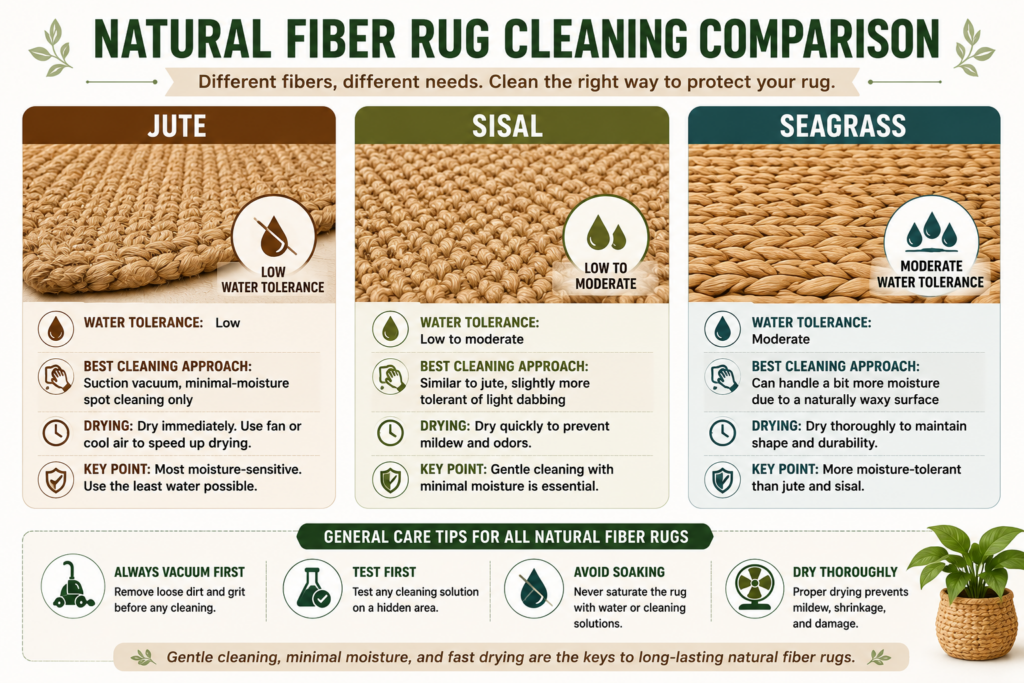
Natural fiber rugs get grouped together often, but they don’t all respond to cleaning the same way.
| Fiber | Water Tolerance | Best Cleaning Approach |
|---|---|---|
| Jute | Low | Suction vacuum, minimal-moisture spot cleaning only |
| Sisal | Low to moderate | Similar to jute, slightly more tolerant of light dabbing |
| Seagrass | Moderate | Can handle a bit more moisture due to a naturally waxy surface |
Jute is the most moisture-sensitive of the three, which is why it needs the driest cleaning approach of the group.
Spot Clean, Professional Clean, or Replace?
Most everyday spills and light dirt call for the spot-cleaning steps above. Move to professional cleaning when a stain is large, has set for more than a day or two, or keeps reappearing after you treat it. Replacement becomes the realistic option once the backing has been soaked, the fibers have frayed extensively, or mildew odor persists even after the rug has fully dried.
Caring for Jute in Humid Climates
Humid environments slow down drying time significantly, which raises the odds of mildew even from routine cleaning. Run a dehumidifier or fan in the room after any spot treatment, and avoid scheduling deep cleaning on days with high indoor humidity. Rotating the rug periodically also helps, since it prevents moisture from settling in the same fibers every time.
Preventing Shedding and Fraying
Some shedding is normal for a new jute rug and typically settles down after the first few weeks of use. To keep it minimal, stick to suction vacuuming rather than a beater bar, trim any loose strands with scissors instead of pulling them, and avoid dragging furniture across the surface, which can snag and loosen the weave.
How to Remove Common Stains from Jute Carpet
Food Stains
Scrape off any solid residue first, then blot with a dry cloth before applying the vinegar solution. Avoid pressing food particles further into the weave while cleaning up.
Coffee and Tea
Blot immediately, since these stains set fast. Use the vinegar mixture in light dabs, and expect to repeat the process a few times rather than soaking the spot once.
Mud
Let the mud dry completely before touching it, then vacuum or brush it away. Wet mud smears into the fibers and is far harder to remove than dried mud.
Pet Accidents
Blot up as much liquid as possible right away, then treat with the vinegar solution to help with both the stain and the odor. Baking soda afterward helps address any lingering smell.
Oil and Grease
Sprinkle baking soda directly on the spot to absorb the oil before it spreads, let it sit, then vacuum. Avoid rubbing, which drives grease deeper into the fibers.
Common Mistakes to Avoid
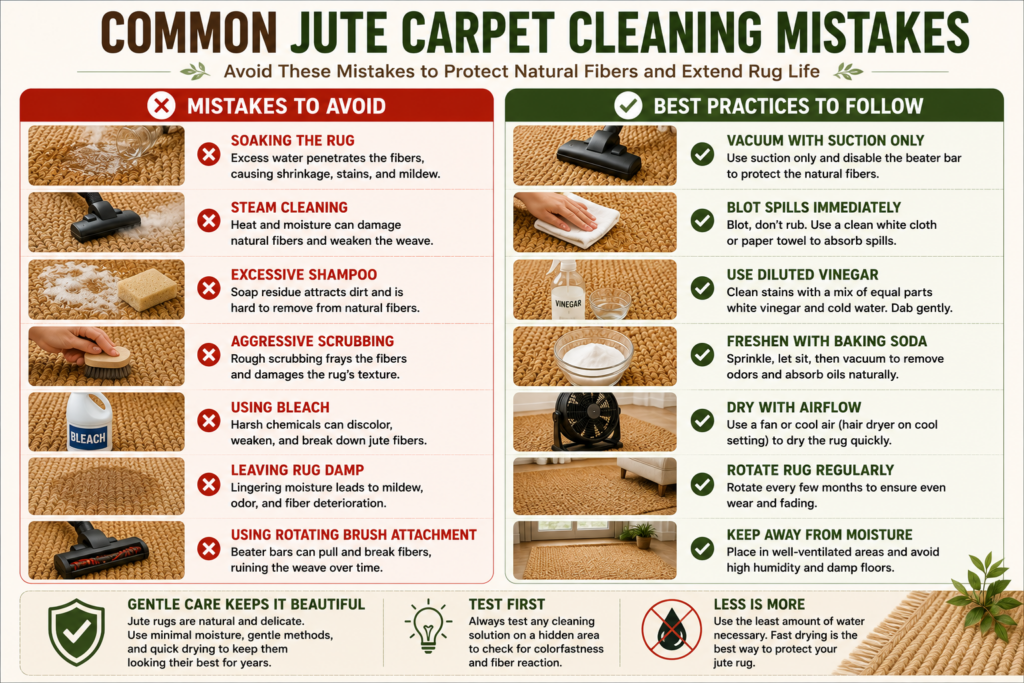
- Soaking the rug — saturated fibers shrink and discolor as they dry.
- Steam cleaning — the heat and moisture combination is one of the fastest ways to damage jute.
- Shampooing with excessive water — most rug shampoo methods use more liquid than jute can safely absorb.
- Scrubbing aggressively — this frays and loosens the weave.
- Using bleach — it breaks down natural fibers and can cause permanent discoloration.
- Leaving the rug damp — this invites mildew and a musty smell that’s hard to remove later.
- Using a rotating brush attachment — it pulls at the fibers instead of lifting dirt cleanly.
Products to never use on jute:
- Bleach or bleach-based cleaners
- Ammonia-based cleaners
- Carpet shampoo made for synthetic fibers
- Steam cleaners
- Enzyme cleaners left to sit wet for long periods
- Any colored or dyed cleaning cloth that could transfer color
How to Keep a Jute Carpet Clean Longer
- Vacuum weekly on a consistent schedule.
- Rotate the rug every few months for even wear.
- Keep shoes off to reduce dirt and oil buildup.
- Clean spills the moment they happen.
- Use rug pads to reduce friction and moisture from below.
- Keep the rug away from consistently damp areas like bathrooms or mudrooms.
- Limit prolonged direct sunlight, which causes uneven fading over time.
Can You Wash a Jute Carpet?
Machine washing isn’t recommended for jute. The fibers aren’t built to handle the water volume or agitation of a washing machine, and the rug is likely to shrink, warp, or fall apart at the seams. Soaking causes the same kind of damage even without a machine involved, since jute simply isn’t designed to dry out from a fully saturated state.
Professional rug cleaning makes sense for larger stains, deep odor issues, or general deep cleaning once or twice a year. Replacement becomes the more practical option when the backing has been compromised, the fibers have frayed extensively, or mildew has set in deep enough that cleaning won’t fully resolve it.
Frequently Asked Questions
Can I use vinegar on a jute carpet?
Yes, a diluted mix of equal parts water and white vinegar is one of the safest stain treatments for jute, as long as you apply it with a damp cloth rather than soaking the rug.
Is baking soda safe for jute rugs?
Yes. It’s a dry method, which makes it one of the lowest-risk ways to handle odor and light oil stains on natural fiber rugs.
Can I steam clean a jute carpet?
No. Steam introduces both heat and moisture, a combination that can shrink, warp, or discolor jute fibers.
What happens if a jute rug gets too wet?
It can shrink, develop discoloration, or grow mildew inside the weave, sometimes in spots you won’t notice until the smell shows up.
How often should I vacuum a jute rug?
Once or twice a week with suction only keeps dirt from settling into the base of the fibers.
Can I shampoo a jute carpet?
It’s not recommended. Most shampoo methods use more water than jute can safely handle, which raises the risk of shrinkage and staining.
When should I hire a professional rug cleaner?
Call a professional for large or set-in stains, persistent odor, or a deep clean once or twice a year, especially if a stain seems to have reached the rug’s backing.
Conclusion
Cleaning jute carpet comes down to using as little water as possible and drying the rug quickly whenever moisture is involved. Vacuum on a regular schedule, blot spills the moment they happen, and treat stains with vinegar or baking soda instead of anything harsher.
Avoid soaking, steam cleaning, or scrubbing, since those are the mistakes most likely to cause permanent damage. Handled this way, a jute rug can stay in good shape for years, with professional cleaning or replacement reserved for the situations routine care can’t fix.