
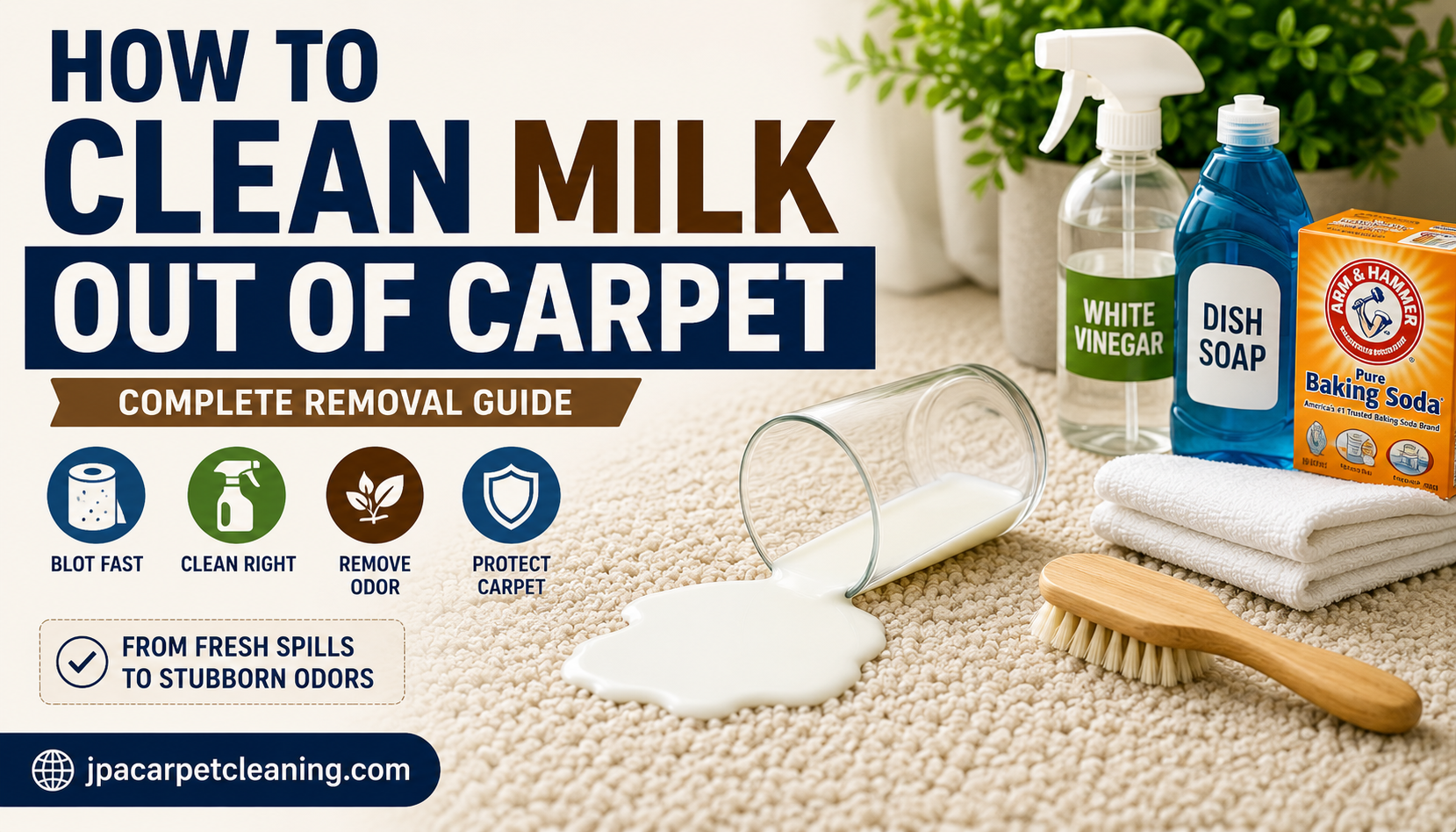
A milk spill seems harmless until it sours a day later. Learning how to clean milk out of carpet starts with paper towels and cold water, not hot water or a scrub brush.
Dish soap lifts what cold water alone leaves behind, and baking soda or an enzyme cleaner handles the sour smell that shows up once the spot has fully dried.
This guide covers fresh spills, dried stains, lingering odor, and why milk smell tends to come back after a first cleaning attempt.
Why Milk Is Difficult to Remove from Carpet
Milk contains proteins and fats that cling to carpet fibers rather than rinsing away easily, especially once they’ve had time to set. Left untreated, spoiled milk produces bacteria that create a stronger, sourer smell than the fresh spill ever had.
Milk can also soak down into the padding, where it’s harder to reach and easy to miss. Warm rooms speed up souring, which is part of why a spill cleaned quickly avoids the stain and odor problems a delayed cleanup usually creates.
Supplies You’ll Need
- White paper towels
- White microfiber cloths
- Cold water
- Mild dish soap
- White vinegar
- Baking soda
- Enzyme cleaner
- Spray bottle
- Soft brush
- Bucket
- Vacuum cleaner
- Spoon or butter knife (for dried milk)
Test every cleaning solution on an inconspicuous area of carpet before treating a visible spot.
How to Clean Milk Out of Carpet
Fresh milk responds well to a straightforward four-step process.
Fresh Milk Spill
Blot, don’t scrub. Press paper towels or a clean white cloth firmly onto the spill, removing as much liquid as possible. Replace towels as they saturate. Never scrub, since it forces milk deeper into the carpet.
Flush with Cold Water. Use cold water only — lightly spray or dab the area, then blot repeatedly. Hot water cooks the proteins in milk, setting the stain and making it harder to remove.
Use a Detergent Solution. Mix 1 teaspoon bleach-free dish soap with 2 cups warm, not hot, water. Apply lightly, blot gently, and repeat until the stain fades.
Rinse. Mist with plain cold water and blot until soap residue is gone, avoiding over-wetting. Leftover detergent attracts dirt and can leave the spot looking dingy again within days.
Old or Dried Milk Stains
Dried milk needs a bit more preparation before treatment, since the residue has already hardened.
Scrape Off Debris. Use a spoon or dull butter knife to gently remove dried milk without damaging the carpet fibers underneath.
Apply a Vinegar Solution. Mix equal parts white vinegar and cold water, spray or dab it lightly over the area, and let it sit for 5 to 10 minutes. Vinegar helps break down the dried protein residue so it lifts more easily.
Blot and Rinse. Blot with clean towels, rinse with cold water, and repeat the process until the carpet feels clean rather than sticky or stiff.
Removing Sour Milk Odor
Odor treatment is a separate step from stain removal, since a stain can look gone while bacteria still linger in the fibers.
Apply Baking Soda. Sprinkle it generously over the cleaned area, covering the entire affected spot.
Let It Sit. Leave it overnight whenever possible, giving the baking soda time to absorb odors trapped in the carpet.
Vacuum. Vacuum thoroughly the next day, removing all the baking soda residue.
Use Enzymatic Cleaners. If odor remains, apply an enzyme cleaner. Enzymes break down the bacteria and milk proteins actually causing the smell, rather than masking it like a fragrance spray would. Repeat if the smell persists.
Homemade vs Commercial Milk Stain Removers
| Factor | DIY (dish soap, vinegar, baking soda) | Commercial (enzyme cleaner, odor eliminator) |
|---|---|---|
| Fresh stains | Good | Good |
| Dried stains | Fair, needs repeat treatment | Good |
| Odor removal | Fair, may need repeats | Strong, breaks down the source |
| Cost | Low | Moderate |
| Best situations | Fresh spills, light residue | Sour odor, dried or repeated spills |
Different Types of Milk Spills
| Type | Cleanup Note |
|---|---|
| Fresh milk | Standard method works well |
| Dried milk | Rehydrate first, then vinegar solution |
| Spoiled milk | Enzyme cleaner needed for odor |
Whole Milk
Higher fat content means a slightly greasier residue — dish soap helps cut through it more effectively than water alone.
Skim Milk
Lower fat but still protein-rich, so it responds well to the standard cold water and dish soap method.
Chocolate Milk
Added sugar and cocoa solids act like a food stain layered on top of a milk stain, so treat the color first, then rinse thoroughly to avoid a sticky residue.
Baby Formula
Often has added oils and proteins that can leave a stronger odor than plain milk, making an enzyme cleaner more likely to be necessary.
Plant-Based Milk
Generally lower in protein than dairy, but sweeteners and added oils can still leave residue — treat it similarly to whole milk.
Why Milk Odors Return After Cleaning
A sour smell that comes back a day or two after cleaning usually means milk reached the padding beneath the carpet, where bacteria kept growing even after the surface looked clean. Surface cleaning alone can’t always reach that layer.
Repeating the enzyme treatment, and making sure the carpet dries completely each time, gives bacteria less opportunity to keep producing odor. If the smell keeps returning despite repeated treatment, the padding itself may need to be addressed directly.
Carpet-Specific Guidance
Wool absorbs moisture readily and should be treated with less liquid and gentler solutions than synthetic carpet. Nylon and polyester tolerate the full cleaning process, including vinegar and enzyme cleaners, without special precautions. Berber’s tight loops can trap milk residue at the base of the fibers, so extra rinsing helps prevent lingering odor. Area rugs, especially natural fiber ones, often do better lifted and treated separately than cleaned in place.
Common Mistakes to Avoid
- Using hot water, which cooks milk proteins into the fibers
- Scrubbing aggressively, which pushes milk deeper into the carpet
- Leaving milk inside the padding, which keeps the odor source active
- Using too much soap, which leaves residue that attracts dirt
- Skipping the enzyme cleaner, which lets bacteria continue producing odor
- Ignoring sour odors, since they rarely fade without direct treatment
- Over-wetting the carpet, which slows drying and risks mildew
- Mixing vinegar with bleach or ammonia-based cleaners, which can release harmful fumes
In homes with kids or pets, keep all cleaning solutions sealed and out of reach until the carpet is fully dry.
When Should You Replace Carpet Padding?
- A large milk spill soaked through to the padding
- Spoiled milk odor keeps returning despite repeated treatment
- Milk has been spilled in the same spot multiple times
- Visible mold growth is present
- The padding feels damp or spongy days after cleaning
Professional extraction or padding replacement is generally the safer route once odor persists through several rounds of home treatment.
How to Prevent Milk Odors from Returning
- Dry the carpet completely after every treatment.
- Improve airflow with fans while the area dries.
- Repeat the enzyme treatment if odor resurfaces.
- Vacuum thoroughly after any baking soda application.
- Clean future spills immediately rather than letting them sit.
Frequently Asked Questions
Can milk permanently stain carpet?
It can if left untreated too long, since the proteins bond to the fibers, but prompt cleaning usually prevents a lasting stain.
Does vinegar remove milk smell?
It helps with fresh residue and light odor, but a stronger, lingering smell usually needs an enzyme cleaner.
Can baking soda eliminate sour milk odor?
Yes, for surface-level odor, though smell that’s reached the padding often needs an enzyme treatment too.
What’s the best cleaner for spilled milk?
Cold water and mild dish soap work well for fresh spills; enzyme cleaners are best once odor sets in.
Why does my carpet still smell like milk?
Residue likely reached the padding, where bacteria keep producing odor even after the surface looks clean.
Can I use hot water to clean milk?
No, hot water cooks the proteins in milk, making the stain harder to remove rather than easier.
When should I hire a professional carpet cleaner?
Consider one for large spills, recurring odor, or milk that’s clearly soaked into the padding.
Conclusion
Cleaning milk out of carpet comes down to acting quickly: blot the spill first, always start with cold water, and follow up with a mild dish soap solution to lift what remains.
For lingering odor, baking soda or an enzyme cleaner breaks down what’s actually causing the smell rather than covering it up. Dry the carpet thoroughly each time, since leftover moisture is what lets bacteria and sour odors take hold again.