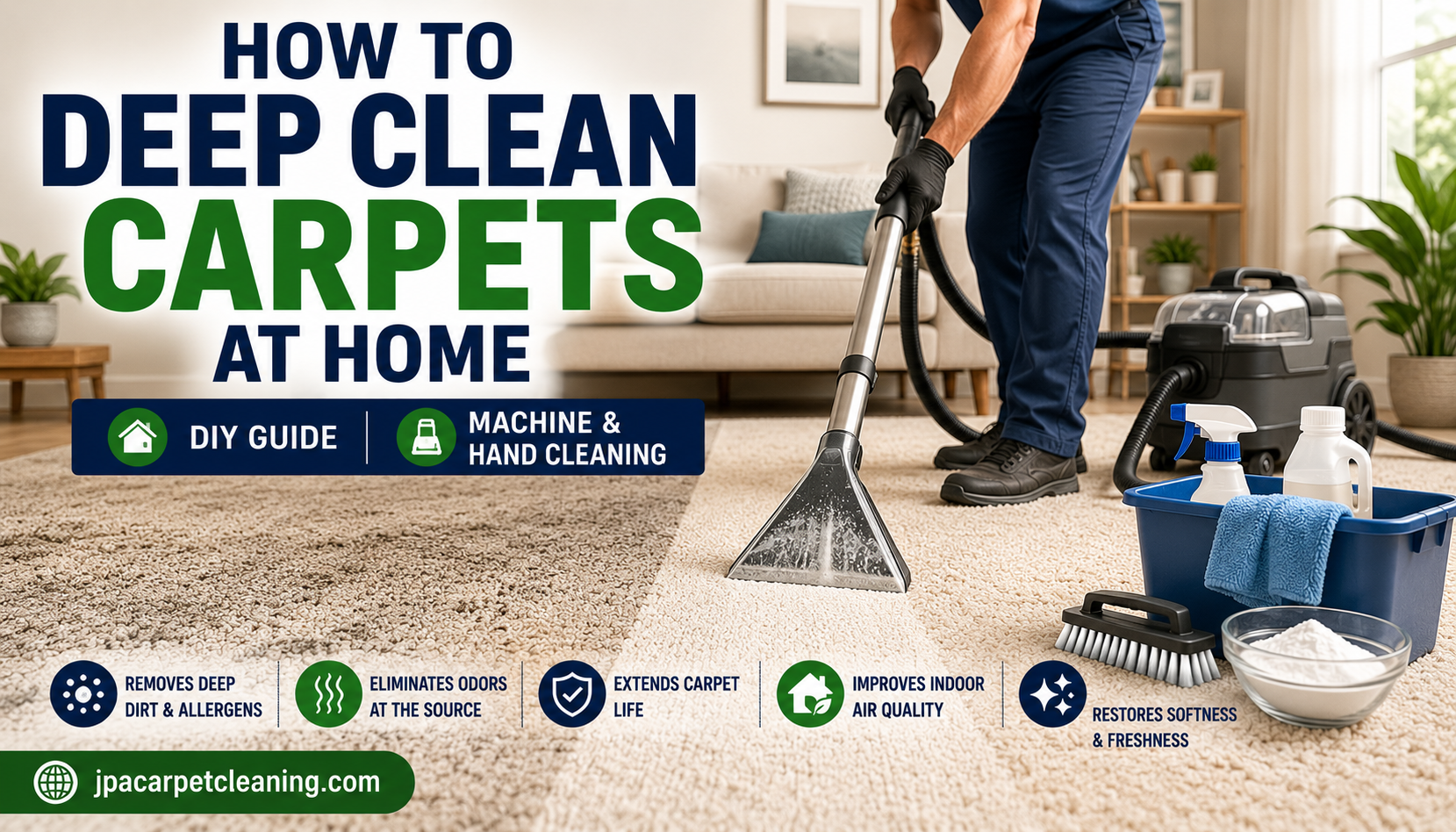
Carpet holds onto more than what’s visible on the surface. Learning how to deep clean carpets at home means going past a quick vacuum to reach the dirt and odors sitting deep in the fibers.
The process starts with familiar steps like vacuuming thoroughly, pre-treating stains, mixing a carpet cleaner solution with warm water, and finishing stubborn odors with baking soda. Each step builds on the last.
This guide covers the process with a machine, an alternative for hand cleaning, stain-specific advice, drying time, and how often to repeat it.
Why Deep Cleaning Carpets Matters
A deep clean removes dirt and allergens that settle below where a vacuum can reach, and eliminates odors that build up over time. Left untreated, that buildup wears down fibers faster and dulls appearance.
Regular deep cleaning extends carpet life, restores its look, and improves indoor air quality by clearing out trapped particles. It also makes routine vacuuming more effective afterward.
Tools and Supplies You’ll Need
- Vacuum cleaner
- Carpet cleaning machine (owned or rented)
- Carpet cleaning solution
- Warm water
- Spray bottle
- Carpet stain remover
- Baking soda
- White vinegar
- Microfiber cloths
- Soft scrub brush
- Fans
- Bucket
- Old towels
Test any cleaning product on a hidden patch before treating the whole room — some solutions affect color or texture differently than expected.
How to Deep Clean Carpets at Home
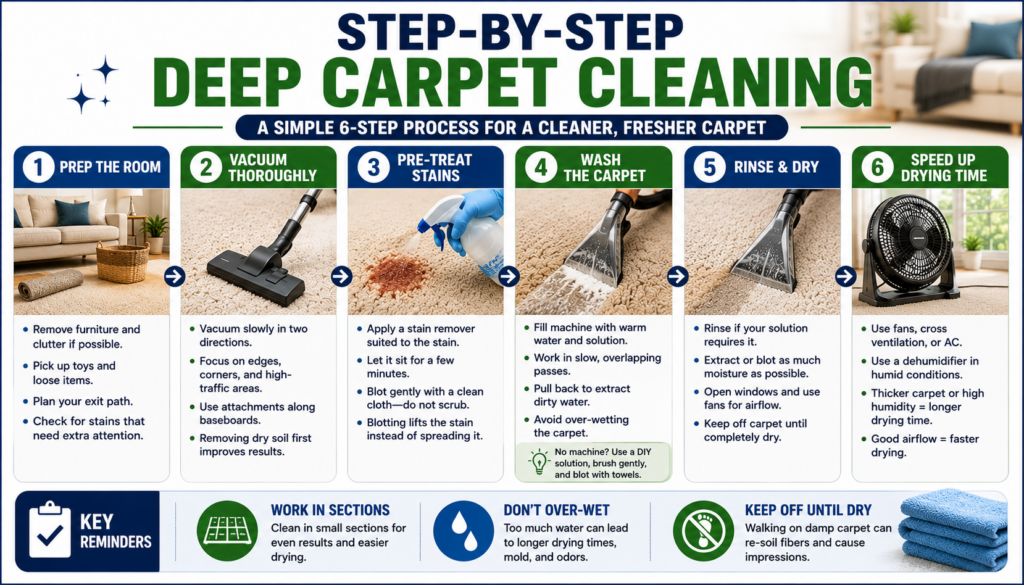
The same six stages apply whether you’re renting a machine or cleaning by hand.
1. Prep the Room
Clear the room before starting: move furniture out, pull up area rugs, and pick up toys or loose objects. Protect furniture legs with foil or plastic if anything stays in place.
Plan an exit path so you’re not stepping over wet carpet later, and note any stains that need extra attention first.
2. Vacuum Thoroughly
Vacuum slowly and in two directions, spending extra time on edges and high-traffic areas. Use crevice attachments around baseboards and corners.
Removing dry soil first matters — wetting dirt before it’s vacuumed turns it into mud that grinds deeper into the fibers.
3. Pre-Treat Stains
Spot clean visible stains before washing the whole carpet. Apply a stain remover matched to the stain type where possible, let it sit a few minutes, then blot rather than scrub.
Blotting lifts the stain out; scrubbing spreads it and can damage fibers before the main cleaning step even begins.
4. Wash the Carpet
Fill the carpet cleaner with warm water and the recommended solution, following the manufacturer’s mixing directions. Start in the far corner and work in slow, overlapping passes, pulling backward to extract as much dirty water as possible. Avoid over-wetting the carpet.
No machine on hand? Mix a mild DIY solution, work it in with a soft brush in small sections, and blot up moisture with microfiber towels. It takes more effort and won’t extract as much water, but it works for smaller areas or lighter dirt.
5. Rinse and Dry
Rinse with clean water if your solution calls for it, then remove as much moisture as possible with the machine or towels. Open windows and run fans to help.
Keep people and pets off the carpet until fully dry, and wait to replace furniture — trapped moisture invites mold and odor later.
6. Speed Up the Drying Time
Cross ventilation, ceiling fans, and portable fans all help push damp air out. Air conditioning or a dehumidifier works well in humid climates where air alone won’t dry the carpet fast enough.
Thicker carpet and high humidity extend drying time, sometimes to a full day, while good airflow in a dry room can cut that to a few hours. Avoid walking on damp carpet — proper drying keeps mold and odor from settling in.
Deep Cleaning Without a Carpet Cleaning Machine
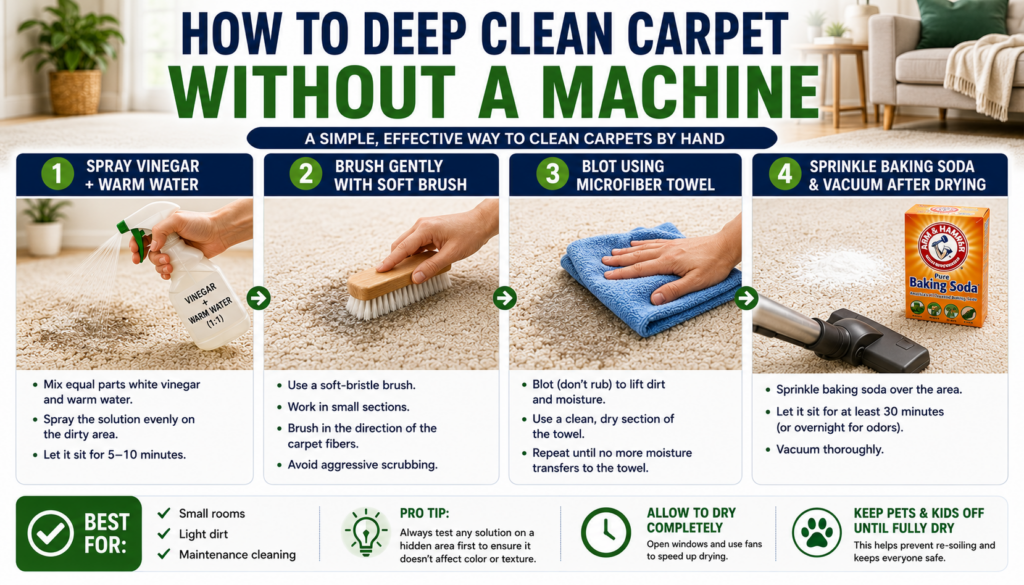
A vinegar solution, gentle brushing, and thorough blotting clean carpet by hand reasonably well. Spray a mix of white vinegar and warm water, work it in with a soft brush, then blot out moisture with clean towels. Baking soda left on afterward absorbs any remaining odor before a final vacuum.
Hand cleaning takes longer and won’t extract as much dirt or moisture as hot water extraction, so it suits smaller areas, lighter soiling, or maintenance between machine cleans rather than a full deep clean.
How to Remove Common Carpet Stains Before Deep Cleaning
Pet Stains
Blot up liquid immediately, then treat with an enzyme cleaner, which breaks down the proteins causing stain and odor.
Coffee
Blot right away and treat with a vinegar solution or an oxygen-based remover for lingering color.
Wine
Blot without pressing hard, treat with dish soap and water, then an oxygen-based cleaner if discoloration remains.
Grease
Scrape off excess first, then use a degreasing dish soap solution or a commercial spot cleaner.
Mud
Let it dry completely, vacuum the loose residue, then treat any remaining mark with a vinegar solution.
Food Spills
Remove solids, then treat with dish soap and warm water, or a commercial spot cleaner for stubborn color.
Best Carpet Cleaning Solutions
Commercial Carpet Shampoo
Formulated for machine cleaning, shampoo works best for whole-room deep cleans and heavy dirt buildup.
DIY Vinegar Solution
A vinegar and water mix handles everyday dirt and light odor between deeper cleans.
Baking Soda Treatment
Best for absorbing odor rather than lifting stains — pair it with another solution for discoloration.
Oxygen-Based Stain Removers
Effective on set-in color from coffee, wine, or food, especially on light-colored carpet, after a patch test.
Enzyme Cleaners
The top choice for pet stains and organic residue, since enzymes break down what’s causing the smell.
Machine, Hand, and Professional Cleaning Compared
| Method | Best For | Limitations |
|---|---|---|
| Machine (owned or rented) | Whole-room deep cleans, heavy soiling | Requires equipment and setup time |
| Hand cleaning | Small areas, light dirt, maintenance | Less extraction, more physical effort |
| Professional cleaning | Deep-set stains, wool or delicate carpet, water damage | Highest cost |
DIY covers most routine needs, but heavy staining, persistent odor, or wool and delicate carpet is usually safer left to a professional.
Carpet Type Considerations
Wool and other natural fibers are sensitive to over-wetting and harsh chemicals, so use a gentler solution and less moisture than on synthetic carpet. Nylon and polyester hold up well to most machine and DIY solutions. Berber’s tight loops can snag with aggressive scrubbing, so keep motions gentle. Area rugs, especially handmade or antique ones, often do better with spot cleaning than a full machine pass.
Common Mistakes to Avoid
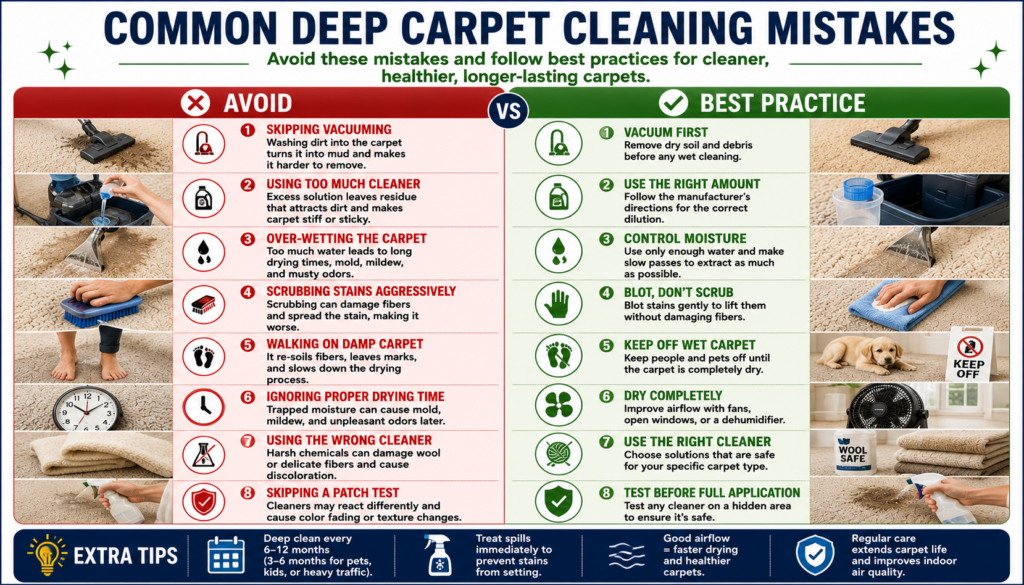
- Skipping vacuuming before washing
- Using too much cleaning solution
- Over-wetting the carpet
- Scrubbing stains aggressively
- Walking on damp carpet
- Ignoring proper drying time
- Using the wrong cleaner on wool or delicate carpet
- Skipping a patch test before full application
Signs of over-wetting include a spongy feel underfoot, a musty smell days later, or discoloration after drying — worth catching early. In homes with kids or pets, keep solutions sealed and out of reach until the carpet is dry.
How Often Should You Deep Clean Carpets?
- Vacuum weekly.
- Spot clean spills immediately.
- Deep clean every 6–12 months for typical households.
- Deep clean every 3–6 months with pets, children, allergies, or heavy foot traffic.
Between deep cleans, vacuum regularly and treat spills right away to keep the next deep clean easier.
Frequently Asked Questions
How often should carpets be deep cleaned?
Most homes do well with a deep clean every 6 to 12 months, or every 3 to 6 months with pets, kids, or heavy traffic.
Can I deep clean carpet without a machine?
Yes, a vinegar solution, soft brush, and thorough blotting work well for smaller areas, though a machine extracts more moisture and grime.
Should I rinse after shampooing carpet?
Rinse if the label recommends it — leftover residue can attract dirt and leave carpet feeling stiff.
How long does carpet take to dry?
Typically a few hours to a full day, depending on humidity, carpet thickness, and airflow.
Is baking soda safe for all carpets?
Yes, it’s safe for nearly all carpet types once fully vacuumed up afterward.
Can I use vinegar on wool carpet?
Use it sparingly and diluted, since vinegar’s acidity can affect wool dyes more than synthetic fibers.
When should I hire a professional carpet cleaner?
Consider one for deep-set stains, water damage, persistent odor, or delicate wool and antique rugs.
Conclusion
Deep cleaning carpet at home comes down to a clear sequence: prepare the room, vacuum thoroughly, treat stains before washing, then clean slowly in overlapping sections with a machine or by hand.
Dry the carpet completely before walking on it again, and keep up with regular vacuuming and periodic deep cleans between. That routine keeps carpet looking and smelling like new for years.