A carpet stain rarely responds to the same fix twice. Figuring out what to use to clean carpet depends on what caused the mess, how set-in it is, and what your carpet is made of.
Vinegar, baking soda, dish soap, and enzyme cleaners each solve a different problem, and reaching for the wrong one can set a stain instead of lifting it, and knowing which one fits the moment saves both time and carpet fibers.
This guide breaks down which commercial products and homemade recipes work for grease, pet accidents, wine, coffee, mud, and odors, plus the steps for a full carpet cleaning that actually holds up.
Why Choosing the Right Carpet Cleaner Matters
Different stains need different approaches. Grease responds to degreasing agents, protein-based stains like blood or vomit need enzymes, and odors often need something that neutralizes the smell rather than masking it.
Using the wrong product can cause real damage — bleach strips color, too much soap leaves a sticky residue, and aggressive scrubbing frays fibers. Carpet material matters too, since wool and other natural fibers react differently to moisture than synthetic carpet does.
Best Products to Use to Clean Carpet
Best Cleaning Products & Solutions
Spot cleaning calls for a different product than a full deep clean, so match the tool to the job at hand.
Commercial Spot Cleaners
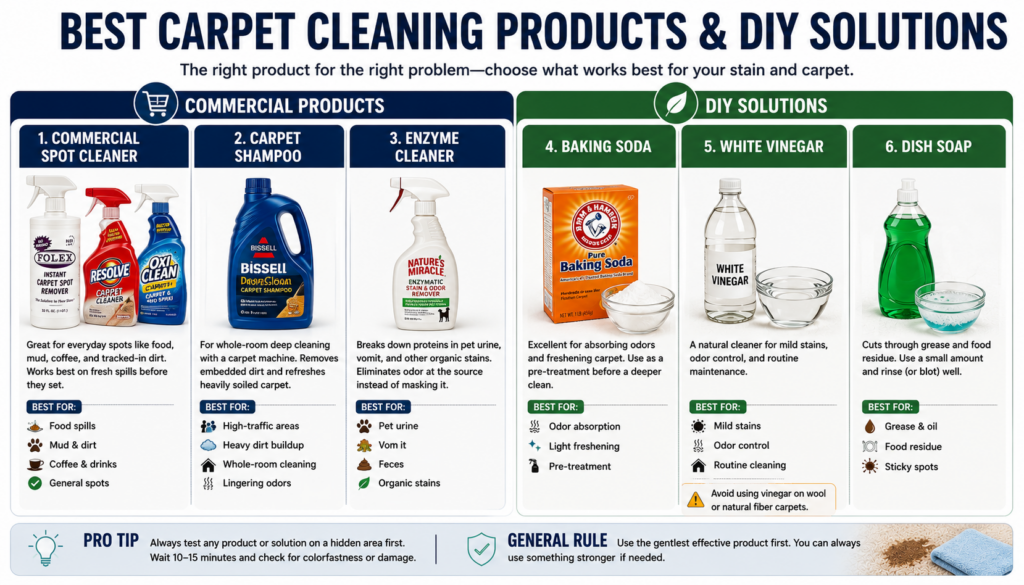
For everyday stains like food spills, mud, and coffee, a dedicated spot cleaner such as Folex Carpet Spot Remover, Resolve Carpet Cleaner, or OxiClean Carpet & Rug Spray lifts the stain without leaving residue behind. These work best on fresh spills treated before they set into the fibers.
Carpet Shampoo
Machine-based shampoos like Bissell Deep Clean Formula are built for whole-room cleaning rather than spot treatment. They’re the better choice for heavy dirt buildup, high-traffic areas, or odor that has settled throughout the carpet.
Enzyme Cleaners
Pet urine, vomit, and other organic stains need an enzyme cleaner, since enzymes break down the proteins that regular cleaners just push around. Standard cleaners can mask the smell temporarily, but enzymes actually digest what’s causing it.
Baking Soda
Baking soda works best for odor absorption and light freshening. Sprinkle it over the carpet, let it sit, then vacuum it up. It also makes a useful pre-treatment step before a deeper clean.
White Vinegar
A diluted vinegar solution handles mild stains, everyday odor control, and routine maintenance. Skip it on wool or other natural fiber carpet, since the acidity can affect certain dyes and fibers.
Dish Soap
A small amount of mild dish soap cuts through grease and food residue. Use it sparingly — too much soap leaves a film that attracts more dirt than it removed.
Homemade Carpet Cleaning Recipes
How to DIY Your Carpet Cleaner
General Stains & Odors
Mix mild dish soap with warm water for general dirt and light stains. It’s gentle enough for regular upkeep and safe for most carpet types.
Pet Accidents & Urine
Combine equal parts white vinegar and warm water, then follow with baking soda if odor lingers after drying. For severe accidents, especially ones that reached the padding, an enzyme cleaner works better than any homemade mix.
Grease Stains
A dish soap and warm water mixture breaks down grease effectively. Blot rather than rub, working from the outside of the stain inward so it doesn’t spread further.
Coffee & Wine
Treat both with a vinegar solution first. Hydrogen peroxide can help lift the remaining color on white carpet only, and it’s worth a patch test before applying it anywhere visible.
Step-by-Step Carpet Cleaning Process
Step-by-Step Cleaning Process
Vacuum
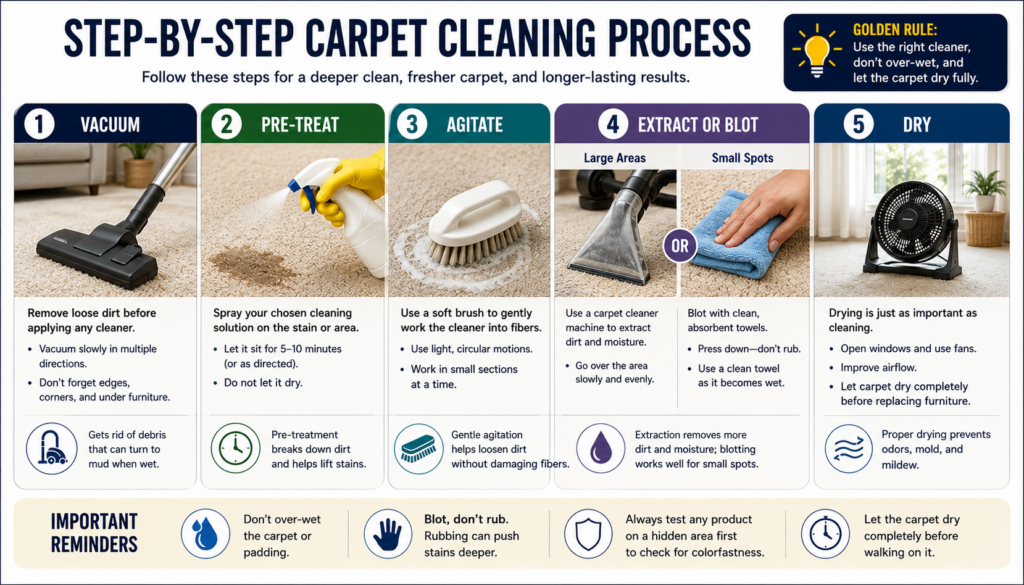
Remove loose dirt before applying anything else. Vacuum slowly, covering edges and corners where debris tends to collect.
Pre-Treat
Spray your chosen cleaning solution and let it sit for several minutes according to the product directions. Avoid soaking the carpet.
Agitate
Use a soft brush in gentle circular motions, working in small sections rather than the whole carpet at once.
Extract or Blot
A carpet machine extracts more moisture and dirt than blotting, which makes it the better option for larger areas. For small spots, microfiber towels work fine — press rather than rub.
Dry
Open windows, run fans, and improve air circulation around the treated area. Let the carpet dry completely before replacing furniture, since trapped moisture is what lets odors and mildew come back.
Which Cleaner Works Best for Different Carpet Stains?
Food Stains
Best commercial: OxiClean Carpet & Rug Spray. Best DIY: dish soap and warm water. Blot rather than rub so the spill doesn’t spread.
Pet Stains
Best commercial: an enzyme cleaner. Best DIY: vinegar and water, followed by baking soda. Treat quickly, before it soaks into the padding.
Grease
Best commercial: Folex Carpet Spot Remover. Best DIY: dish soap and warm water. Avoid over-wetting the area while blotting.
Coffee
Best commercial: Resolve Carpet Cleaner. Best DIY: a vinegar solution. Blot immediately rather than letting it set.
Wine
Best commercial: an oxygen-based stain remover. Best DIY: vinegar, then hydrogen peroxide on white carpet only. Always patch test first.
Mud
Best approach either way: let it dry fully, vacuum, then treat any remaining residue with a spot cleaner or vinegar solution. Don’t scrub while it’s still wet.
Ink
Best commercial: a rubbing-alcohol-based spot cleaner. Best DIY: a small amount of rubbing alcohol on a cloth. Blot only — rubbing spreads it.
Smoke Odors
Best commercial: an enzyme or odor-neutralizing spray. Best DIY: a baking soda treatment, repeated if the smell lingers.
Commercial vs Homemade Carpet Cleaners
| Factor | DIY / Homemade | Commercial |
|---|---|---|
| Cost | Low, pantry ingredients | Higher, ongoing purchase |
| Effectiveness | Good for light, routine stains | Stronger on set-in or heavy stains |
| Convenience | Requires mixing | Ready to use |
| Odor removal | Handles mild odors (baking soda, vinegar) | Enzyme and specialty formulas handle stronger odors |
| Heavy stains | Limited | Generally more effective |
| Pet accidents | Vinegar helps mild cases | Enzyme cleaners perform better |
| Safety | Fewer chemicals, but risky if mixed carelessly | Follow label directions and keep away from kids and pets |
Reach for DIY solutions on routine maintenance and light stains, and switch to commercial products for set-in stains, pet accidents, or heavily soiled carpet. Professional cleaning is worth it for wall-to-wall staining, water damage, or delicate natural fiber carpet.
Common Carpet Cleaning Mistakes
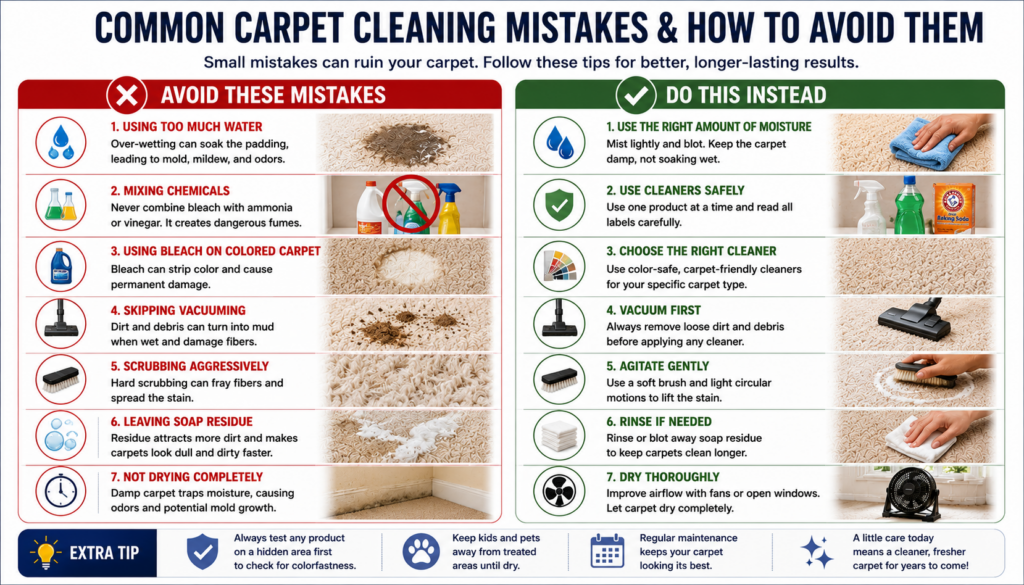
- Using too much water
- Mixing chemicals — never combine bleach with ammonia or vinegar, since the fumes are dangerous
- Using bleach on colored carpet
- Skipping vacuuming before treating a stain
- Scrubbing aggressively
- Leaving soap residue behind
- Not drying the carpet completely
In households with kids or pets, keep any cleaning solution out of reach and rinse treated areas well before letting them back into the room.
Tips for Keeping Carpet Cleaner Longer
- Vacuum weekly.
- Treat stains immediately.
- Use entrance mats.
- Remove shoes indoors.
- Clean spills before they dry.
- Schedule a professional deep clean annually.
Frequently Asked Questions
Can I clean carpet with vinegar?
Yes, diluted white vinegar works well for mild stains and odors, though it’s best avoided on wool or natural fiber carpet.
Is baking soda safe for carpet?
Yes, it’s safe for nearly all carpet types as long as it’s fully vacuumed up afterward.
What is the best homemade carpet cleaner?
It depends on the stain — vinegar and water for general dirt, dish soap for grease, baking soda for odor.
Can dish soap damage carpet?
Too much leaves a residue that attracts dirt, but a small, well-rinsed amount is safe for most carpet.
Which cleaner removes pet urine?
An enzyme cleaner works best, since it breaks down the proteins causing the stain and odor instead of masking them.
What removes old carpet stains?
Older stains usually need a few repeated treatments with an enzyme or oxygen-based cleaner rather than one heavy application.
Do I need a carpet cleaning machine?
Not for spot cleaning, but a machine helps with whole-room deep cleans and extracts more dirt than blotting alone.
Conclusion
Choosing what to use to clean carpet comes down to matching the product to the problem — light dirt calls for something different than pet stains or a glass of spilled wine. DIY solutions handle routine cleaning well, while commercial and enzyme cleaners take over where homemade mixes fall short.
Whatever you reach for, test it on a hidden patch first, and don’t skip vacuuming before treating any stain. A little care up front keeps carpet looking better for longer.